





Skip to content

Who you are

Identity quizzes offer different vocabularies for describing preferences, habits and the impression you make. Some use broad personality descriptions; others approach a smaller part of everyday experience or use playful imagery. Sharing a category does not mean they measure the same thing or that their labels can be combined into a complete account of you. This collection is for exploring how you describe yourself, not establishing a fixed identity, assessing your worth or predicting what you must become. Bring an ordinary example, such as joining a group or choosing how to spend a free afternoon, and notice which questions help you explain that example more clearly.

Who you are
Who you are3 min

Mental Age

Take a free mental age test about habits and outlook. Explore four playful mindset types, with clear explanations and practical reflection prompts.

Take test
Who you are5 min

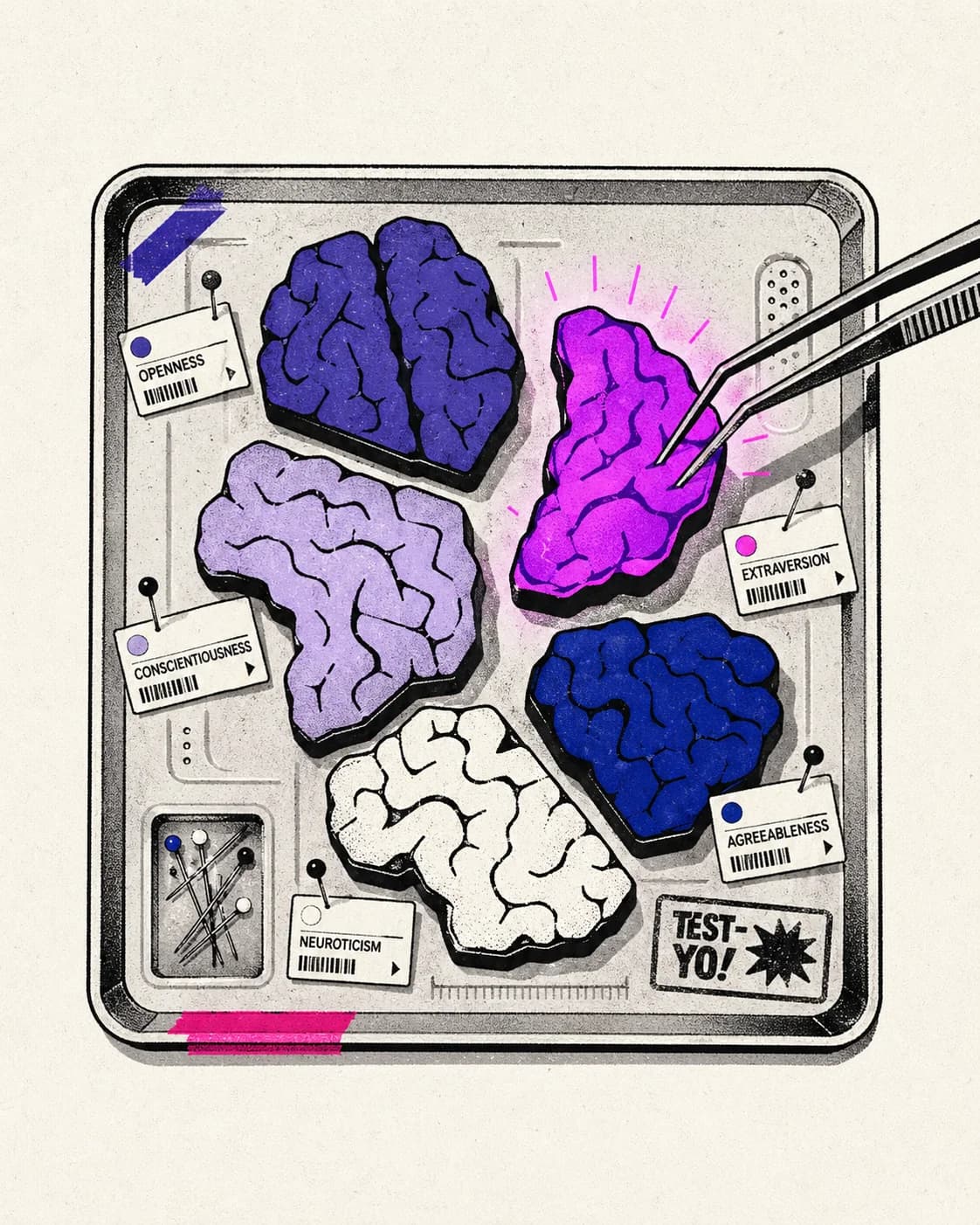
Personality

Take a free personality test in about 5 minutes. Explore five Big Five traits with 30 questions, instant results and everyday examples. No signup.

Take test
Who you are2 min

Introvert or Extrovert

Am I an introvert or extrovert? Free 10-question test places you as introvert, ambivert or extrovert in 2 minutes.

Take test
Who you are3 min

Self-Esteem Test

Free self-esteem test using the real 10-item Rosenberg Self-Esteem Scale (RSES). Get your result in 3 minutes — no email required.

Take test
Who you are5 min

In Control?

Explore how you explain outcomes through your choices, chance and circumstances. Read four result guides without turning responsibility into self-blame.

Take test
Who you are6 min

Power Style

What drives how you actually show up at work? 24 honest questions.

Take test
Who you are4 min

Procrastinator Type

Explore perfectionism, deadline pressure, avoidance and big ideas in task habits. Read four procrastination styles and choose a manageable next step.

Take test
Who you are4 min

Color Personality

Explore five color personality patterns through everyday preferences. Read what red, blue, green, yellow and purple mean here, and compare color systems.

Take test
Who you are4 min

Toxic Trait

Your strengths have a shadow. 20 brave questions find it.

Take test
Who you are4 min

Era You Belong

Born in the wrong decade? Find where your soul actually lives.

Take test
Who you are3 min

What Era Are You In

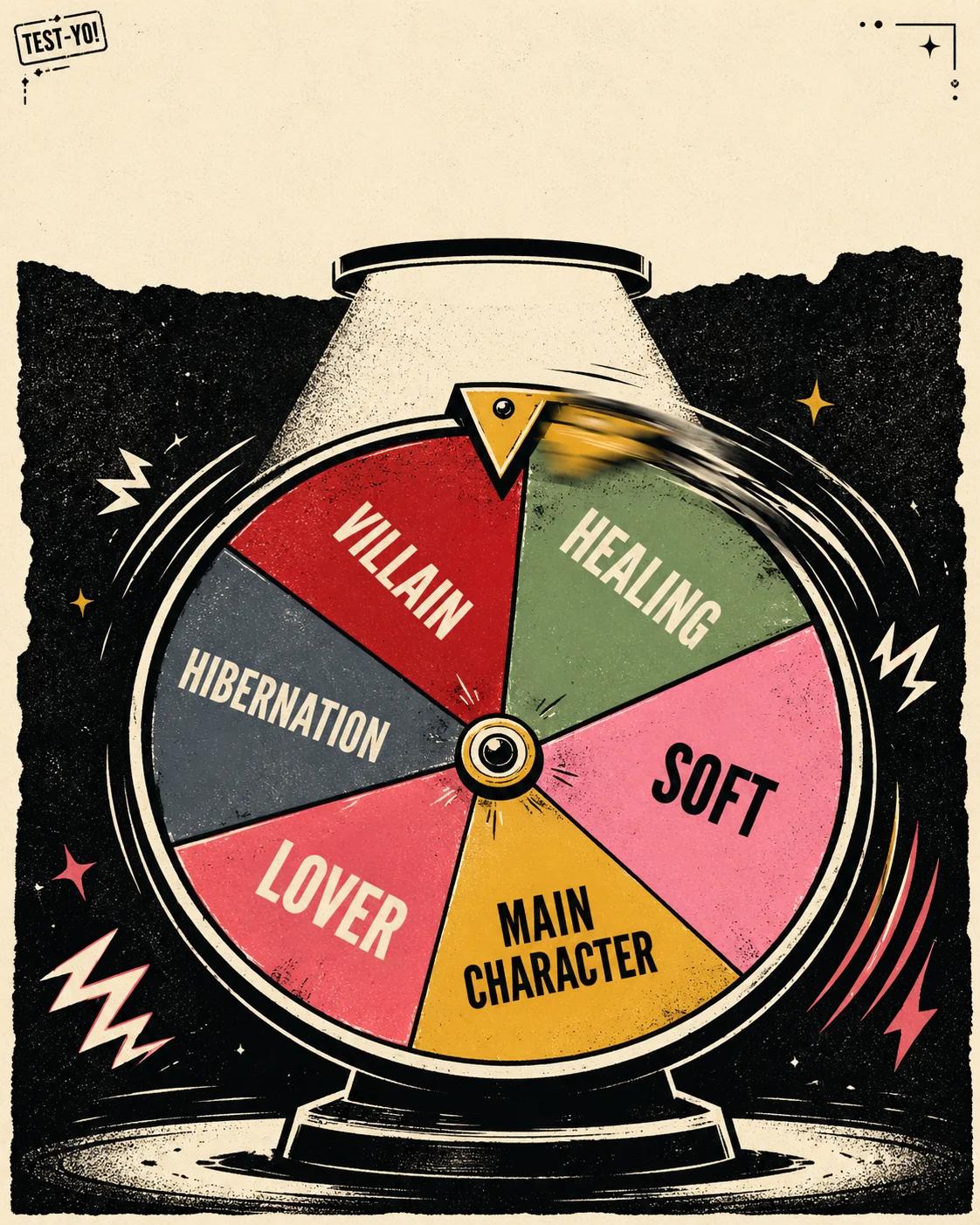
Explore six playful life-era labels, from Healing to Main Character. Read what each means and choose a reflection prompt for your current priorities.

Take test
Who you are3 min

What Blocks You

Explore six recurring self-beliefs, from not feeling enough to expecting failure. Read reflection prompts without diagnosis or promises of change.

Take test
Who you are4 min

Type A/B/C/D

Explore Type A, B, C and D patterns in pace, precision and social comfort. Read four result guides without medical claims or fixed personality labels.

Take test
Who you are5 min

Temperament Test

Sanguine, choleric, melancholic or phlegmatic? A free 22-question test based on the classical four temperaments, mapped onto extraversion and emotional stability.

Take test
Who you are5 min

Trauma Response Test

Fight, flight, freeze or fawn? A free 22-question self-reflection quiz on the "4F" stress-response model. Non-diagnostic — it does not detect trauma or PTSD.

Take test
Who you are6 min

HSP Test

Are you a Highly Sensitive Person (HSP)? A free 24-question self-report quiz on sensory processing sensitivity, the trait researched by psychologist Elaine Aron.

Take test

How to choose a quiz in this category

Choose an identity quiz by the kind of example you want to explore. If you keep wondering why a busy gathering leaves you wanting quiet, look for questions about social preferences. If you want to describe how you approach decisions or routines, a broader personality quiz gives you a different starting point. The era quizzes are a playful alternative when you would rather compare tastes than examine habits. Before answering, choose an ordinary day rather than your most memorable success or argument. Read each description and decide whether its question matches yours; a title alone cannot explain what a quiz covers. Keep a note of an answer that was difficult to choose. That hesitation may help you describe a preference more precisely than the final label. You can then compare the result with a situation where you act differently.

Start here

Related reading

Choosing where to start

Start by deciding whether you want a broad description or a lighter prompt for conversation. Read a card’s description before its title persuades you: what situation does it actually ask you to consider? Pick a quiz whose question you can answer with examples from your own life. The linked titles below are starting points drawn from the cards on this page, rather than a required sequence. After trying one, write down a phrase that fits and a phrase you would change. If you want another angle, choose a different question instead of hunting for a more flattering label. Compare what each quiz asks, as well as what each result says. A playful image can be enjoyable without doing the same job as a detailed account of habits.

After your results

Replace the label with a sentence beginning “I tend to…” and attach a situation to it. Then find a counterexample: when do you behave differently, and what changes around you? Keeping both examples helps prevent a description from becoming a rule. You can disagree with a result without answering again until it agrees with you. If you share it, mention the detail you recognized rather than expecting others to treat the whole profile as fact. Leave yourself room to develop interests and responses that the quiz never asked about.

Questions about these quizzes

Which identity quiz should I open first?

Choose the question you can connect to a recent experience. A specific example gives you something to compare with the result, even if the title is playful.

Should my labels agree across quizzes?

They may describe different contexts or use different kinds of imagery. Compare the underlying questions before deciding there is a contradiction in how you see yourself.

Can a result tell me who I really am?

No single description can settle that. Treat it as language to try out, keeping the parts that clarify an experience and questioning the parts that do not.