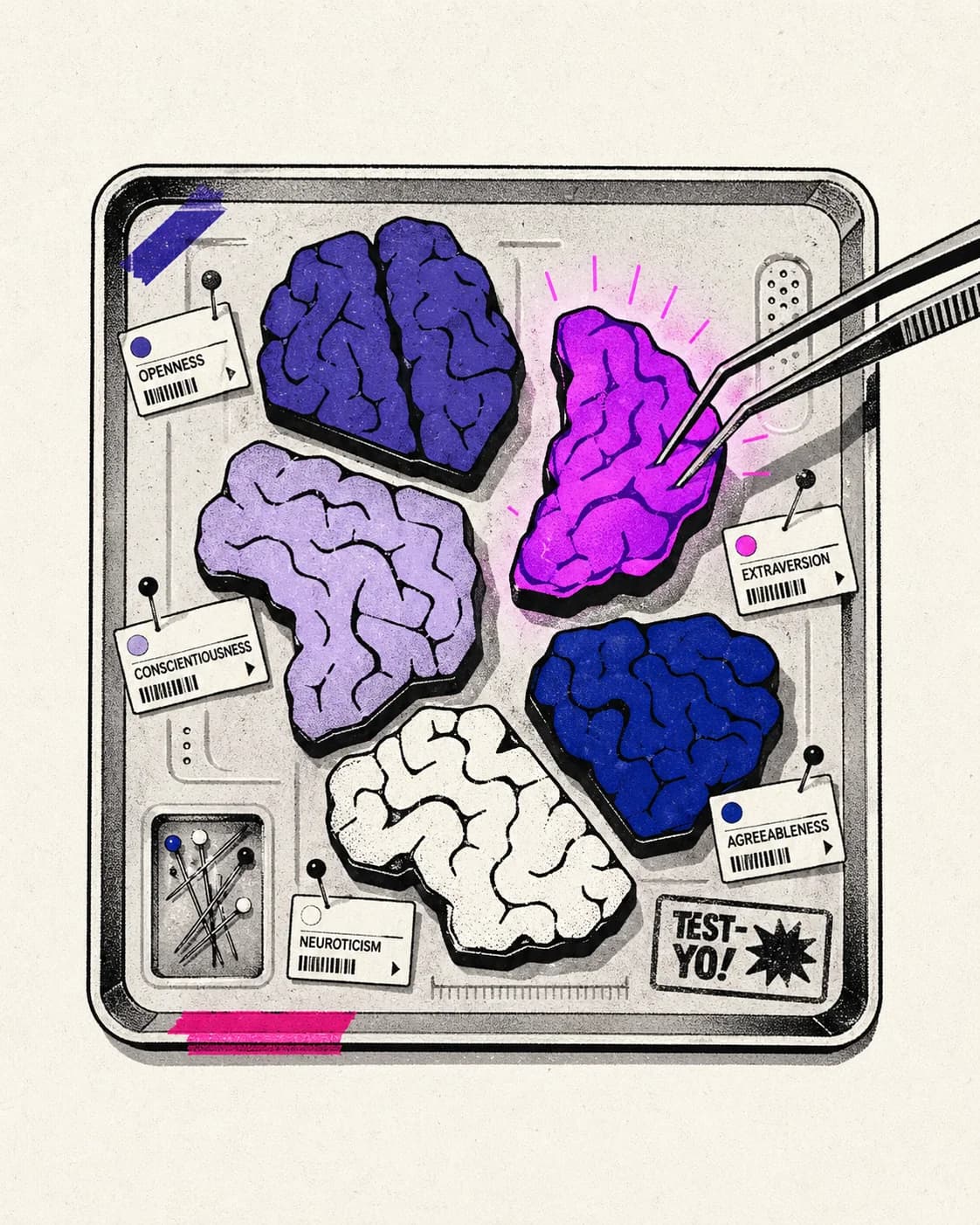
The Big Five — sometimes called the OCEAN model — describes personality with five continuous dimensions. It is one of the most widely studied frameworks in personality psychology, but a trait score is still a description of tendencies, not a diagnosis or a complete account of a person. The useful question is not "which box am I in?" but "where do I tend to sit, and when does that pattern change?"
How the Big Five was built
The model grew from lexical research and factor analysis: researchers compared the words people use to describe one another, then looked for clusters that appeared repeatedly. Five broad dimensions became a durable organising model across many measures and samples. Cross-cultural work also finds substantial common structure, while showing that language and culture still affect how traits are expressed. That combination — recurring dimensions with room for context — is stronger than a personality system that assigns everyone a permanent category.
The five traits
Openness to Experience captures curiosity, interest in art and ideas, and willingness to engage with the unfamiliar. People scoring higher may be more drawn to variety and abstract ideas; people scoring lower may prefer what's familiar and proven. Neither direction is automatically better.
Conscientiousness measures self-discipline, organisation and follow-through. It is often associated with job performance, although the size and usefulness of that association depend on the role, the criterion and the situation. Higher scores often reflect planning and persistence; lower scores indicate less consistent organisation or follow-through. The score does not measure intelligence or adaptability.
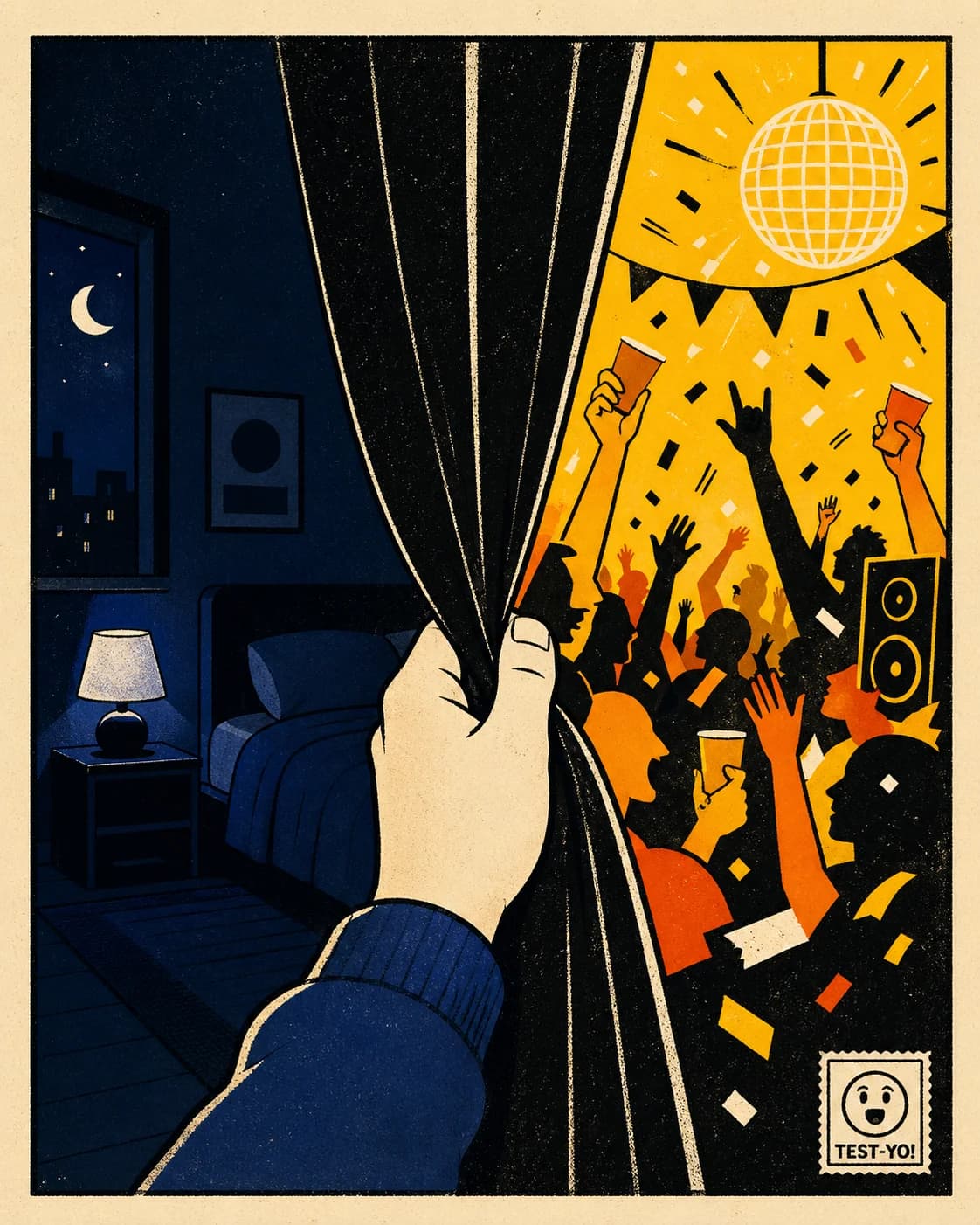
Extraversion describes tendencies such as sociability, assertiveness and positive emotional engagement. Introversion is the lower end of this dimension; neither end by itself measures social skill or explains why someone avoids a situation.
Agreeableness captures warmth, cooperation and trust. It can support smoother relationships, but being agreeable is not the same as being kind in every situation, and a lower score is not a moral judgement. High scorers often prioritise harmony; lower scorers may challenge ideas directly and negotiate harder.
Neuroticism — sometimes labelled Emotional Reactivity — measures the tendency to experience negative emotion intensely or frequently. A high score is a sensitivity, not a disorder. It can make stress harder to ignore, while also making changes in mood easier to notice.
Why five and not three or seven
Earlier researchers proposed three-factor, sixteen-factor and other solutions. The five-factor model became influential because broad dimensions kept recurring across different instruments and datasets. That does not make five a law of nature: other models, including HEXACO, add or reorganise dimensions for different research questions.
A score is not a type
Suppose a normed instrument — not this quiz — reported Openness at the 78th percentile, Conscientiousness at 62nd, Extraversion at 44th, Agreeableness at 66th and Neuroticism at 71st. You might describe that hypothetical profile as curious and emotionally reactive, with fairly strong follow-through. You would not be "78% open," and you would not be an Openness type. A percentile compares answers with that instrument's reference group; it does not say what you will do on Tuesday, what you value, or how you will behave under every kind of pressure. This quiz reports an entertainment result from your answers, not a population percentile.
The same top trait can look different in two people. One person high in Openness may seek art and abstract ideas; another may show it through experimentation at work. Read the combination, the context and the examples in your life before turning a score into a story.
What the Big Five predicts
Research links some traits with some outcomes, but these are group-level associations rather than personal forecasts. Conscientiousness has shown a relatively consistent relationship with several job-performance criteria; other traits matter more for particular occupations, criteria or contexts. A correlation cannot tell you that a trait caused an outcome, and a result cannot tell you whether one person will succeed.
What it doesn't predict well
The Big Five does not establish intelligence, wisdom, ethics, competence at a specific skill, mental-health status, compatibility, or suitability for a job. It also cannot tell you why an answer was chosen. Treat a result as a prompt for reflection, not as permission to stereotype yourself or somebody else.
How personality changes across life
Personality is more stable than mood but less fixed than some people think. Over time, a person's habits and circumstances can change how a trait is expressed, and a repeat result can move without making the earlier result meaningless. Rank-order comparisons and absolute scores answer different questions, so avoid treating either as a permanent label.
Taking the test
Validated instruments differ in length, wording, scoring and intended use. Some short forms have been studied as efficient measures of the five domains, but shortening a questionnaire involves trade-offs in reliability and validity. Our 30-item quiz borrows the five-domain structure and uses a balanced self-report format; it is an original entertainment indicator, not the BFI, IPIP or a normed assessment.
Ready to find out which trait stands out in your answers? The 30-item test takes about five minutes.