 TEST-YO!· Couple Compatibility
Couple Compatibility Test: how well do you match?
A free couple compatibility test: you each answer 24 statements, then compare and get a match score across affection, communication, conflict, everyday life, the future and values.
4 min · 24 questions · Free · No signup
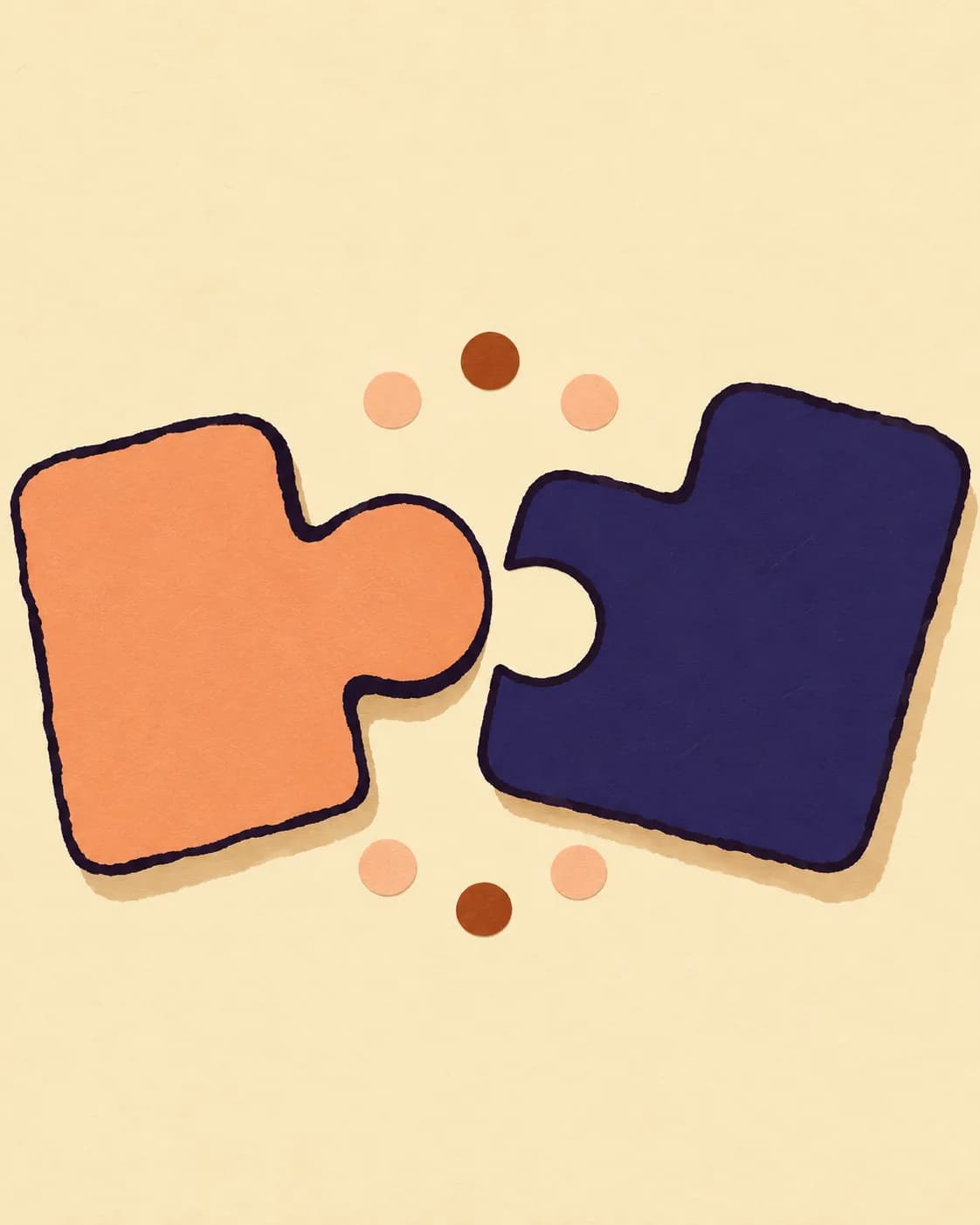
What a compatibility test can and cannot tell you
Read more · About this testRead less
Compatibility is not one thing. Couples tend to talk about it in six areas, and two people can match closely in some and differ in others. This test looks at each area separately so the difference is easy to discuss.
- Similar preferences
- Research on couples often finds that partners who share attitudes and values feel more satisfied, though the effect is modest and depends on the area. Similar habits matter less than how a couple handles the ones they do not share.
- The six areas
- Affection (how you like to give and receive love), communication (talking and checking in), conflict and repair (how you argue and make up), everyday life (weekends, routines, time alone), future plans (commitment, children, money, where to live) and values (honesty, beliefs, ambition).
- Why take it separately
- Each of you answers alone, without seeing the other person’s choices. That keeps answers honest and makes the comparison a real surprise rather than a negotiation.
- Reading a gap
- A gap of 0 means you answered the same; 4 means opposite ends of the scale. Gaps in future plans and values are worth talking about early; gaps in everyday life are often the easiest to solve with a shared plan.
This is a self-reflection tool, not a validated relationship assessment. It cannot tell you whether a relationship will last or what to decide.
Possible archetypes
Your answers lead to one of 6 results: The Warm Heart, The Open Book, The Repairer, The Rhythm Keeper, The Future Planner, or The Values Anchor.
- The Warm HeartLove you can feelAffection is what makes love real for you: words, touch and small gestures.
- The Open BookLove you can talk aboutTalking openly is how you feel close: feelings, check-ins and long conversations.
- The RepairerLove that mendsHow you fight and make up matters most to you: talk it through, find middle ground, move on.
- The Rhythm KeeperLove that fits your daysEveryday life together matters most to you: weekends, routines, alone time and friends.
- The Future PlannerLove that goes somewhereShared plans matter most to you: commitment, children, money and where you will live.
- The Values AnchorLove built on the same groundShared values matter most to you: honesty, beliefs, ambition and how you treat people.
Read more · About this testRead less
- The Warm Heart
- Your answers put affection first. Of the six areas in this test, the statements about warm words, physical closeness, small surprises and staying in touch during the day fit you most strongly. For you, love is something you notice in the everyday, not only something you agree on. That says nothing about how much you love someone; it describes what helps you feel loved. People who lead with affection often feel secure when it is present and quietly uneasy when it fades, even if nothing else has changed. In a couple, this works best when your partner knows it plainly. Many people show love in other ways, such as practical help or long-term plans, and may not realise that a hug or a message in the middle of the day carries so much weight for you. The compare step is where this gets useful. If your partner answers the same 24 statements, you will see whether affection sits close for both of you or is the area where you differ most. A gap here is common and very fixable once it is named.
- The Open Book
- Your answers put communication first. The statements about sharing feelings, checking in on the relationship, hearing problems early and enjoying deep conversations fit you more than any other area. For you, closeness grows through words. You likely feel calmer when things are said out loud, even hard things, and more anxious when a partner goes quiet or keeps worries to themselves. That strength can meet a different style. Some people process alone first, or show care through actions rather than talk. Neither style is wrong, but the difference can feel like distance until you both understand it. When your partner takes the same test, the compare view shows how close your answers are on communication and on the five other areas. If talking is where you differ, the most useful step is agreeing on when and how you check in, rather than how often.
- The Repairer
- Your answers put conflict and repair first. The statements about resolving arguments quickly, disagreeing openly, letting go after making up and preferring compromise over winning fit you most strongly. That does not mean you argue a lot. It means the way a couple handles friction is what makes you feel safe. A relationship where disagreements end in repair probably feels more secure to you than one where they are avoided. Different repair styles are one of the most common sources of tension. One person wants to talk it out now; the other needs space first. Both can be caring, and both can feel like rejection to the other. If your partner takes the test, compare your answers on this area in particular. Knowing that you need resolution the same day, and that they might need an hour first, can turn a repeated fight into a small, planned pause.
- The Rhythm Keeper
- Your answers put everyday life first. The statements about how you spend weekends, how much time alone you need, routine versus spontaneity and seeing friends and family carry the most weight for you. You probably know that love is lived in ordinary hours. Big feelings matter, but so does whether a Saturday at home feels like rest or a waste, and whether your partner's need for space feels natural or like distance. Lifestyle differences rarely end a relationship by themselves, but they cause a lot of small friction when nobody names them. A homebody and a social planner can be very happy together once they agree on a rhythm that leaves room for both. When you compare with your partner, look at the gaps in this area statement by statement. They are often the easiest ones to solve with a simple shared plan.
- The Future Planner
- Your answers put the future first. The statements about commitment, children, saving and planning, and being open to moving for a life together fit you most strongly. For you, a relationship feels secure when you can picture it ahead. You may feel uneasy when big topics stay vague, not because you want to rush, but because shared direction is part of what love means to you. Future plans are also where couples often assume they agree without checking. Children, money and where to live are big decisions, and answers can differ even in very happy relationships. Comparing your answers with your partner's is a gentle way to open these topics. A gap here is not a verdict; it is a reason to talk early, kindly and honestly about what each of you hopes for.
- The Values Anchor
- Your answers put values first. The statements about honesty, faith or shared beliefs, ambition and agreeing on money, family and how to treat people fit you more than any other area. For you, compatibility runs deeper than habits. You can probably live with different hobbies or routines, but a gap in honesty or in how someone treats others would matter a great deal. Values tend to be stable, which is why they are worth comparing early. They also show up in small choices, such as how a couple spends money or supports each other's goals, long before anyone names them. When your partner takes the same test, the compare view shows where your values line up and where they differ. Shared values give a relationship solid ground; different ones need respect and a clear conversation, not a winner.
How it works
- Answer 24 short questions, honestly
- Your answers add up to 6 patterns
- Read your result and, if you like, compare it with someone
A 24-statement compatibility test for couples. Each of you rates the same preferences about affection, communication, conflict and repair, everyday life, future plans and values.
This adapted quiz is not a validated instrument. How we build it
Read more · About this testRead less
About this test
Your own result shows the area that matters most to you; when your partner answers from your link, you both see a 0–100 match score and where you are closest and furthest apart.
Methodology
24 original statements on a 5-point agree scale, four per area across six areas. Your own result is the area with the highest total. The couple score is the share of agreement across all 24 answers (100 minus the average answer distance, scaled), with a per-area gap of 0 to 4. A self-reflection tool, not a validated instrument.
Keep exploring


Related reading
Deep Questions to Ask Your Partner: 70 Ideas That Connect
70 deep questions to ask your partner, from childhood and dreams to love, conflict and the future, plus how to ask them so the talk feels close, not tense.
Love Languages List: The 5 Love Languages With Examples
Explore the five love languages through everyday examples, giving versus receiving, different preferences and the limits of this reflection framework.
FAQ
How does the couple compatibility test work?
You each answer the same 24 statements about affection, communication, conflict, everyday life, the future and values. Take it yourself, then send your link to your partner. When they finish, you get a 0–100 match score and see the areas where your answers are closest and furthest apart.
How is the compatibility score calculated?
The score compares your answers statement by statement. Identical answers count fully, answers at opposite ends of the scale count zero, and everything in between counts proportionally. It measures how similar your preferences are, not whether your relationship will last.
Can I take it alone?
Yes. On your own you see which of the six areas matters most to you in a relationship. The match score appears only when a partner answers from your link.
Is a low score a bad sign?
No. Many happy couples differ a lot on some areas. A gap simply shows what is worth talking about. How you handle differences matters more than having none.
Is this the TikTok compatibility test?
It answers the same question in a gentler way: two people take the same quiz and compare. There are no trick questions and no judgement, just your preferences side by side.
Is this a good Valentine's Day quiz for couples?
Yes. Take it yourself, send your partner the link and compare your match score together on 14 February. Then pick the area where you differ most and talk about it over dinner. It is a conversation starter, not a verdict on your relationship.
Is it free and private?
Yes, it is free with no sign-up. Your answers stay in your browser and in the link you choose to share, so send it only to your partner.