 TEST-YO!· Thinker Type
How Do You Actually Think?
Five quick questions. No right answers — just a nudge toward an archetype.
- 1 min
- 5 questions
- No signup
- Free
Full result at the end — no email needed
Possible results · which one are you?
- Analytical Thinker
- Creative Thinker
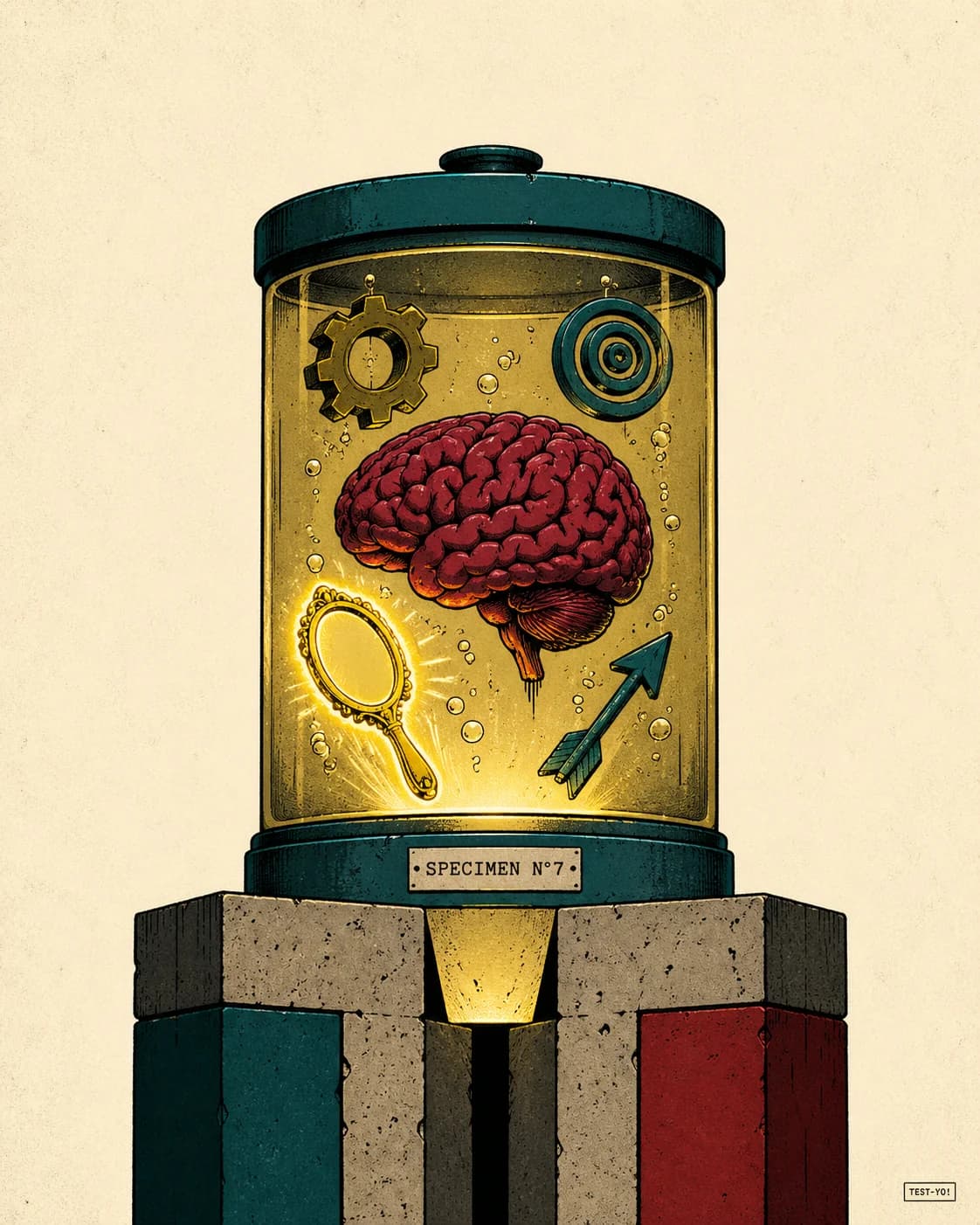
Quick answer
Your answers lead to one of 2 results: Analytical Thinker or Creative Thinker.
- 5 questions · ~1 min
- Cost: free · no signup
About this test
A 5-question 60-second quiz that maps your thinking style to one of two playful archetypes. It's a conversation starter, not a psychometric instrument — the heavier cognitive lifting lives in our IQ screener and the Big Five personality test.
Methodology
5 single-choice questions score a single axis (analytical ↔ creative) and return one of two archetypes. Designed for entertainment and conversation, not assessment.
What the results mean
Think about how you approached a recent unfamiliar problem: collecting facts, imagining alternatives or moving between both. These two results describe the preference that stood out in your answers. They are starting points for noticing your process, with room for a different approach when the task calls for it.
- Analytical Thinker
- Your answers favour breaking a question into parts, checking evidence and explaining how a conclusion follows. In everyday life, that might mean comparing options in a table before choosing or asking where a claim came from. Watch whether waiting for complete information delays a useful first attempt; a rough sketch or an intuition can provide something worthwhile to examine rather than something to dismiss.
- Creative Thinker
- Your answers lean towards possibilities, connections and trying a different angle. You might explain a tricky idea through a story or suggest an option nobody has considered during a planning conversation. Watch whether an appealing connection substitutes for checking what actually works; choosing one promising idea and testing its details can help give your imagination a practical outlet without closing down the other possibilities.
Keep the parts of each description that help you approach the problem in front of you.
How to use your result
Use a small task you can revisit, such as planning a meal or explaining a disagreement. Notice which approach you reach for first, then deliberately borrow something from the other description. The useful comparison is between your approaches to that task, rather than between you and another person.
- Write the question you are trying to answer before choosing a method or collecting more material.
- Try a factual outline alongside a sketch of alternatives, and note what each makes easier to see.
- Ask what information could change your mind, including something that challenges your preferred explanation.
What this quiz is and is not
Thinking preferences are the focus of this self-reflection exercise, which is not a diagnosis or an intelligence assessment. Neither result establishes a fixed ability, and neither should guide hiring or educational placement.
Possible archetypes
- Analytical Thinker · Receipts-or-no
- You've fact-checked your own intrusive thoughts. Multiple times.
About: Analytical Thinker
You prefer measurable evidence and step-by-step reasoning.
- Creative Thinker · Brain on shuffle
- You connected three unrelated things in the shower this morning. They all fit.
About: Creative Thinker
You see patterns and options others don't, and prefer breadth over narrow depth.
Related tests
Related reading
The Big Five Personality Traits Explained
What Openness, Conscientiousness, Extraversion, Agreeableness and Neuroticism actually measure — and why researchers trust this model.
Holland's RIASEC Career Model Explained
The six career-personality types behind the most widely used career assessment in the world — and how to read your own profile.
FAQ + disclaimer
Is this a real psychological test?
No. It's a 60-second fun quiz — a shareable archetype, not a validated instrument. For a research-backed framework, try our Big Five personality test.
How long does it take?
About 60 seconds — 5 single-choice questions.