 TEST-YO!· Parenting Block
What Belief About Parenting Is Holding You Back?
This parenting limiting belief quiz explores assumptions about being enough, repeating the past, resting and knowing what to do. It is for parents reflecting on self-talk who want gentle questions about support and expectations, without judging their worth or children.
- 3 min
- 24 questions
- No signup
- Free
Full result at the end — no email needed
Possible results · which one are you?
- "I'll Be Like My Parents"
- "I'm Not Enough For Them"
- "Good Parents Don't…"
- "If I Rest, I'm Failing"
- "They'll Resent Me"
- "I Should Know This Already"
Quick answer
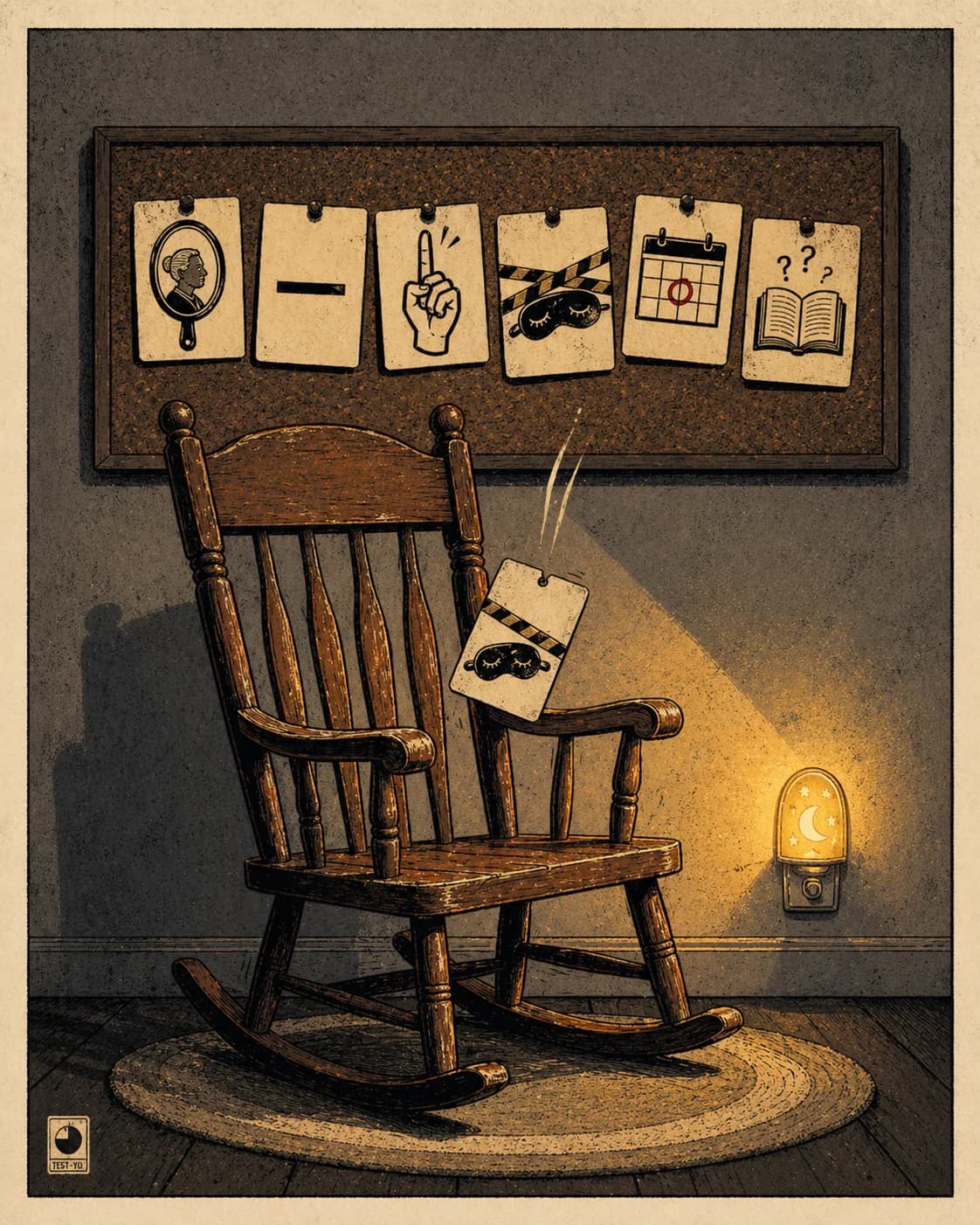
Your answers lead to one of 6 results: "I'll Be Like My Parents", "I'm Not Enough For Them", "Good Parents Don't…", "If I Rest, I'm Failing", "They'll Resent Me", or "I Should Know This Already".
- 24 questions · ~3 min
- Cost: free · no signup
About this test
The sentence about being a parent you're running quietly under. 24 honest items, one verdict on the script costing you presence with your kid.
Methodology
24 items, 4 per belief, 5-point Likert. Dominant-belief scoring across six classic parenting limiting beliefs.
What the results mean
The labels name thoughts you reported, not facts about your parenting or predictions about your child. Family circumstances and access to support need their own attention.
- "I'll Be Like My Parents"
- Your answers suggest concern about repeating patterns you associate with your parents. Notice a specific interaction rather than assuming the past determines your choices. The quiz cannot establish what happened in your childhood or predict the parent you will become.
- "I'm Not Enough For Them"
- Your answers suggest feeling that your efforts still fall short of what your child needs. Consider a particular moment and what support was available. The quoted belief is not a measure of parental worth or proof that more effort is always the answer.
- "Good Parents Don't…"
- Your answers suggest strong rules about what a good parent should never do, especially under other people's gaze. Examine the rule and the child's needs separately. A quiz cannot set a parenting standard or decide how a particular situation should be handled.
- "If I Rest, I'm Failing"
- Your answers suggest interpreting rest as failing your responsibilities. Notice the expectation without deciding you should simply overcome it alone. Practical care arrangements and available support matter, and wanting rest does not tell the quiz anything about your commitment to your child.
- "They'll Resent Me"
- Your answers suggest worrying about how your child may judge you later. The future is not something this quiz can determine. Focus on the interaction you can understand now, including listening and repair, rather than treating fear as evidence of a future outcome.
- "I Should Know This Already"
- Your answers suggest expecting yourself to know how to handle each stage already. Parenting can involve unfamiliar situations even when you have experience. Naming a question and seeking appropriate help does not make the quoted belief a fact about your capability.
If these feelings persist, cause distress or affect daily life, consider speaking with a qualified mental health professional.
How to use your result
Choose a step that fits your circumstances:
- Choose one difficult moment and separate your child's need from the judgement in your self-talk.
- Identify a practical question you could take to a trusted support person or professional.
- Notice one expectation that could be discussed or shared rather than carried alone.
Possible archetypes
- "I'll Be Like My Parents" · Generational-trauma
- You said one thing your mother said and panicked for a week. We both know it.
About: "I'll Be Like My Parents"
You are trying hard not to repeat what hurt you. The good part is awareness and real growth. The hard part is that the past can still run the room if every choice is only a reaction against it. What helps is choosing what your child needs now, not only doing the opposite of what your parents did.
- "I'm Not Enough For Them" · Almost-enough mode
- Every other parent looks like they got the manual. You're winging it.
About: "I'm Not Enough For Them"
You often feel like you are almost enough, but not quite. The good part is that you care and keep trying. The hard part is that no amount of effort feels like proof. What helps is noticing what your child actually receives from you, not only measuring yourself against an imagined perfect parent.
- "Good Parents Don't…" · Look-perfect mode
- You parent one way at home and another at the playground. The kid clocks both.
About: "Good Parents Don't…"
You can start parenting for the people watching. The good part is that you want to do it well. The hard part is that editing yourself in public can pull you away from what your child needs in the moment. What helps is asking, "Would I do this the same way if nobody was watching?"
- "If I Rest, I'm Failing" · Always-on mode
- A weekend off makes you anxious. The bath is now a court case in your head.
About: "If I Rest, I'm Failing"
You feel guilty when you rest. The good part is that you are present and available. The hard part is that exhaustion makes you less patient, less warm and less yourself. What helps is treating rest as part of parenting, because your child also learns from watching you recover.
- "They'll Resent Me" · Future-bill mode
- You're already auditing yourself for their future therapy session.
About: "They'll Resent Me"
You worry your child will resent you later. The good part is that you care about long-term impact. The hard part is that fear can make you overcorrect and miss the child in front of you right now. What helps is repairing real moments instead of trying to control a future story.
- "I Should Know This Already" · Incognito-tab parent
- You google 'is this normal' at 2am and clear your history. We see you.
About: "I Should Know This Already"
You think you should already know how to handle this. The good part is humility and curiosity. The hard part is that shame can keep support out of reach. What helps is remembering that every stage is new the first time you parent through it. Asking for help is part of the job.
Related tests
FAQ + disclaimer
How accurate is this quiz?
This is a self-reflection quiz, not a prediction. It summarises the answers you give here, without establishing a fixed trait or guaranteeing an outcome. It is not a diagnosis or clinical assessment.
Can my result change?
Yes. Different answers, circumstances or interpretations can produce a different result. If you retake it, compare the individual answers and context as well as the label.
Does this tell me whether I am harming my child?
No. It cannot assess safety, parenting quality or a child’s wellbeing. Take specific concerns to an appropriate qualified professional rather than relying on a label.
Does the result prove I will repeat my parents’ patterns?
No. It describes a concern in your answers, not your history or your future behaviour.
Is asking for help a sign that I am not enough?
No. Practical and professional support can be part of parenting. The quiz is a prompt to name a need, not a reason to handle it alone.