 TEST-YO!· Anger Style
Anger Style — What's YOUR anger?
This anger style quiz explores how you describe frustration, from sudden expression to holding things in or pulling away. It is for anyone reflecting on difficult conversations who wants practical language for behaviour, without receiving a diagnosis or excusing harm.
- 3 min
- 16 questions
- No signup
- Free
Full result at the end — no email needed
Possible results · which one are you?
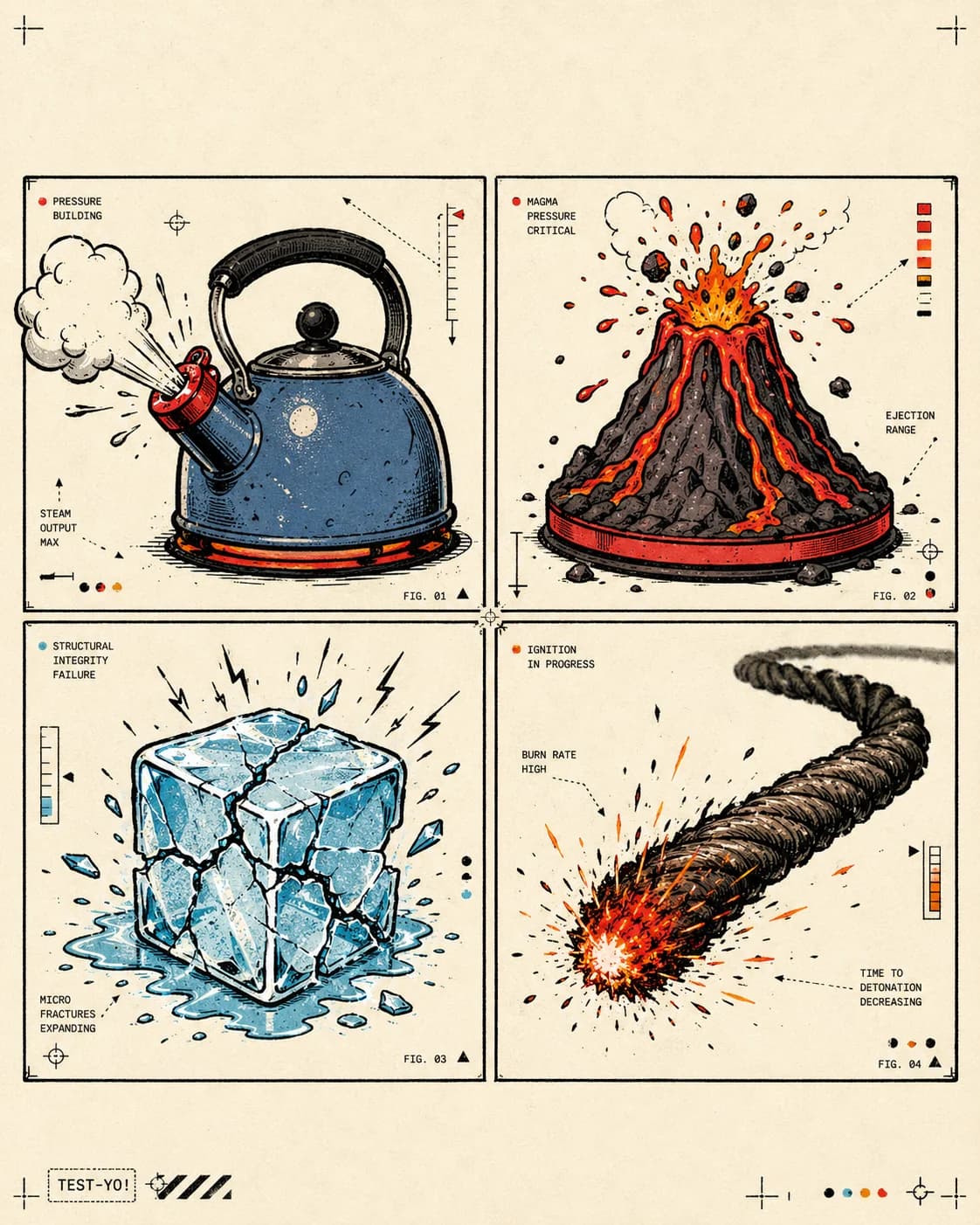
- Volcano
- Slow Burn
- Stuffer
- Cold Front
Quick answer
Your answers lead to one of 4 results: Volcano, Slow Burn, Stuffer, or Cold Front.
- 16 questions · ~3 min
- Cost: free · no signup
About this test
Volcano, slow burn, stuffer or cold front — your anger has a shape, even if you've never named it. 16 honest questions surface the one that actually leads. Most people use a mix; you'll find out which one runs the show.
Methodology
16 self-report items (4 per pattern) on a 5-point Likert scale. Inspired by Spielberger's STAXI dimensions of anger expression. Independent reformulation, not the official instrument.
What the results mean
The four patterns describe answers about behaviour. Anger is a feeling; intimidation, threats and hurtful actions still require responsibility regardless of your label.
- Volcano
- Your answers suggest anger can come out quickly and intensely. Notice early signs and consider a safe pause before continuing a difficult conversation. Directness does not require shouting or intimidation, and the label does not excuse harm or remove responsibility for repair.
- Slow Burn
- Your answers suggest holding onto smaller frustrations until several emerge together. Consider raising one specific concern while it is still manageable. Keeping a private score can leave the other person unaware of what needs attention until the conversation becomes overwhelming.
- Stuffer
- Your answers suggest finding it difficult to acknowledge or express anger. Try describing the feeling and the situation in ordinary words without deciding you must confront someone immediately. This result cannot explain physical symptoms or establish why you experience them.
- Cold Front
- Your answers suggest becoming distant or silent when angry. A pause can help if it is communicated and has a clear return point. Consider explaining what you need rather than leaving another person to guess whether the silence is punishment.
If these feelings persist, cause distress or affect daily life, consider speaking with a qualified mental health professional.
How to use your result
Choose a step that fits your circumstances:
- Recall one recent frustration and name the specific behaviour you want to address.
- If needed, agree on a safe pause and a time to return to the conversation.
- Describe your concern without threats, insults or demands for control.
Possible archetypes
- Volcano · 0 to 100, instantly
- You go zero to nuclear in one sentence and everyone in the room remembers it.
About: Volcano
Your dominant anger style is the Volcano. When you get angry it comes out big and fast, you've raised your voice or slammed something recently, your anger surprises people, and you regret what you said in anger more than you'd like. The good part is honesty — there's no guessing where you stand. The hard part is the wreckage left behind. What helps is the 24-hour rule on anything you're tempted to say in volcano-state.
- Slow Burn · Six-week list
- You stockpile six weeks of grievances, then unload in one sentence.
About: Slow Burn
Your dominant anger style is the Slow Burn. Your anger builds slowly over weeks before you act on it, you keep score of small offences, when you finally bring something up you bring up everything, and you're more sarcastic when you're angry. The good part is patience. The hard part is the recipient gets hit with weeks of compressed material at once. What helps is naming small things small, the day they happen.
- Stuffer · Body pays the bill
- You don't get angry, you get a stomachache. Your body keeps the score.
About: Stuffer
Your dominant anger style is the Stuffer. You tell yourself you're not angry when you clearly are, you get headaches or gut issues or tension instead of saying you're mad, you'd rather suffer in silence than say you're hurt, and you avoid the word "angry" even with people you trust. The hard part is real and physical — anger that doesn't leave you keeps living in you. What helps is one small naming per week: "I felt angry when ___."
- Cold Front · Weaponised silence
- Your anger isn't a yell — it's a closed door for three days. They feel it.
About: Cold Front
Your dominant anger style is the Cold Front. When you're angry you go cold and silent, you've given someone the silent treatment for hours or days, your anger looks like distance not heat, and people know you're angry by what you stop doing, not what you say. The good part is restraint. The hard part is the recipient feels punished without being told why. What helps is the four-word version: "I'm angry about ___."
Related tests
Related reading
The Big Five Personality Traits Explained
What Openness, Conscientiousness, Extraversion, Agreeableness and Neuroticism actually measure — and why researchers trust this model.
How to Stop Holding Grudges Without Dropping Your Boundaries
Work through an old grievance with five practical steps, separate forgiveness from trust, and decide when a clear boundary matters more than reconciliation.
FAQ + disclaimer
How accurate is this quiz?
This is a self-reflection quiz, not a prediction. It summarises the answers you give here, without establishing a fixed trait or guaranteeing an outcome. It is not a diagnosis or clinical assessment.
Can my result change?
Yes. Different answers, circumstances or interpretations can produce a different result. If you retake it, compare the individual answers and context as well as the label.
Does my style excuse something hurtful I said?
No. A result does not excuse harm. Focus on safety, taking responsibility and changing the behaviour rather than defending the label.
Is quiet anger always healthier than a quick outburst?
No. Silence, sarcasm and withdrawal can also affect others. The quiz does not rank patterns as healthy or diagnose anger problems.
When should I seek support?
If anger feels hard to manage, causes harm or affects daily life, consider a qualified mental health professional. Prioritise safety when there is intimidation or violence.