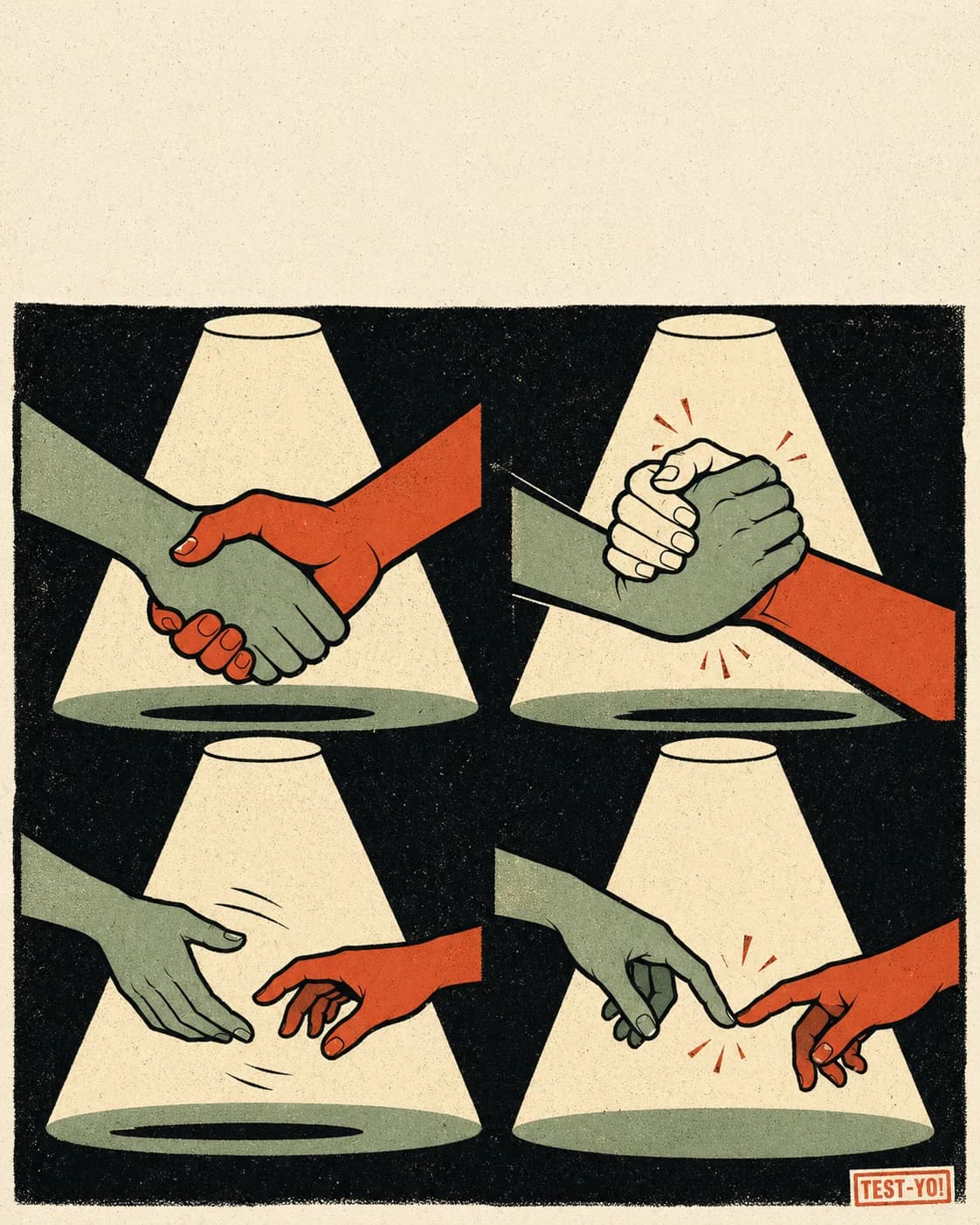
Attachment theory asks how people seek closeness, respond to separation and regulate themselves in important relationships. In adult research, it is better understood as a set of tendencies than as a set of permanent boxes. The same person can respond differently with a partner, friend or family member, and behaviour can change with the situation.
The two dimensions
Many adult attachment measures describe two related but distinct dimensions. Attachment anxiety concerns how strongly someone worries about rejection, abandonment or a partner’s responsiveness. A person higher on this dimension may seek reassurance or monitor signs of distance more often. Attachment avoidance concerns discomfort with dependence, emotional disclosure or closeness. A person higher on this dimension may prefer self-reliance or create distance when intimacy feels demanding.
These dimensions are not diagnoses and they are not moral scores. Low anxiety does not make someone caring, and low avoidance does not guarantee good communication. They describe patterns in thoughts, feelings and behaviour around close relationships.
The ECR-R is a published 36-item self-report measure that scores anxiety and avoidance separately. A different instrument, the ECR-Short Form (ECR-S), was developed by Wei, Russell, Mallinckrodt and Vogel in 2007 as a 12-item short form with six items for each dimension. Fraley, Waller and Brennan’s 2000 paper is the ECR-R source; it is not the source of the short form. Keeping those instruments distinct matters when describing what a short online quiz can and cannot support.
Four familiar patterns
People often turn the two dimensions into four names by dividing each axis into a higher and lower region:
| Anxiety | Avoidance | Common shorthand |
|---|---|---|
| Low | Low | Secure |
| High | Low | Anxious or preoccupied |
| Low | High | Dismissive or avoidant |
| High | High | Fearful-avoidant |
These labels are useful summaries, but the underlying dimensions are continuous. Someone near a dividing line may not fit a neat category, and a person can move around as trust, stress and relationship context change. The “secure” region is not a certificate of perfect relationships; it usually means relatively comfortable closeness and autonomy in the context being considered.
Context changes the picture
Imagine someone who sends several messages after a partner goes quiet. That could reflect attachment anxiety, but it could also reflect a real breach of trust, a previous agreement or an urgent practical problem. Someone who wants time alone after an argument may be using a familiar distancing strategy, or may simply be trying to calm down before speaking carefully. The behaviour alone cannot tell you which explanation is correct.
Attachment research also distinguishes general tendencies from relationship-specific models. A person may feel secure with a long-term friend and guarded with a new partner. Treating one questionnaire result as a complete account of someone’s history, motives or future relationships overstates what the method can say.
A useful reflection exercise
Test-Yo’s 12-item Attachment Style quiz is adapted from the ECR-S (Wei et al., 2007): it keeps the published two-dimension structure with six anxiety and six avoidance items, nine items follow the published ECR-S wording, and the remaining three are reworded or replaced for this website; translated wording applies where applicable. It is an adaptation for this website: the presentation, scoring implementation and four playful quadrant labels are Test-Yo’s own, and this website adaptation has not been independently validated, normed or established as a clinical assessment. It is not the 36-item ECR-R, and the existence of the published ECR-S does not validate this website’s implementation.
Use a result as a starting question: “When I feel uncertain, do I reach for reassurance, create distance, or ask directly what is happening?” Compare the answer across different relationships and recent situations. Look for specific behaviours you could discuss or change, rather than treating a label as your identity.
What the theory cannot do
An attachment label cannot diagnose a mental-health condition, establish what happened in childhood, read a partner’s intentions or predict whether a relationship will succeed. It cannot replace a conversation, a careful assessment or professional support. If fear, conflict, coercion or distress is persistent, a qualified mental-health professional can help with the situation; a quiz is not therapy.
The most responsible use of attachment language is modest: describe a pattern, check it against context, and leave room for change and disagreement. The two dimensions can give you a vocabulary for reflection without turning a complicated relationship into a fixed type.