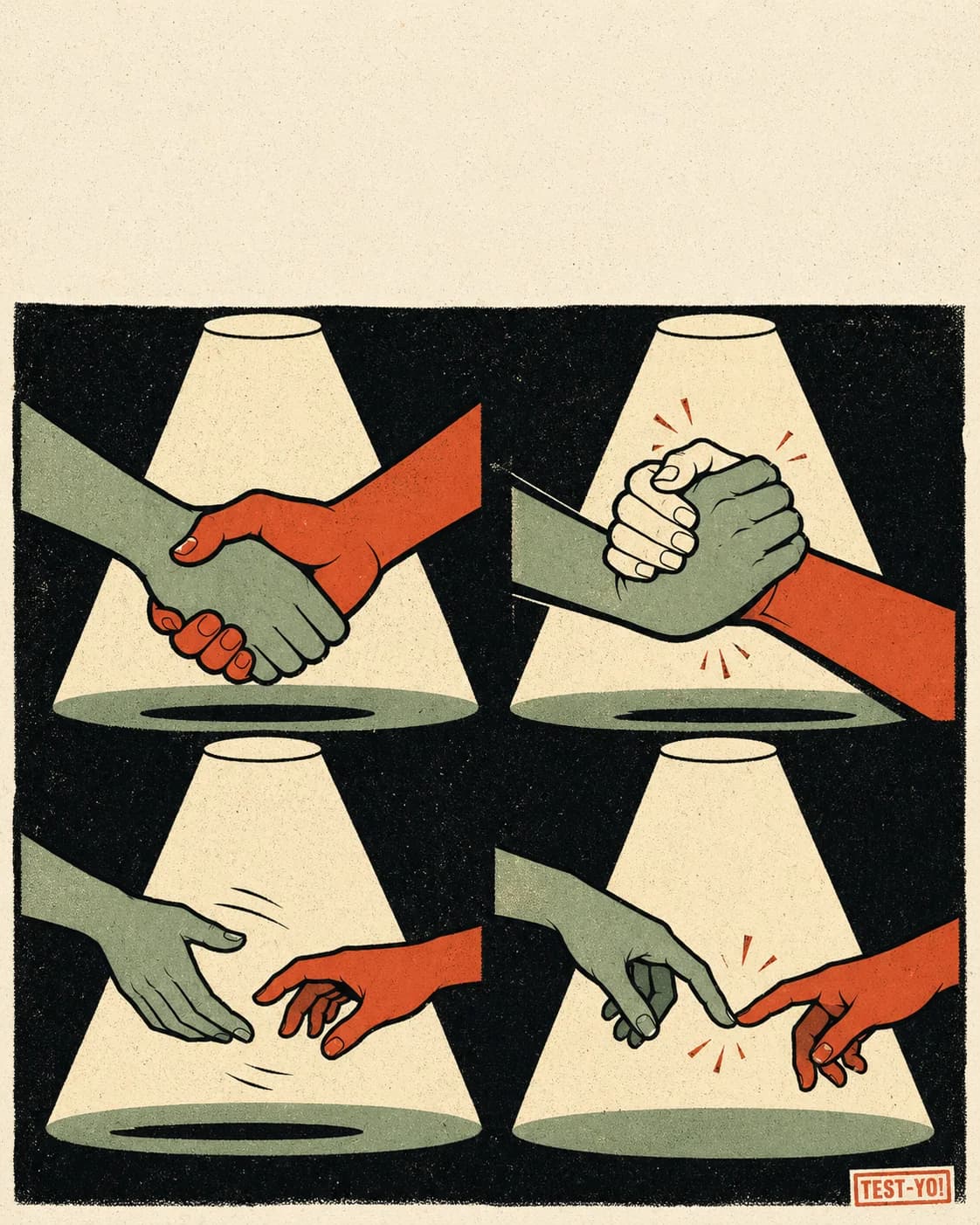
What does applying love languages to children mean?
Gary Chapman and Ross Campbell wrote a children's version of the love languages book. Its existence does not make the categories a child assessment, and this guide makes no claims from that book. Here, applying the framework means offering different ways to show everyday care, then paying attention to the child's own words, preferences and situation.
The categories are words of affirmation, quality time, acts of service, receiving gifts and physical touch. For the broader framework and its limitations, see our love languages list and examples. Research on love languages is limited and mixed. It is a popular self-reflection model, not a validated personality measure, and this page does not claim that matching a child's supposed language improves their development.
The examples below are original suggestions parents can try, not developmental benchmarks or findings from a study. Age bands organise the situations; they do not set deadlines for how a child should respond. Offer warmth in several forms rather than making one category the only route to care. A child does not need to demonstrate a preference before receiving attention or help.
Toddlers: offer simple choices in ordinary moments
With a toddler, start with a situation you can see rather than a theory about their personality. After a tiring outing, you could offer a quiet book together, help with shoes or a hug if wanted. If the child chooses the book, that is information about this moment. It does not establish that quality time is their permanent language.
Words can describe something concrete you noticed: “You kept trying to fit that piece.” Shared attention might mean joining their game without taking it over. Practical help might mean holding a coat while they find the sleeve. A small gesture could be keeping their drawing somewhere they can see it. These are possible ways to show care, not tasks you must complete in sequence.
For touch, offer rather than require a hug, holding hands or sitting close. If a toddler turns away, make room and offer another way to connect. Do not make affection a condition for greeting relatives or receiving kindness. A parent can explain to another adult that the child can wave instead, without presenting the decision as a rejection or asking the child to manage adult disappointment.
Try describing the immediate choice: “Shall I sit here, or would you like me beside you?” Keep your interpretation tentative, especially when the child cannot explain much in words. Consider hunger, tiredness, unfamiliar surroundings and the activity itself before attributing a response to a love language. You are gathering context for care, rather than scoring a small person's reactions.
School-age children: invite detail without setting an exam
For a school-age child, try asking about a recent event. “When you were disappointed after the game, what helped?” leaves more room than “Your language is words, isn't it?” They might mention a conversation, someone making a snack or having space before joining the family again. Accept an answer that does not fit your categories, including “I don't know.”
You could acknowledge effort without comparing siblings, make time for an activity the child chooses, or ask before helping with a task. A thoughtful gesture could be remembering the library book they wanted to borrow. None needs to become a reward for affection. Keep everyday care separate from bargains about whether the child gives you a hug, thanks you enthusiastically or behaves in a particular way.
Suppose a child becomes upset when you help with a project. It would be premature to decide they dislike acts of service. They may have wanted to finish independently or had a different plan. Ask what they wanted you to do and offer a specific choice next time. Helping can mean finding materials while leaving the child in charge of the design.
Make room for individual preferences without creating a family ranking. One child may want to talk after school while another wants a quiet transition. You can explain how both will get attention, rather than announcing that they have different types. Revisit arrangements when they stop working. The child's description of their experience matters more than keeping your interpretation consistent.
Teenagers: ask directly and protect privacy
With a teenager, an invitation can be more useful than a surprise. Ask whether they want company on a walk, a lift to an activity or someone to listen before offering advice. Words of encouragement can stay private if that is what they prefer. A public compliment that you intend warmly may feel uncomfortable; ask how they would like achievements acknowledged.
A teenager can enjoy a shared activity without wanting to explain every part of their day. Avoid treating privacy as evidence that quality time is unimportant. Agree what a check-in might look like and allow an honest answer about timing. If a conversation is needed, say why rather than presenting it as a test of whether they appreciate your care.
The site love language test is for adults and teens who can self-report. It is not for labelling young children, and a parent should not answer on a child's behalf to produce a type. A teen who chooses to try it can keep the result private, question it or decide that several preferences fit. Sharing it should remain their choice.
If they do want to discuss a result, ask which example sounded familiar and which did not. Do not use a profile to settle an argument or insist that they should welcome a particular gesture. A request for space can coexist with wanting support. The aim is a conversation they can correct, rather than a report an adult uses as authority over them.
What not to conclude from a child's reaction
A child is still developing. A single happy response to a present does not establish a gift-based identity, and declining a hug does not measure affection for a parent. Nor does wanting your attention prove that the child only values quality time. Consider the immediate need and what the child actually communicates. Leave room for preferences you have not yet understood.
Avoid comparing siblings, repeatedly testing reactions or withholding other forms of care to see which one is missed. Those exercises turn the relationship into an experiment the child did not choose. A category also cannot explain every disagreement, school difficulty or change in behaviour. This guide offers no diagnostic or therapeutic conclusions. Persistent concerns are a reason to consult an appropriately qualified professional.
Talk about feelings and requests instead of types
Begin with an observation that does not assign a motive: “You got quiet when I started helping.” Follow with an open question such as “What was that like for you?” Listen before supplying your own explanation. If the child struggles for words, offer possibilities without requiring agreement: disappointed, frustrated, tired, or something else. Let them reject the options you suggest.
Then separate the feeling from the next request. A child can be disappointed that you are busy, and you can still need to finish a task. Explain when you can return, offer a realistic choice and follow through. If you misunderstood, acknowledge it plainly. Repair can involve asking what would help now rather than promising to remember a supposed language forever.
Parents can reflect on their own habits using what kind of dad are you? or what kind of mom are you?. These are prompts about the adult's self-report, not evaluations of a child or measures of parenting quality. Use anything relevant to name a small action you can change, without making the child responsible for validating your result.
For your own preferences, the free love language quiz can start a separate reflection on giving and receiving care. Keep that reflection separate from interpreting your child's behaviour. You might discover that you like solving problems, while your child asks you to listen first. The useful outcome is permission to ask again and adjust, rather than a label either of you must carry.
Independent guide, not affiliated with Gary Chapman or Northfield Publishing. The 5 Love Languages is their trademark.