 TEST-YO!· What Kind of Son
What Kind of Son Do You Actually Have?
Answer 24 statements about how your son actually behaves at home — not how he behaves on his best day at grandma's.
- 3 min
- 24 questions
- No signup
- Free
Full result at the end — no email needed
Possible results · which one are you?
- Golden Retriever
- Vault
- Tornado
- Old Soul
- Class Clown
- Little Engineer
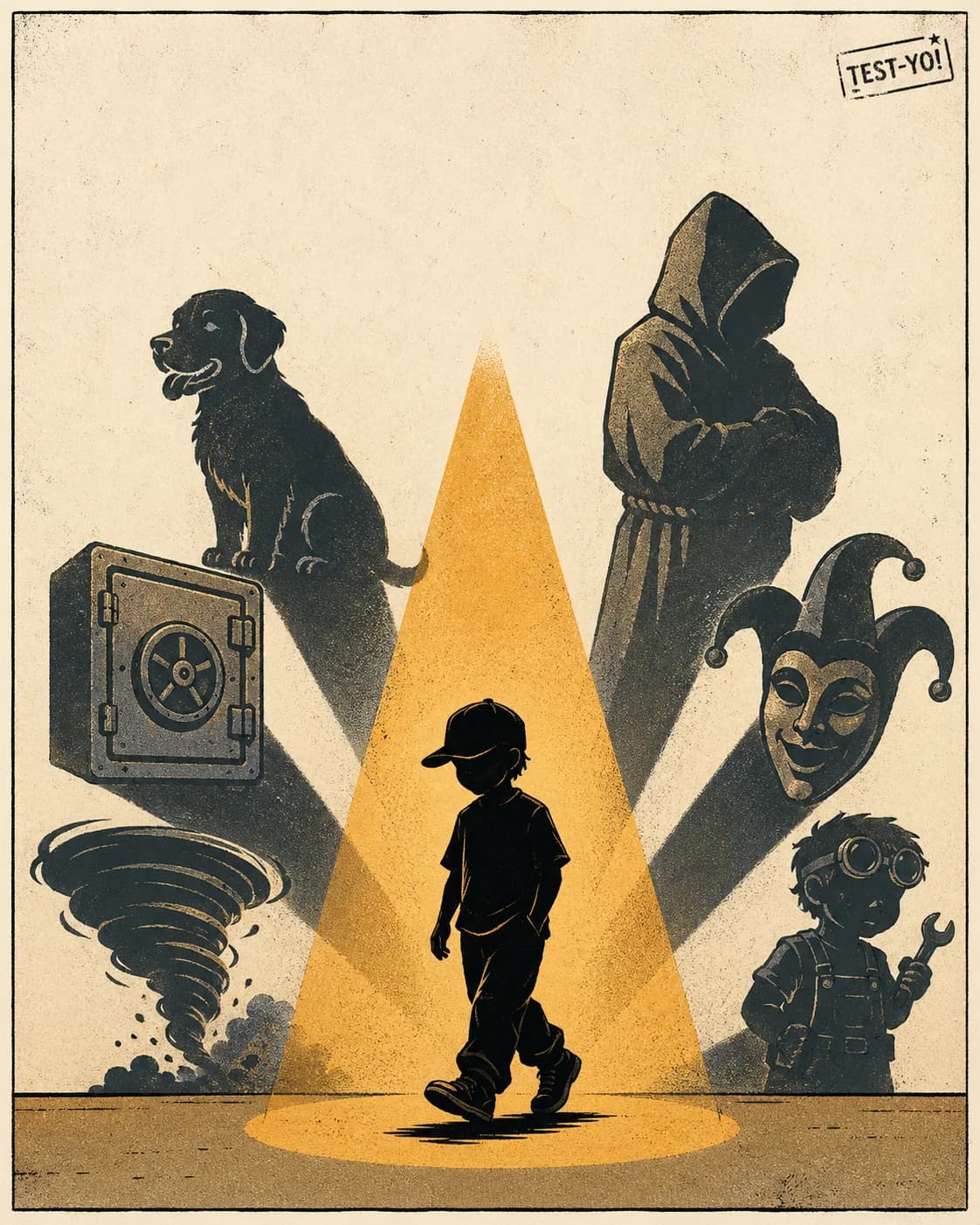
Quick answer
Your answers lead to one of 6 results: Golden Retriever, Vault, Tornado, Old Soul, Class Clown, or Little Engineer.
- 24 questions · ~3 min
- Cost: free · no signup
About this test
A parent quiz, not a kid quiz. 24 quick statements about how your son actually behaves at home, one honest verdict on the kind of son you're raising — strengths, watch-outs, and what he needs from you next.
Methodology
24 items, 4 per archetype, 5-point Likert. Dominant-archetype scoring across six son types. Parent-rated, not self-rated.
What the results mean
A result here summarises what you noticed about your son while answering, not what he must be like everywhere. Home, friendships and settings can draw out different habits. Use the descriptions to consider how you respond to him, including the moments that do not fit.
- Golden Retriever
- You describe warmth, enthusiasm and affection that is easy to spot in everyday company. He may enjoy sharing small achievements or including people in an activity. Watch for expecting cheerfulness whenever you meet; someone who usually seems upbeat still needs permission to be disappointed, quiet or uninterested in a hug.
- Vault
- Your answers suggest that your son often keeps thoughts private or shares them on his own timetable. A brief answer at dinner may say little about how much he has experienced. Watch whether repeated questions feel like pressure; relaxed company can offer another opening without requiring an immediate conversation.
- Tornado
- You notice movement, fast changes of activity and enthusiasm that can fill the available space. Busy days may go more smoothly when there is a clear place for that energy. Watch whether every interaction becomes a correction; describe a specific limit while also noticing what he is trying to do.
- Old Soul
- You describe thoughtful questions and sensitivity to the mood around him. He may enjoy a serious conversation or notice when someone seems preoccupied. Watch for relying on his apparent maturity to handle adult worries; being perceptive does not make him responsible for settling tensions or looking after your feelings.
- Class Clown
- Your answers highlight humour, playful timing and a knack for getting a reaction. Jokes may help him join a group or make a frustrating moment more bearable. Watch whether laughter hides a question he finds difficult to ask; allow a serious response without making the conversation feel like a performance.
- Little Engineer
- You notice close attention to how things work, detailed explanations and enjoyment of taking ideas apart. Exploring a question together can be a satisfying way to connect. Watch whether enthusiasm becomes a demand to excel; room for unfinished projects and changing interests matters alongside encouragement of a current fascination.
Keep any result optional in family conversations and respect his wish to leave it private.
How to use your result
Try responding to the person behind the description:
- Choose a moment when his behaviour surprised you.
- Ask about an interest without turning the answer into a lesson.
- Let a shared activity include quiet stretches as well as talking.
What this quiz is and is not
Family self-reflection is the purpose here; this is not a diagnosis or developmental assessment. A parent’s answers provide one perspective, not a complete account of a son.
Possible archetypes
- Golden Retriever · Pure sunshine son
- He'd hug you in front of his entire class. We both know it.
About: Golden Retriever
Your son shows love easily. He hugs, gives, shares and makes people feel wanted. The good part is a warm bond that is easy to feel. The hard part is that children who give a lot do not always know how to ask for what they need. What helps is teaching him that kindness is not the same as pleasing everyone. He can be generous and still have boundaries.
- Vault · Mama's-vault son
- Asking him about his day is a hostage negotiation. We both know it.
About: Vault
Your son keeps a lot inside. That does not mean he has nothing to say; it means he needs time and safety before he opens up. The good part is depth and loyalty. The hard part is that you may have to guess what he feels, and he may carry worries alone. What helps is being available without pressure. Ask small, specific questions and leave the door open.
- Tornado · Domestic disaster
- He has two speeds: full sprint and asleep. You have no nervous system left.
About: Tornado
Your son has big energy. He moves fast, feels loudly and can fill a whole room in minutes. The good part is joy, honesty and life. The hard part is that his energy can exhaust you and other people may label him before they understand him. What helps is giving him safe outlets, clear structure and a parent who protects their own rest too.
- Old Soul · Tiny philosopher son
- He asks about death between bites of pasta and reads your mood before you do.
About: Old Soul
Your son notices more than most kids his age. He asks big questions, reads moods and thinks deeply. The good part is real sensitivity and conversation. The hard part is that he can start carrying adult worries too early, including yours. What helps is letting him be thoughtful without making him responsible for adult feelings. Remind him often that he is still the child.
- Class Clown · Pocket comedian
- You laughed and had to pretend you didn't. Reports say 'bright, but…'.
About: Class Clown
Your son knows how to make people laugh. He reads the room and uses humor to connect. The good part is charm, quick thinking and social courage. The hard part is that he may start believing he has to perform to be loved. What helps is noticing him when he is quiet, serious or ordinary. He needs to know the non-funny version of him matters too.
- Little Engineer · TED-talk in a body
- He took the toaster apart and now lectures you on dinosaurs at 7am.
About: Little Engineer
Your son can focus deeply on what interests him. He builds, studies, tests and explains with real patience. The good part is curiosity and a mind that can stay with hard problems. The hard part is that transitions, surprises and sudden changes may feel bigger to him than they look from the outside. What helps is giving warnings before changes and respecting the focus instead of treating it as stubbornness.
Related tests
FAQ + disclaimer
My son is more than one of these — which do I pick?
Most boys are. The result names his dominant archetype; his secondary often shows up in the breakdown too.
Can I take it for more than one son?
Yes — take it once per son. Brothers often land on completely different archetypes, which is half the fun.
Will his archetype change as he grows up?
Some shift, most don't — the core temperament tends to stay, even if how it shows up matures.
Is there a "best" archetype?
No. Each one comes with a real strength and a real cost. The point is to see him clearly.