 TEST-YO!· Apartment Vibe
What Does Your Apartment Say About You?
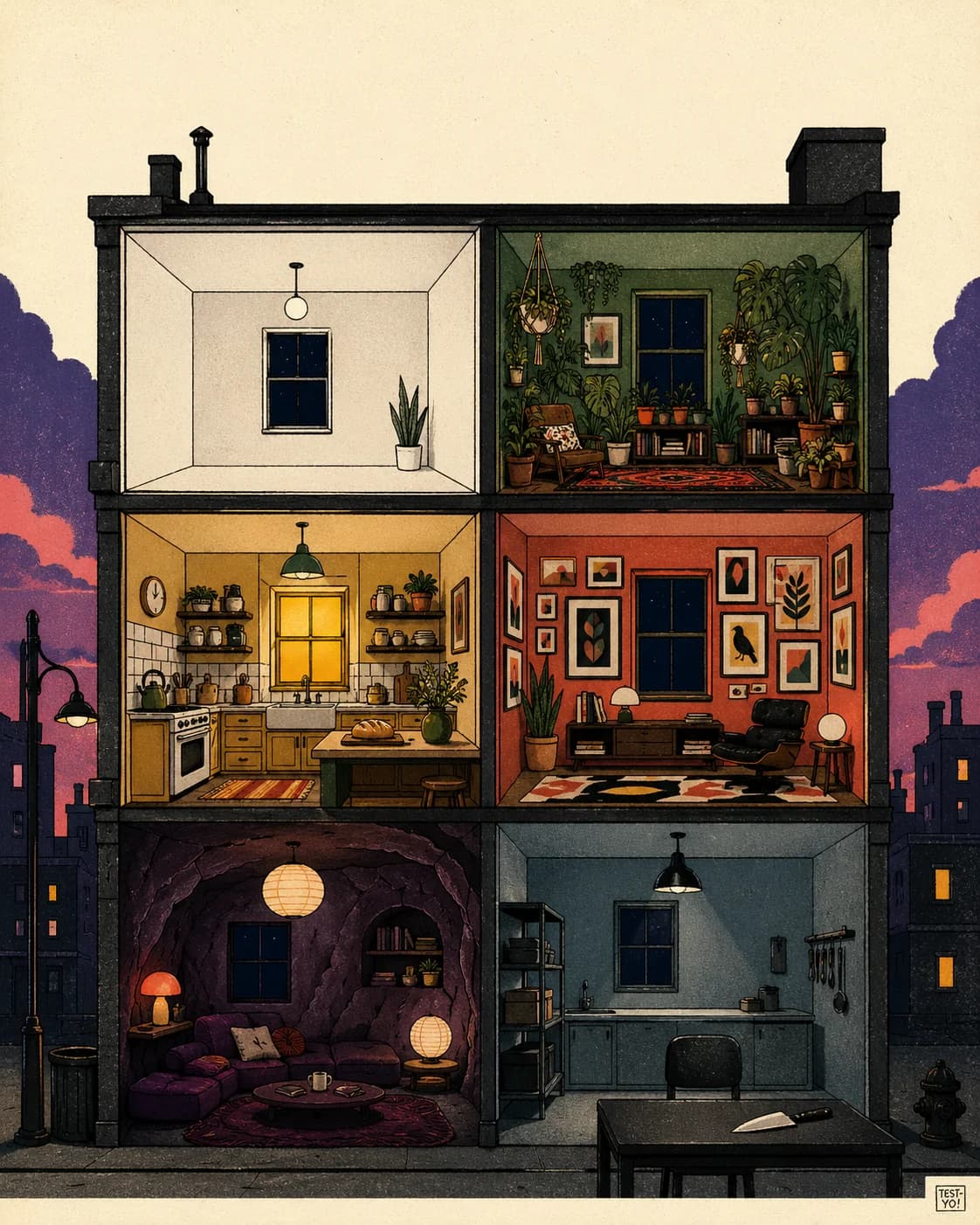
This apartment vibe quiz explores what you want a home to feel like, from visual simplicity to warmth, privacy and function. It is for renters, housemates or curious homebodies seeking ideas within their existing space, without shopping instructions or judgements.
- 3 min
- 24 questions
- No signup
- Free
Full result at the end — no email needed
Possible results · which one are you?
- Minimalist
- Maximalist
- Cottage
- Gallery
- Cozy Cave
- Functional
Quick answer
Your answers lead to one of 6 results: Minimalist, Maximalist, Cottage, Gallery, Cozy Cave, or Functional.
- 24 questions · ~3 min
- Cost: free · no signup
About this test
Your space is a self-portrait. 24 honest items, one verdict on what you've actually been making.
Methodology
24 items, 4 per archetype, 5-point Likert. Dominant-archetype scoring across six home style types.
What the results mean
These six labels describe preferences in your answers. They do not judge your home, budget or ability to decorate, and a shared space can reflect several preferences.
- Minimalist
- Your answers favour a clear, calm space that feels easy to reset. Consider which simple arrangements help daily life rather than treating every untidy surface as failure. A preference for less visual detail can still leave room for ordinary activity and memories.
- Maximalist
- Your answers favour visible color, objects and stories that make a home feel personal. Notice what you enjoy seeing and where more empty space might feel comfortable. The result does not require adding possessions or keeping things that no longer work for you.
- Cottage
- Your answers favour warmth, familiar textures and a slower, lived-in atmosphere. Consider which existing details create that feeling and which practical needs still deserve attention. A comfortable home can support time outside as well as quiet days spent indoors.
- Gallery
- Your answers favour an intentional space with carefully chosen things on display. Notice whether arranging it is enjoyable or feels like a demand to impress visitors. Your home can include useful, unfinished and private areas without every corner being ready to show.
- Cozy Cave
- Your answers favour privacy, comfort and a space for stepping away from demands. Consider what makes that retreat feel supportive and how you want guests to experience it. You can welcome someone on your terms without turning home into a performance.
- Functional
- Your answers favour a home that works reliably for everyday tasks. Notice the arrangements that save effort and any small detail that makes being there pleasant. Practicality and visual enjoyment can coexist without a renovation or a different set of belongings.
How to use your result
Choose a step that fits your circumstances:
- Name one place in your home that already supports your day.
- Try a reversible change such as moving a light or clearing one useful surface.
- Discuss shared-space needs with housemates before changing their belongings or routines.
Possible archetypes
- Minimalist · Empty-surface religion
- A second mug on the counter ruins your whole day. We both know it.
About: Minimalist
You like a home that feels clear, calm and easy to reset. The good part is that your space rarely overwhelms you. The hard part is that mess can start to feel like a personal failure, even when it is just life happening. What helps is leaving room for normal human chaos without treating it as a threat.
- Maximalist · More is more, always
- There is no surface in your house. Only objects on objects.
About: Maximalist
Your home tells your story out loud. Objects, color and memories make the place feel alive. The good part is that your space feels personal and hard to copy. The hard part is that too much visual noise can drain you before you notice. What helps is keeping the story, but giving your eyes a few quiet places to rest.
- Cottage · Sourdough-starter energy
- Your kitchen smells like bread on a Tuesday. On purpose.
About: Cottage
You want your home to feel warm, slow and lived in. The good part is that people can relax there. The hard part is that comfort can become hiding when life outside feels too much. What helps is using home as a place to refill, not a place to disappear from the world completely.
- Gallery · Walking Architectural Digest
- Every guest gets the unsolicited tour. You both pretend they didn't.
About: Gallery
You think carefully about what people see when they enter your home. The good part is taste, intention and a space that feels considered. The hard part is that home can start to feel like it must always be presentable. What helps is letting some corners be useful, unfinished or ordinary.
- Cozy Cave · Built for the body, not the post
- Lights low, blanket on, door locked. The world can wait.
About: Cozy Cave
Your home is built around comfort, privacy and recovery. The good part is that it honestly supports you. The hard part is that hosting can feel like becoming a different person, and guests may not immediately understand your world. What helps is adding a few small signals of who you are without turning your home into a stage.
- Functional · Decor is silly, actually
- If it does not have a job, it does not live here. Pretty for no reason is not your thing.
About: Functional
You want your home to work first. The good part is that your space is useful, honest and not fake. The hard part is that function alone may not comfort you when you are tired or low. What helps is adding beauty in practical ways, like better light, a good blanket or one object you enjoy seeing every day.
Related tests
FAQ + disclaimer
How accurate is this quiz?
This is a self-reflection quiz, not a prediction. It summarises the answers you give here, without establishing a fixed trait or guaranteeing an outcome.
Can my result change?
Yes. Different answers, circumstances or interpretations can produce a different result. If you retake it, compare the individual answers and context as well as the label.
Does this tell me what furniture to buy?
No. It explores preferences, not a shopping list or design assessment. Start with what you already have and the limits of your space.
Can a small or rented room fit my result?
Yes. The labels describe preferences rather than property types. You can explore a detail within tenancy rules, access needs and shared arrangements.
What if my housemate has another vibe?
Use the results to discuss shared and private areas. Neither label determines whose taste should take priority.