 TEST-YO!· Sex Drive Type
What's Your Drive Type, Actually?
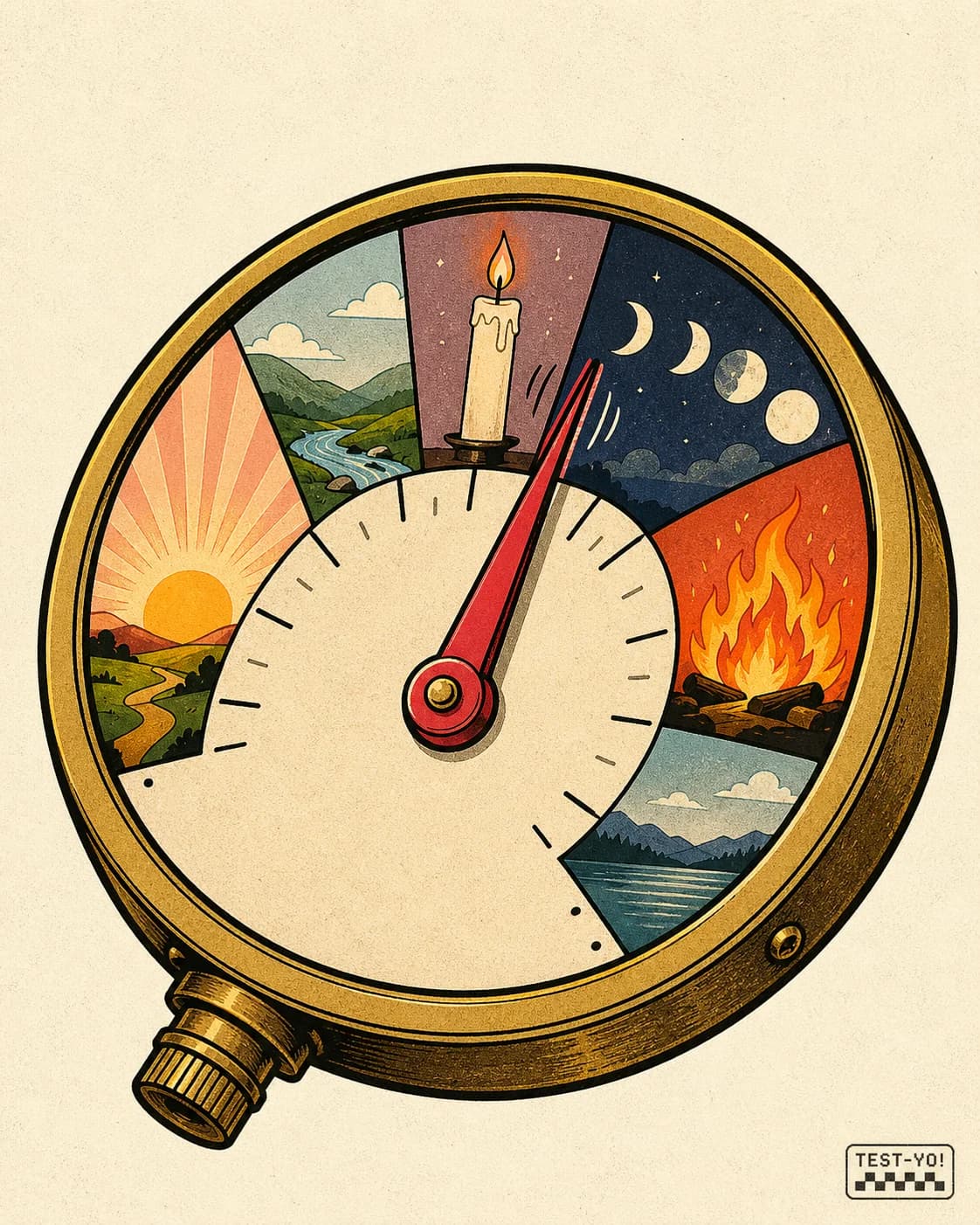
Spontaneous, Responsive, Slow-Burn, Seasonal, High-Volume, Low. The 6 drive types — find out yours.
- 3 min
- 24 questions
- No signup
- Free
Full result at the end — no email needed
Possible results · which one are you?
- Spontaneous
- Responsive
- Slow-Burn
- Seasonal
- High-Volume
- Low-Drive
Quick answer
Your answers lead to one of 6 results: Spontaneous, Responsive, Slow-Burn, Seasonal, High-Volume, or Low-Drive.
- 24 questions · ~3 min
- Cost: free · no signup
About this test
Inspired by Emily Nagoski's responsive vs spontaneous desire model, plus intensity patterns. 24 honest items.
Methodology
24 items, 4 per type, 5-point Likert. Inspired by Nagoski's spontaneous-vs-responsive model and population intensity patterns.
Possible archetypes
- Spontaneous · Wants it Tuesday
- You can be at the dentist and suddenly want it. Your brain has no chill.
About: Spontaneous
For you, desire often appears on its own. You may not need much context, planning or warm-up to know what you want. The good part is that your own desire usually feels clear to you. The hard part is being with someone whose desire starts later, after closeness or touch has already begun. They may read your quick desire as pressure, and you may read their slower start as rejection. Neither has to be true. Your rhythms are just different, so talk about pace instead of treating it as a love problem.
- Responsive · Warm me up first
- You don't want it. Then they kiss your neck and now suddenly you do. Iconic.
About: Responsive
For you, desire may not show up first. It often appears after closeness, touch, flirting or a good moment has already begun. This is normal, and it does not mean your desire is fake or low. The good part is that once the right context is there, your desire can be very real. The hard part is that a spontaneous partner may think you are not interested before you have had time to warm up. Explain that your desire often starts after the beginning, not before it.
- Slow-Burn · Candle at noon
- You need a whole-day arc, not a 10-minute window. We've all heard about it.
About: Slow-Burn
Your desire is not off. It just needs time. You may need hours of emotional, mental or physical build-up before you feel fully ready. The good part is that desire can become deep and intense when the pace fits you. The hard part is that modern life often rushes everything. Without enough space, your partner may think you are not interested, and you may start believing that too. What is really happening is simpler: you are still warming up. Protect the time you need.
- Seasonal · Hibernate, then go
- Two weeks feral, three weeks asleep. Your libido is a moon phase.
About: Seasonal
For you, desire changes with your life. Sleep, stress, hormones, mood, workload or the season can all affect it. The good part is that your body gives you useful information: low desire may be a sign that something else needs care. The hard part is that a partner who wants predictability can feel confused, and you may treat a low week like a personal problem. Try to look for the cause before blaming yourself. Often the issue is stress, tiredness or life pressure, not the relationship itself.
- High-Volume · Always-on, no breaks
- You think about it like other people think about lunch. Constantly. Loudly.
About: High-Volume
Your baseline desire is high. You may think about sex often and feel ready more easily than many people. The good part is that your desire is usually clear, direct and easy to initiate. The hard part is a mismatch with a lower-drive partner. You may feel rejected, while they may feel pressured. That does not automatically mean love is missing. It means the two of you need to name the gap and decide how to handle it together, instead of leaving you to carry it alone.
- Low-Drive · Rather sleep, tbh
- You'd swap it for a nap and a snack and not lose any sleep. Literally.
About: Low-Drive
You do not carry desire as a constant background feeling. That can be completely normal. Some people simply have a lower baseline drive, and it is not automatically a problem. The good part is that you may make choices from connection rather than impulse. The hard part is that a higher-drive partner can read the gap as rejection, and you may feel pressure to fix yourself. It can be useful to check stress, health and medication factors. After that, give yourself permission to be honest about where you are.
Related tests
Related tests
FAQ + disclaimer
Is "responsive" the same as low drive?
No — responsive desire is normal, healthy and the most common pattern for women. The drive is real, it just shows up after warmth-up.
Should both partners take it?
Yes — drive mismatch is one of the biggest sources of bedroom tension and very fixable when both know.