 TEST-YO!· Music Taste
What Does Your Playlist Say About You?
Explore how you use music for memories, discovery, connection, emotion and energy. This quiz is for anyone curious about their listening habits, describing the relationship you have with songs rather than judging your taste or analysing a streaming account history.
- 3 min
- 24 questions
- No signup
- Free
Full result at the end — no email needed
Possible results · which one are you?
- The Curator
- The Nostalgic
- The Mainstream Lover
- The Sad Indie
- The Hype Beast
- The Niche Snob
Quick answer
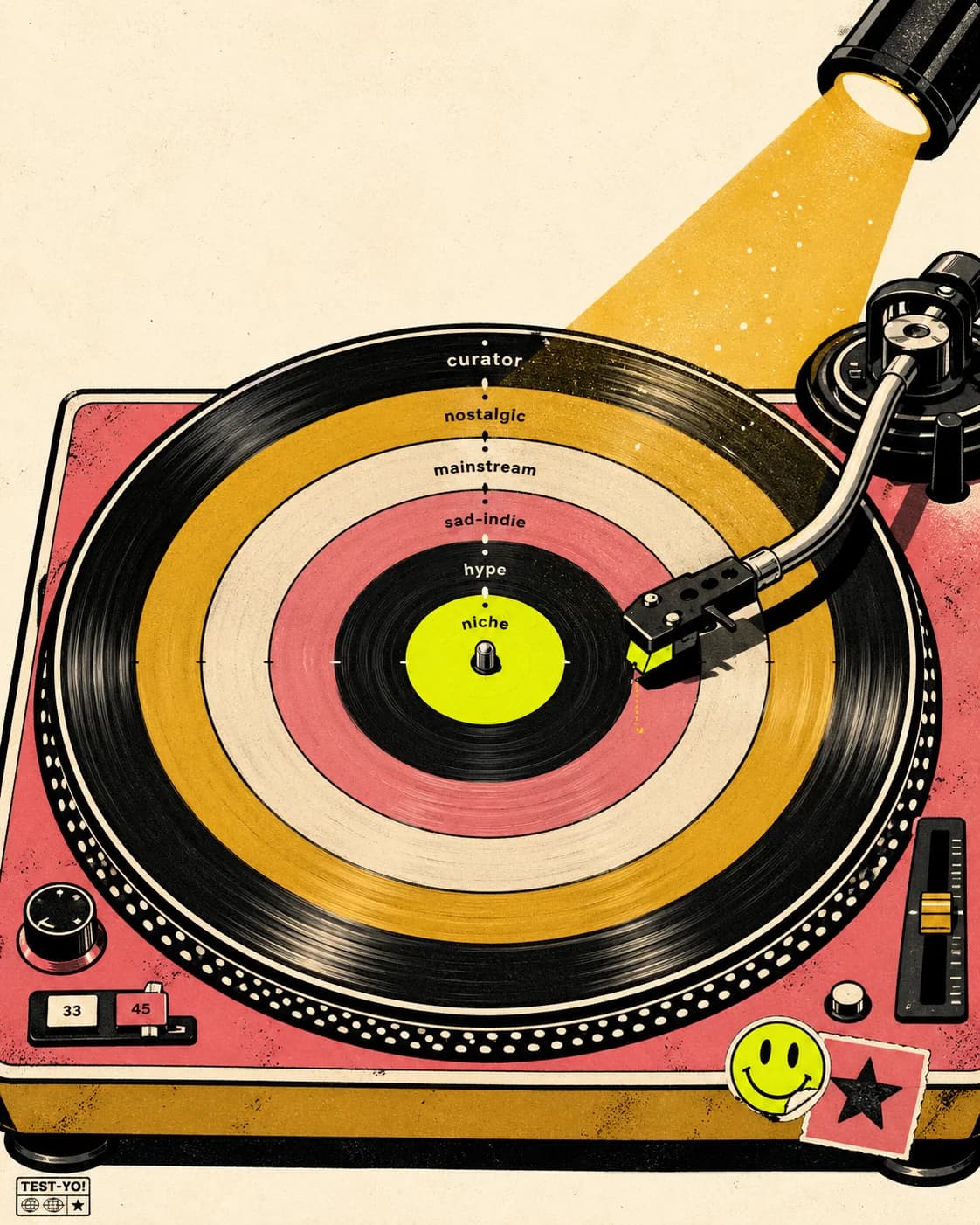
Your answers lead to one of 6 results: The Curator, The Nostalgic, The Mainstream Lover, The Sad Indie, The Hype Beast, or The Niche Snob.
- 24 questions · ~3 min
- Cost: free · no signup
About this test
Your Spotify Wrapped already told you the data. 24 honest items tell you what your taste actually means.
Methodology
24 items, 4 per archetype, 5-point Likert. Dominant-archetype scoring across six music-taste types.
What the result types mean
These six archetypes describe ways of listening, not exclusive genres or measures of taste. You can enjoy several approaches and recognise more than one description.
- The Curator
- You enjoy choosing songs to create a mood, mark a memory or say something to another person. The care involved can be meaningful even when others do not notice every choice. Make space for playlists that you enjoy creating for yourself.
- The Nostalgic
- Songs connect you strongly with past places, people or periods of your life. Familiar music can hold memories without needing to be your only soundtrack. Try giving a new experience its own song alongside the older favourites.
- The Mainstream Lover
- You enjoy a song because it connects with you, including popular hits. The result does not say your taste is shallow or less personal. Notice what you like about a track without feeling that you need to defend its popularity.
- The Sad Indie
- You gravitate towards music that gives difficult or tender feelings room. Notice whether a listening session feels expressive, comforting or leaves you stuck in a mood you want to change. This music preference does not indicate a mental health condition.
- The Hype Beast
- You use music for movement, energy and momentum. Think about the songs that help you start an activity or enjoy a shared moment. You can keep that intensity while also exploring what quieter listening offers in another setting.
- The Niche Snob
- You enjoy discovery and finding artists beyond familiar recommendations. Notice whether rarity has become more important than enjoyment. You can share a discovery, welcome new listeners and still value your own connection to the music.
How to use your result
Start with a situation you recognise, then choose one useful step:
- Choose a song that fits your result and describe what it does for you.
- Build a short playlist for a different purpose, such as a new memory or a quieter evening.
- Swap one recommendation with a friend and ask what they hear in it.
- Keep enjoying familiar favourites; the result is not a prescription to change genres.
Possible archetypes
- The Curator · Playlist-as-love
- You spent 47 minutes on a lista title. They didn't notice. You did it again.
About: The Curator
For you, a lista is a way to say something. You use songs to name a mood, remember a person or build a feeling. The good part is care and taste. The hard part is that people may not realize how personal the gift is. What helps is making listas because you enjoy the act, not because everyone will understand the work.
- The Nostalgic · Time-machine ear
- A song from 2011 plays. You're 17 again. The room hasn't moved. Time has.
About: The Nostalgic
Music takes you back quickly. Certain songs can bring back whole years, places and versions of you. The good part is a strong connection with your own past. The hard part is that you can spend more feeling what you had than noticing what you have. What helps is letting new memories earn songs too.
- The Mainstream Lover · Pop-with-no-shame
- You know every word the snobs are pretending not to know. They hum it.
About: The Mainstream Lover
You do not need a song to be rare to love it. If it hits, it hits. The good part is openness and joy without pretending. The hard part is that people may mistake popular taste for shallow taste. What helps is trusting your ear without always defending it.
- The Sad Indie · Rainy-window indie
- You picked a song that takes 47 seconds to start. You're crying by second 12.
About: The Sad Indie
You like music that gives feelings space. Slow, sad or tender songs help you process what is inside. The good part is emotional depth. The hard part is that the mood can start choosing you instead of the other way around. What helps is keeping the songs, but noticing when you need music that lifts you out too.
- The Hype Beast · Bass-in-chest mode
- You can't hear emotional damage over the sub-bass. That's the point.
About: The Hype Beast
You want music you can feel in your body. It helps you move, train, drive, go out or get your energy back. The good part is that sound gives you fuel. The hard part is that quieter music may feel useless before you give it a chance. What helps is letting some songs move your mood, not only your body.
- The Niche Snob · Early-discovery ear
- They got 100k monthly listeners and you started grieving. They were YOUR thing.
About: The Niche Snob
You like discovering artists before everyone else does. The good part is deep taste and real curiosity. The hard part is that staying ahead can become part of your identity, so popularity feels like loss. What helps is remembering that loving something first is not the only way to love it well.
Related tests
FAQ + disclaimer
How accurate is this music taste test?
It reflects how you describe your listening habits. It cannot infer a complete personality, judge musical knowledge or predict every song you will enjoy.
Is the quiz scientific?
No. This is a self-reflection quiz with informal listening archetypes, not a validated personality assessment or a psychological reading of your playlist.
Can my music archetype change?
Yes. New experiences, routines, friends and discoveries can change how you listen. You may also use music differently in different situations.
Do I need Spotify or a listening history?
No. The quiz uses your answers to statements about listening. It does not require a streaming account, import playlists or analyse account data.