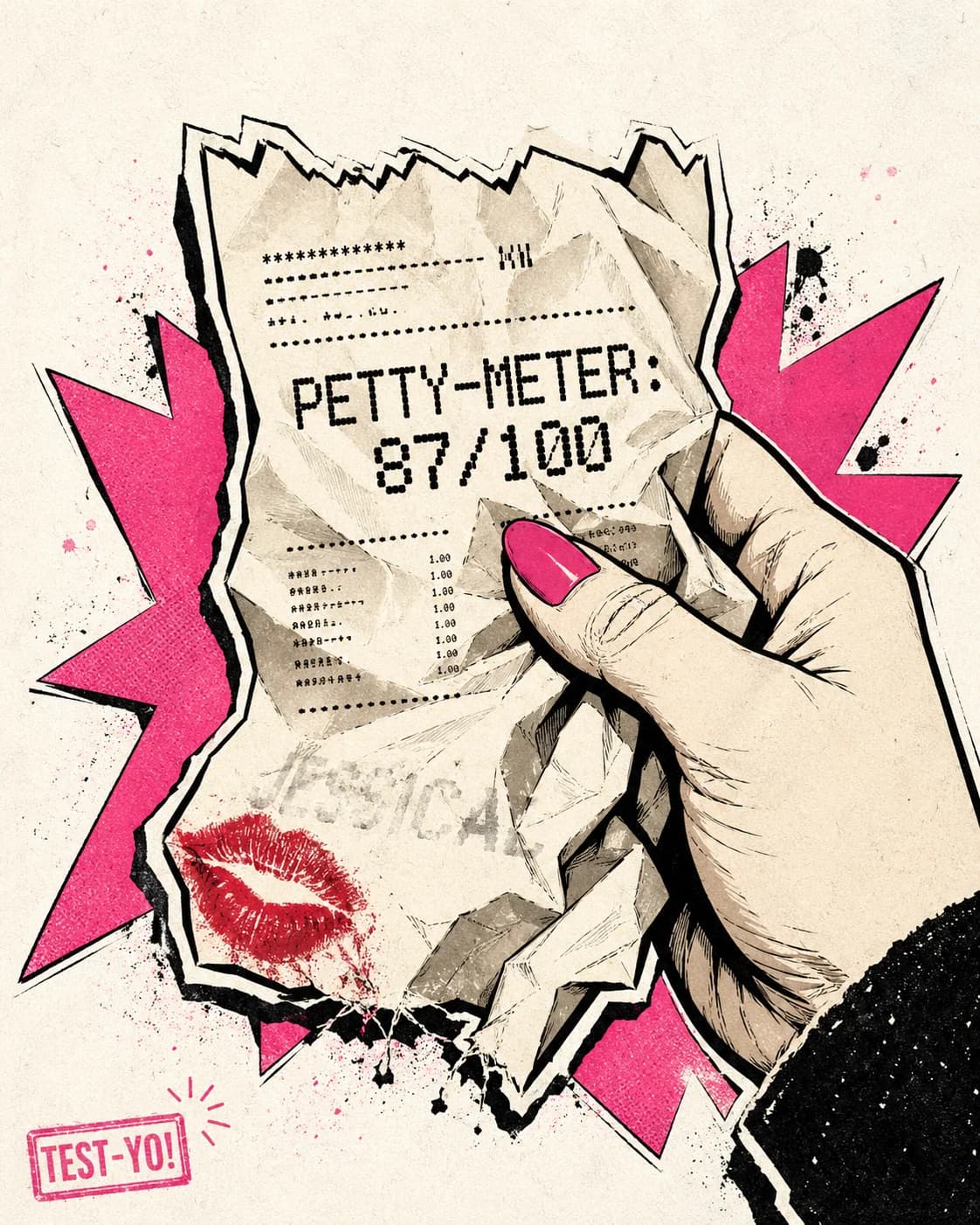
What does petty mean in everyday use?
In everyday conversation, petty describes a response that seems out of proportion to the issue behind it. The trigger might be a missed greeting, a late reply or a small inconvenience. The response adds a sting: you want the other person to notice that you noticed. It often keeps a minor disagreement alive after its practical purpose has disappeared.
The word can describe score-keeping, taking a small slight personally, or finding a tiny way to get even. None of these actions tells the whole story of a person. You can act pettily in one exchange and handle another generously. Asking what you did, what you wanted and what happened afterwards is more useful than deciding that petty is your identity.
Proportion is the important question, but it needs context. A forgotten cup might be an isolated oversight or another example of someone leaving every shared task to you. Before judging the reaction, ask what the complaint actually concerns. The petty score test gives you situations to reflect on; your own examples supply the context a quiz cannot see.
Examples at home: the chore becomes a message
Imagine two flatmates who usually take turns emptying the drying rack. One forgets after a rushed morning. The other carefully puts away only their own plate and leaves a single fork on the counter as a pointed reminder. The fork has become a message that the flatmate now has to interpret. Nothing about tomorrow's washing up has been agreed.
A clearer response would be to put the fork away and mention the missed turn, or to leave the rack and ask for it to be done. Neither option requires pretending that you enjoyed the extra work. The difference is whether your action addresses the task or creates a small punishment. Ask yourself what outcome you would accept if the other person responded reasonably.
Another example is keeping a private tally of who last chose dinner, then rejecting every suggestion without saying why. Taking turns can be fair; making someone fail an unannounced test makes agreement harder. Say that you would like a choice tonight. If you have been carrying the planning for weeks, name that wider pattern instead of arguing about one meal.
Examples at work: getting your point across sideways
Suppose a colleague overlooks your name when thanking people for preparing a presentation. In the next meeting, you conspicuously thank everyone except that colleague. This might feel like restoring balance, but it does not tell them what was missing. Other people may hear a new slight without knowing about the first one, leaving you with a second awkward exchange to explain.
You could instead send a brief note describing your contribution and asking to be included in the follow-up. If the omission keeps happening, keep an accurate record and use the appropriate workplace channel. Correct attribution matters. You do not have to accept being repeatedly overlooked to avoid seeming petty; you can pursue the concern directly without arranging a matching embarrassment.
Consider the channel too. Copying an entire team into an email about a harmless typing error may turn a simple correction into a public reprimand. Before sending it, ask who needs the information to do their job. If your real aim is for others to notice a colleague's mistake, a private correction is a chance to choose a different response.
Examples online: the audience changes the exchange
Imagine a friend leaves your message unanswered but posts a photo. You publish a vague remark about people who are always too busy for their friends. The post gives an audience a role in a conversation your friend has not yet had. It also assumes that posting a photo and answering your particular message required the same attention at that moment.
You could check whether a reply is needed and ask once, without turning the delay into a public performance. If contact consistently feels one-sided, discuss that pattern privately or change how much effort you offer. Muting a thread to give yourself space is different from announcing that you have muted someone so they will feel excluded. The intention and the follow-through matter.
Petty versus setting a boundary
A boundary describes what you will accept and what you will do to protect your time, belongings or participation. A petty response tries to make the other person feel a small cost without clearly explaining the issue. The same outward action, such as declining an invitation, can serve either purpose. Look at the explanation, the context and whether the action is proportionate.
For example, you might stop lending a charger because it repeatedly comes back damaged. Explaining that decision protects an item you need. Hiding someone else's charger to teach them a lesson creates a new problem. You can stay firm without building a punishment into the response. You also do not need the other person's agreement before keeping your own belongings with you.
Be careful when someone uses petty to dismiss a concern you have raised plainly. Repeated interruptions, ignored agreements or jokes at your expense deserve a conversation even if each incident looks small in isolation. Describe the pattern and its effect. You can acknowledge an unhelpful reaction while still asking for the underlying behaviour to change. Both parts can be true.
Petty versus a grudge versus revenge
These words overlap, but they point to different parts of an exchange. Petty often describes the scale or style of a reaction. A grudge is an old grievance that remains active in how you think about or treat someone. Revenge is an attempt to make the person pay for a perceived wrong. A tiny act can be part of either longer pattern.
You might make a pointed correction once, keep returning to the original slight for months, or plan a way to embarrass the person later. Those are different choices worth examining separately. Compare the grudge holder test and revenge style test, or read how to stop holding grudges if an old incident keeps shaping new conversations.
What to do instead: pause, say it, or let it drop
Start with a pause long enough to identify your aim. Are you trying to fix an inconvenience, ask for recognition, protect a limit or make the other person feel bad? You can write the sharp reply without sending it, put the phone down or finish another small task. A pause is a chance to choose, not a promise that the annoyance will vanish.
If something needs saying, use an observable detail and a request. You could tell a friend that you waited at the wrong entrance and would like clearer directions next time. That gives them something they can answer. Saying that they obviously do not respect your time claims knowledge of their motives and makes the conversation harder to keep specific.
Letting it drop is also an active choice when the issue is minor and no repair is needed. It means declining to collect evidence for a future argument. If you keep reopening the incident, reconsider whether there is an unmet request you have not named. The anger style test can prompt reflection on how you express annoyance without deciding what you should tolerate.
When it starts hurting a relationship
Small retaliations become costly when ordinary mistakes start feeling like traps. Someone may hesitate to ask a question because they expect an old error to return as a joke. You may spend more energy arranging your response than enjoying time together. Notice the practical effect: are disagreements ending with a usable agreement, or with both people waiting for the next move?
If you recognise your part, acknowledge the specific action without asking for immediate reassurance. You can explain that your pointed comment was unfair, correct it and raise the original concern separately. If the exchanges keep repeating, consider a qualified professional's help with communication. The quiz is a self-reflection tool: use it to notice a choice you can change, rather than deliver a verdict on yourself or anyone else.