 TEST-YO!· How You Cope
Konten utama halaman ini saat ini hanya tersedia dalam bahasa Inggris.
How Do You Actually Cope?
Explore six ways of responding to difficult feelings. Read non-diagnostic result guides, practical reflection prompts and when to consider support.
3 min · 24 questions · Free · No signup
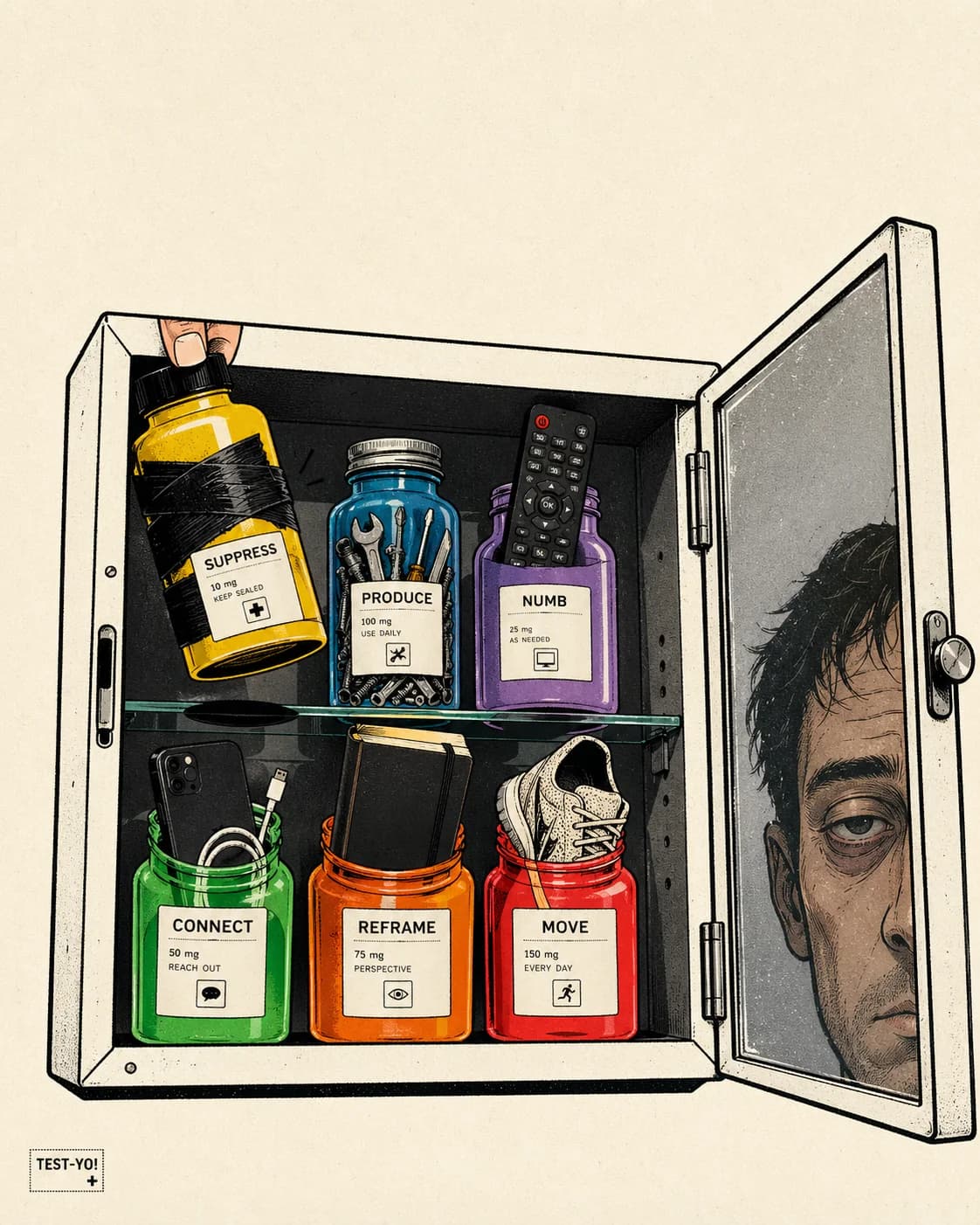
What the results mean
Baca selengkapnya · Tentang tes iniRead less
These six labels describe tendencies in your answers, not clinical categories. A response may help in one situation and be less useful in another.
- Suppressor
- You set feelings aside to keep functioning. That may feel useful in the moment, while you might still want time to acknowledge what happened later. The quiz cannot tell you what unexpressed feelings do to your body or health.
- Productiviser
- When feelings are hard, you turn to tasks, cleaning or organizing. Notice whether activity supports you or leaves no space to recognize what you need. Productivity can be one response without becoming a requirement for deserving care or rest.
- Numb-er
- You put distance between yourself and uncomfortable feelings through distraction or disengagement. Notice the effect on your day without judging yourself by the label. If a coping habit feels unsafe or difficult to control, consider discussing it with a qualified professional.
- Connector
- You work through feelings by talking and staying connected. Think about who feels safe to approach and whether they have space to listen. Support can include other people alongside private ways of settling yourself; it need not depend on constant availability.
- Reframer
- When something hurts, you look for meaning, perspective or another interpretation. Notice whether a new explanation helps you or rushes past a feeling you still want acknowledged. You do not have to find a lesson in every difficult experience.
- Body Mover
- Movement is where you go with difficult feelings. Consider the forms that feel accessible and comfortable for you, without treating activity as treatment. It may also help to identify a quiet option for times when movement is unavailable.
If these feelings persist, cause distress or affect daily life, consider speaking with a qualified mental health professional.
How to use your result
Choose a step that fits your circumstances:
- Recall a difficult moment and describe what you did before judging whether it helped.
- Identify one safe response you could choose in a similar situation.
- Ask a trusted person about support while respecting their availability and your privacy.
Possible archetypes
Explore six ways of responding to difficult feelings. Read non-diagnostic result guides, practical reflection prompts and when to consider support.
- SuppressorEmo. constipatedYou file feelings under "deal with later" and "later" never arrives. Brave.
- ProductiviserTrauma: spreadsheetSad? Reorganize the closet. Heartbroken? Inbox zero. Cleanest fridge.
- Numb-erDoomscroll modeYou numb the volume with the algorithm and a glass of something. We see you.
- Connector47-min voice-notesA feeling isn't real until you've sent the 47-minute voice memo.
- ReframerMain-character lesnEvery breakdown becomes a lesson. Every ex becomes a chapter.
- Body MoverRage-run feelingsYou can't think it through, you have to sweat it out. Your therapist agrees.
How it works
- Answer 24 short questions, honestly
- Your answers add up to 6 patterns
- Read your result and, if you like, compare it with someone
Everyone says they have "healthy coping" until something breaks.
This adapted quiz is not a validated instrument. How we build it
Baca selengkapnya · Tentang tes iniRead less
About this test
24 honest items, one verdict on what you actually do when it hurts.
Methodology
24 items, 4 per style, 5-point Likert. Dominant-style scoring across six coping types. This questionnaire and its result bands are not a validated instrument.
Keep exploring

FAQ
How accurate is this quiz?
This is a self-reflection quiz, not a prediction. It summarises the answers you give here, without establishing a fixed trait or guaranteeing an outcome. It is not a diagnosis or clinical assessment.
Can my result change?
Yes. Different answers, circumstances or interpretations can produce a different result. If you retake it, compare the individual answers and context as well as the label.
Does this diagnose my coping or mental health?
No. These informal patterns cannot identify a condition, its cause or the treatment you need. A professional can discuss concerns in their full context.
Is one coping mechanism always best?
No. Context, safety and the effect on your life matter. The quiz does not rank people or prescribe a single response.
Can I use several coping mechanisms?
Yes. Different situations can bring different responses. The displayed result is the strongest match in these answers, not a complete account of how you cope.