 TEST-YO!· Love Block
Konten utama halaman ini saat ini hanya tersedia dalam bahasa Inggris.
What Belief About Love Is Holding You Back?
Explore six assumptions about love, closeness and deserving care. Read reflection prompts without predicting relationships or another person’s feelings.
3 min · 24 questions · Free · No signup
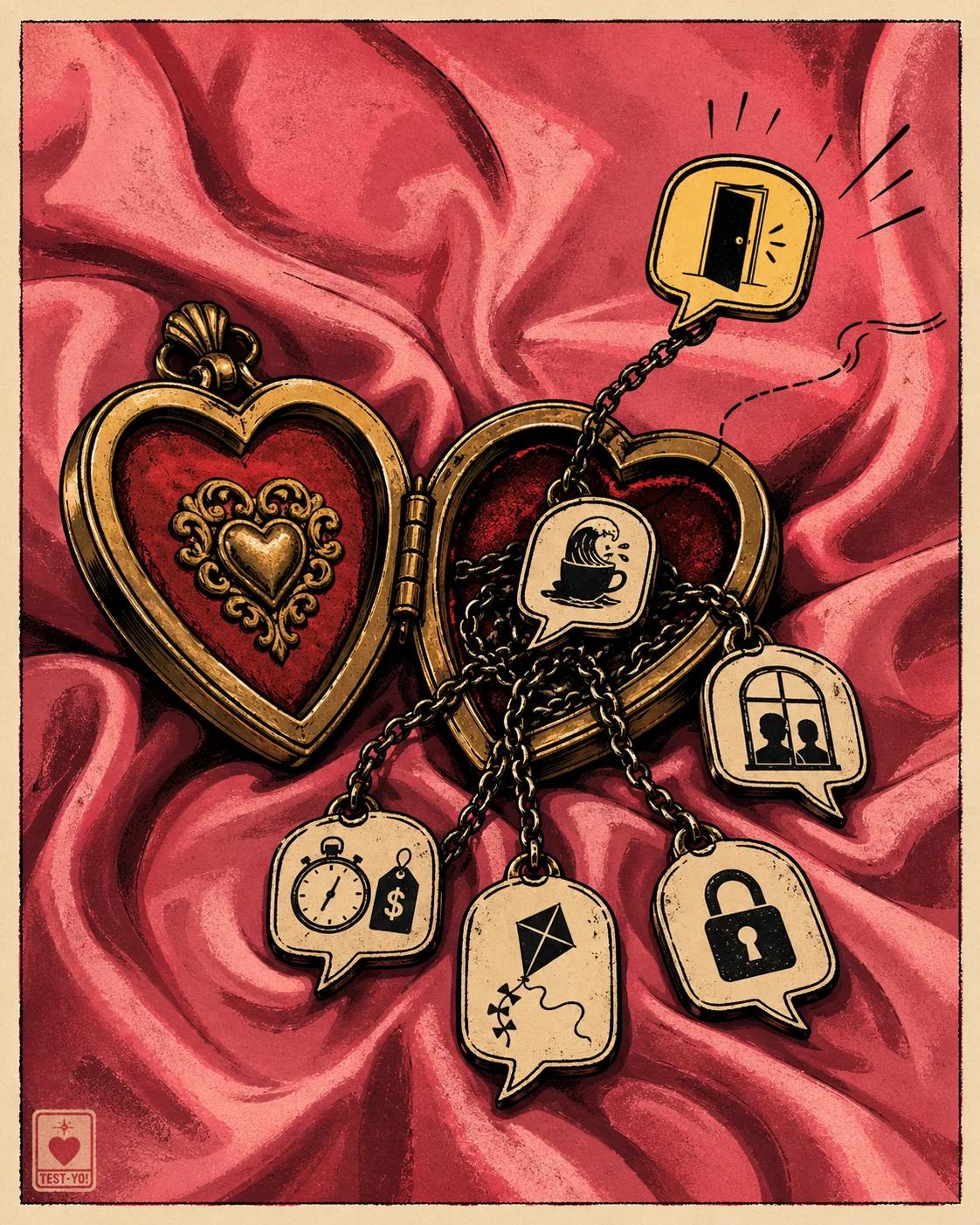
What the results mean
Baca selengkapnya · Tentang tes iniRead less
These quoted beliefs are patterns in your answers, not predictions about love. Another person’s actions and your safety need attention independently of any quiz label.
- "I'll Be Left"
- You expect closeness to end in being left. Notice whether a current event supports that expectation or whether uncertainty is filling the gap. The label cannot predict abandonment and does not mean you should ignore actual signs of an unreliable relationship.
- "I'm Too Much"
- You edit your needs or expression because you worry they are too much. Consider what you want to communicate and whether the relationship allows respectful differences. The result does not tell you that every request must be accepted or that your needs are wrong.
- "Love Is For Others"
- Love seems to be for other people and not for you. Notice what that story leaves out about your own hopes and choices. The quiz cannot promise a future relationship, and being single does not make the belief true.
- "I Have To Earn It"
- Being loved is tied to providing help, effort or reassurance. Consider whether receiving care feels possible without immediately repaying it. The label does not determine what you owe someone or require you to give more to keep a relationship.
- "Anyone Good Leaves"
- You expect warmth or kindness to disappear. Caution may have a context worth respecting, while a new person's behavior needs its own evidence. This result cannot identify deception or establish that someone kind will stay or leave.
- "I'm Safer Alone"
- Independence feels safer than closeness. You can value being alone without needing to change it. If you also want connection, consider what pace and boundaries would feel acceptable; intimacy is neither an obligation nor a cure.
If these feelings persist, cause distress or affect daily life, consider speaking with a qualified mental health professional.
How to use your result
Choose a step that fits your circumstances:
- Choose one thought and distinguish a current event from an expected outcome.
- Name a need or boundary you would want respected in a relationship.
- Discuss a small concern with someone trustworthy only if it feels safe and useful.
Possible archetypes
Explore six assumptions about love, closeness and deserving care. Read reflection prompts without predicting relationships or another person’s feelings.
- "I'll Be Left"One foot out, alwaysYou break up in your head every Tuesday so the real one won't sting.
- "I'm Too Much"Pre-shrinking myselfYou feel a lot, then immediately apologize for it. We've all watched this.
- "Love Is For Others"Outside, looking inYou see a happy couple, smile, mutter 'must be nice', cry into a bowl of pasta.
- "I Have To Earn It"OverfunctioningYou give 110%, they tip 4%. And you wonder why you're tired.
- "Anyone Good Leaves"Trust no nice onesSomeone treats you well and your first thought is 'okay, what's the catch'.
- "I'm Safer Alone"Safer on my ownYou'd rather eat alone in peace than text someone back. And you mean it.
How it works
- Answer 24 short questions, honestly
- Your answers add up to 6 patterns
- Read your result and, if you like, compare it with someone
The sentence about love you've been operating under, often inherited.
This adapted quiz is not a validated instrument. How we build it
Baca selengkapnya · Tentang tes iniRead less
About this test
24 honest items, one verdict on the script costing you connection.
Methodology
24 items, 4 per belief, 5-point Likert. Dominant-belief scoring across six classic love limiting beliefs.
Keep exploring
FAQ
How accurate is this quiz?
This is a self-reflection quiz, not a prediction. It summarises the answers you give here, without establishing a fixed trait or guaranteeing an outcome. It is not a diagnosis or clinical assessment.
Can my result change?
Yes. Different answers, circumstances or interpretations can produce a different result. If you retake it, compare the individual answers and context as well as the label.
Does this tell me whether my partner will leave?
No. It cannot read feelings or predict behavior. Look at actual communication, actions and safety, not the label.
Is this an attachment-style diagnosis?
No. The beliefs are informal reflection prompts. They do not establish an attachment style, condition or cause.
Do I need a relationship to change a belief?
No. Reflection can happen while single or partnered. Being alone is a valid preference and does not need correcting.