 TEST-YO!· Self-Esteem Test
Konten utama halaman ini saat ini hanya tersedia dalam bahasa Inggris.
Inspired by research
How Is Your Self-Esteem, Honestly?
Free self-esteem test using the real 10-item Rosenberg Self-Esteem Scale (RSES). Get your result in 3 minutes — no email required.
RSE · Rosenberg 1965. This adapted quiz is not a validated instrument.
3 min · 10 questions · Free · No signup
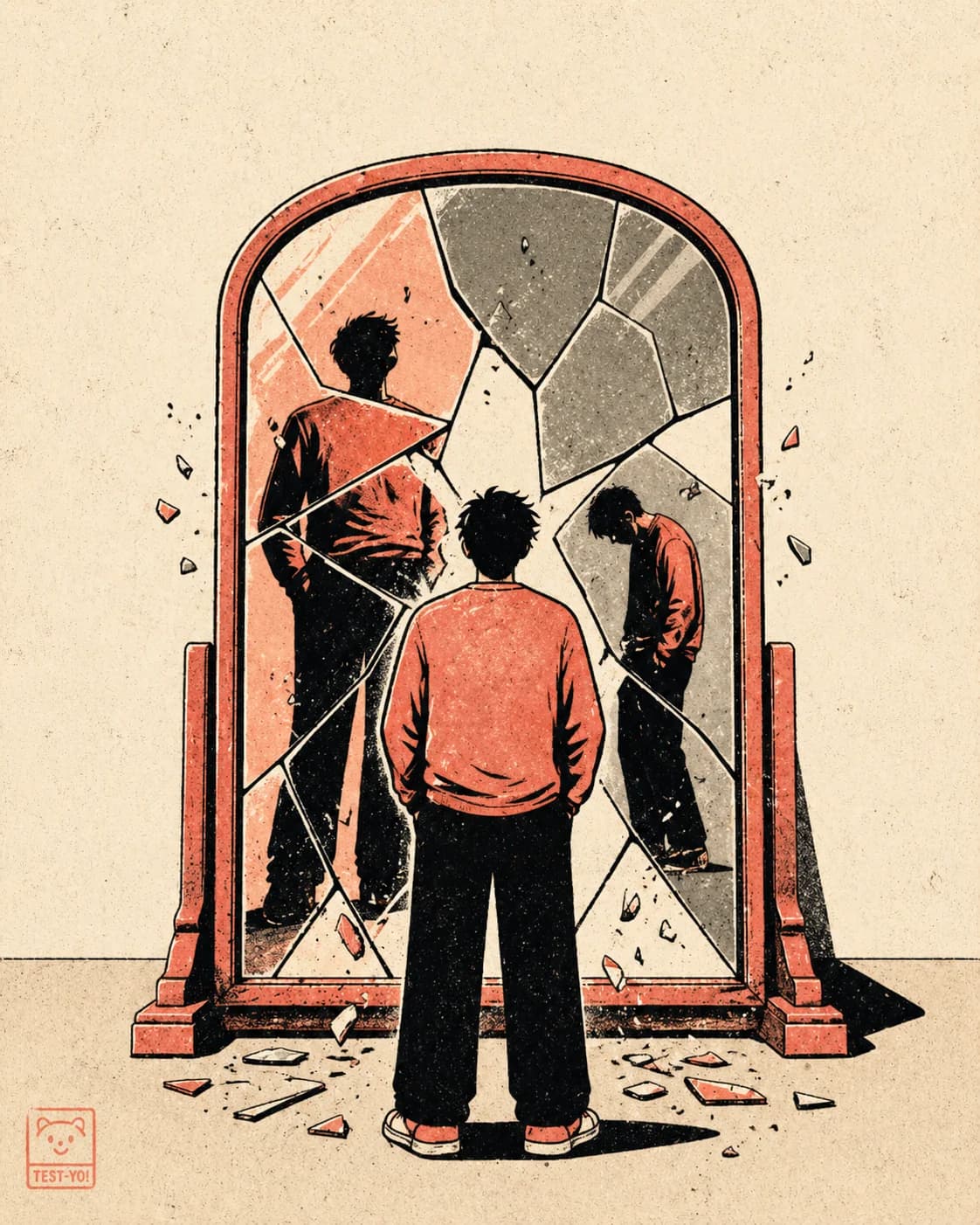
Possible archetypes
Free self-esteem test using the real 10-item Rosenberg Self-Esteem Scale (RSES). Get your result in 3 minutes — no email required.
- RebuildingSoft launch eraYou're in a soft-launch era with yourself. Be patient — the rebuild is the move.
- SteadyingWork-in-progressSome days you're that girl, some days you're hiding under the duvet. Normal.
- GroundedUnbothered, lotionedYou like yourself without needing to post about it. Quietly that girl.
- RadiantHealthy main-charYou like yourself and somehow nobody is mad about it. Rare. Beautiful.
How it works
- Answer 10 short questions, honestly
- Your answers add up to 4 patterns
- Read your result and, if you like, compare it with someone
This test uses the Rosenberg Self-Esteem Scale (RSES), first published in 1965 and the most widely-cited measure of global self-esteem in psychology.
This adapted quiz is not a validated instrument. How we build it
Baca selengkapnya · Tentang tes iniRead less
About this test
Ten statements, a 4-point scale, and one of four reflective archetypes. Self-esteem shifts over time — this is a snapshot, not a label.
Methodology
Items are the Rosenberg Self-Esteem Scale (RSES), a 10-item self-report measure introduced by Rosenberg (1965). Responses use a 4-point Likert scale; items 2, 5, 6, 8 and 9 are reverse-scored; total range is 10–40. This quiz groups that 10–40 total into four illustrative ranges (<15, 15–25, 26–32, 33–40) for its four archetypes — the RSES itself has no universal cutoffs, and reading a score against population norms would need published comparison samples. Reference: Rosenberg, M. (1965). Society and the adolescent self-image. Princeton University Press. The scale is public domain.
Keep exploring
Sources & references
- Rosenberg, M. (1965). Society and the Adolescent Self-Image (Rosenberg Self-Esteem Scale). Princeton University Press.
FAQ
Is this the real Rosenberg Scale?
Yes — the 10 items are the original Rosenberg Self-Esteem Scale (RSES, 1965), which is in the public domain and the most widely-cited measure of global self-esteem in psychology research.
How long does the self-esteem test take?
About three minutes. Ten 4-point Likert statements, no sign-up.
Is low self-esteem the same as depression?
No. They can overlap, but they are different constructs. Persistent low mood, hopelessness, or thoughts of harming yourself are reasons to speak to a qualified mental-health professional, not just retake a quiz.
What does my score mean?
The RSES total ranges 10–40. This quiz sorts that range into four illustrative bands (rebuilding, steadying, grounded, radiant) it defines itself for readability — the scale has no official clinical cutoffs, so treat the band as a snapshot, not a label.
Can I improve my self-esteem?
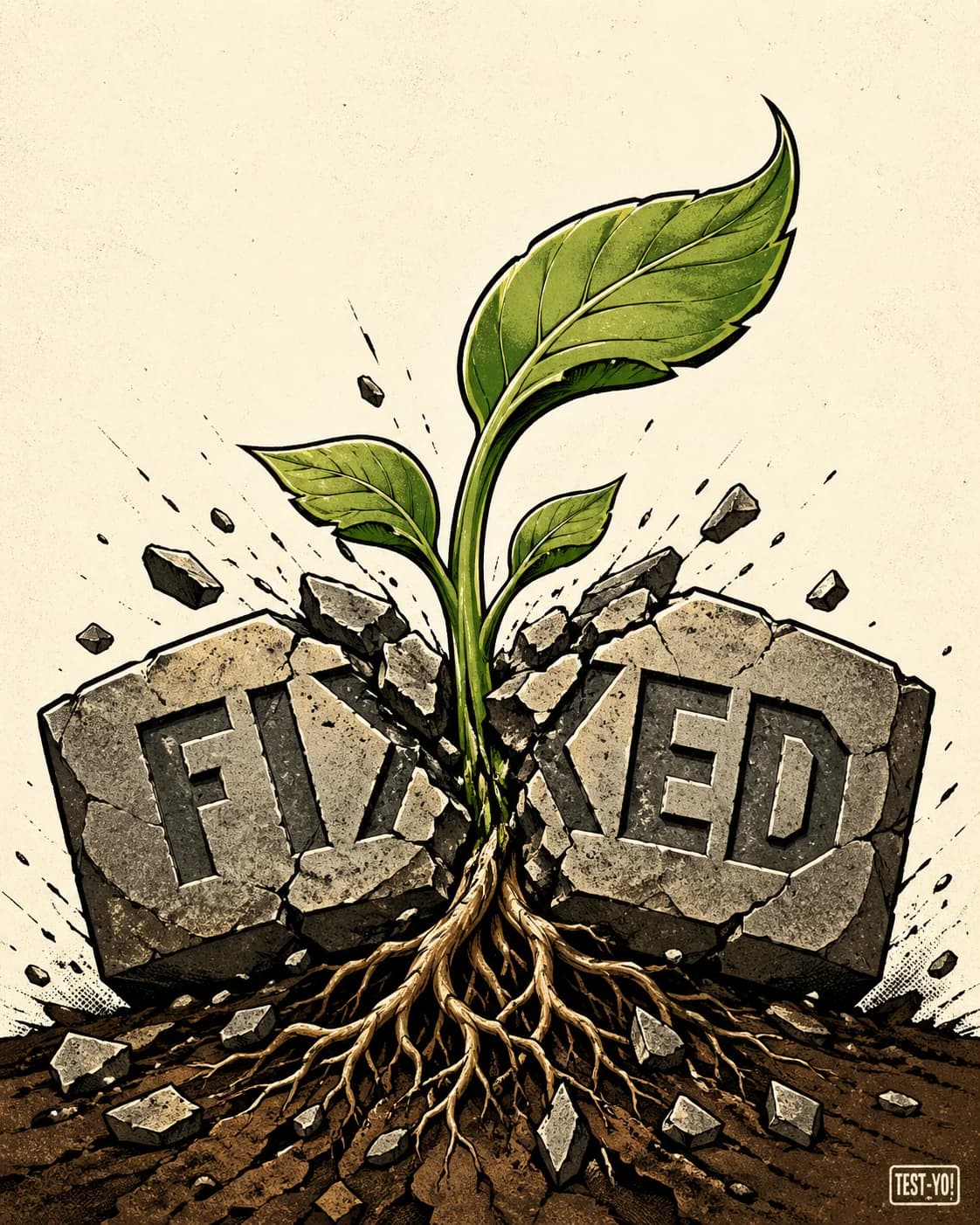
Self-esteem is not fixed. It commonly shifts with life circumstances, relationships, achievements, and how you talk to yourself. Retaking the test occasionally can show trends over time, which one result cannot.
Is this test free and anonymous?
Yes. No email, account, or payment is required, and your answers are not tied to your identity.
Who created the Rosenberg Self-Esteem Scale?
Sociologist Morris Rosenberg developed it in 1965 to measure global self-worth in a large sample of high-school students, and it has since been used in thousands of studies across ages and cultures.
Why are some items reverse-scored?
Items 2, 5, 6, 8 and 9 are worded negatively (e.g. "I feel I do not have much to be proud of") to reduce the chance that people just agree with everything. Their scoring is flipped before totalling.
Is this test suitable for teenagers?
The original Rosenberg scale was validated on adolescents, so the wording works for teens as well as adults. Anyone under distress should still talk to a trusted adult or professional, not lean on a quiz.
How is this different from a therapist's assessment?
A therapist combines a scale like this with clinical interviewing, history, and judgment. This quiz gives you a single self-report snapshot for reflection — useful, but not a substitute for professional evaluation.