 TEST-YO!· Overthink Meter
Konten utama halaman ini saat ini hanya tersedia dalam bahasa Inggris.
Overthink Meter — How (and why) do you overthink?
Explore replaying conversations, analyzing choices and imagining worst cases. Read four thought-pattern guides with practical prompts and clear limits.
3 min · 16 questions · Free · No signup
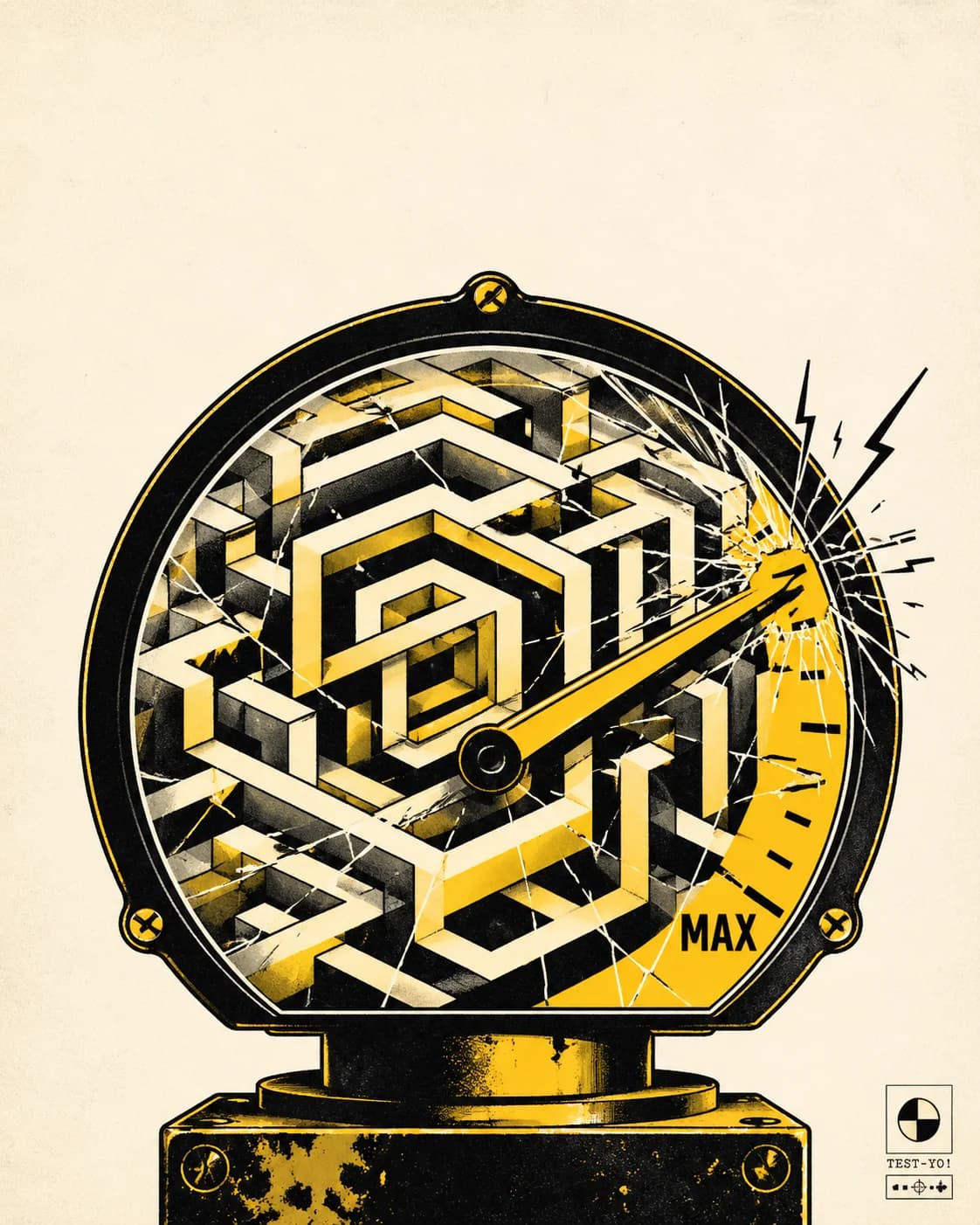
What the results mean
Baca selengkapnya · Tentang tes iniRead less
The four labels are informal patterns in your answers. They do not diagnose anxiety, establish a cause or measure how serious your experience is.
- Spiraller
- You return to conversations after they have ended and reconsider what you or someone else said. Notice what is known and what you are guessing. Replaying an exchange does not necessarily provide new information about the other person.
- Analyst
- You spend a lot of time comparing options or collecting more information before deciding. Consider whether the missing detail could change the choice. For a small decision, defining the question and a reasonable stopping point may help you move forward.
- Worrier
- You brace for difficult interactions and read uncertain signals as a problem. Separate the actual message from the meaning you fear it carries. When appropriate and safe, asking a clear question can provide information that repeated guessing cannot.
- Catastrophizer
- Uncertain situations quickly bring worst-case possibilities to mind. Those possibilities are thoughts, not forecasts. Consider what evidence is available and what support would be useful, without requiring yourself to prove that nothing difficult could ever happen.
If these feelings persist, cause distress or affect daily life, consider speaking with a qualified mental health professional.
How to use your result
Choose a step that fits your circumstances:
- Write one recurring thought and separate observations from assumptions.
- Choose a small decision and define what information would be enough to make it.
- Take a comfortable pause from the loop and consider speaking with someone you trust.
Possible archetypes
Explore replaying conversations, analyzing choices and imagining worst cases. Read four thought-pattern guides with practical prompts and clear limits.
- SpirallerChronic 3am replayerIt's 3am and you're replaying that thing you said in 2019.
- AnalystExcel for pizzaYou've had 14 tabs open about a decision since Tuesday. Pick already.
- Worrier"Ok." with a periodThey sent "ok." with a period. You've been spiraling for two hours. Same.
- CatastrophizerPre-grieve modeYou've already attended your own funeral about a headache. We see you.
How it works
- Answer 16 short questions, honestly
- Your answers add up to 4 patterns
- Read your result and, if you like, compare it with someone
A 16-item self-report quiz that maps you to one of four overthinking patterns drawn from research on rumination (Nolen-Hoeksema 1991), worry (GAD-7) and decisional procrastination.
This adapted quiz is not a validated instrument. How we build it
Baca selengkapnya · Tentang tes iniRead less
About this test
Four items per pattern on a 5-point Likert scale. The point isn't to label you anxious — it's to identify which loop your brain runs so you can interrupt the right one.
Methodology
16 self-report items (4 per overthinking pattern) on a 5-point Likert scale. Inspired by published constructs of rumination (Nolen-Hoeksema 1991), worry, and decisional procrastination. Not a clinical instrument. This questionnaire and its result bands are not a validated instrument.
Keep exploring

FAQ
How accurate is this quiz?
This is a self-reflection quiz, not a prediction. It summarises the answers you give here, without establishing a fixed trait or guaranteeing an outcome. It is not a diagnosis or clinical assessment.
Can my result change?
Yes. Different answers, circumstances or interpretations can produce a different result. If you retake it, compare the individual answers and context as well as the label.
Does this mean I have an anxiety disorder?
No. This is not a clinical assessment and cannot identify a condition, severity or cause. A qualified professional can discuss ongoing concerns in context.
Is the meter a score of how much I overthink?
No. It picks a pattern from your answers. It does not measure how serious repetitive thinking is, and it does not compare you with other people.
Can more than one pattern fit?
Yes. You might replay conversations in one setting and analyze decisions in another. Read every description that feels relevant instead of forcing a single label.