 TEST-YO!· Sibling Role
Konten utama halaman ini saat ini hanya tersedia dalam bahasa Inggris.
What Sibling Role Did You Actually Get?
Explore six sibling role patterns with a free quiz about responsibility, closeness and independence. Reflect on your experience beyond birth order labels.
3 min · 24 questions · Free · No signup
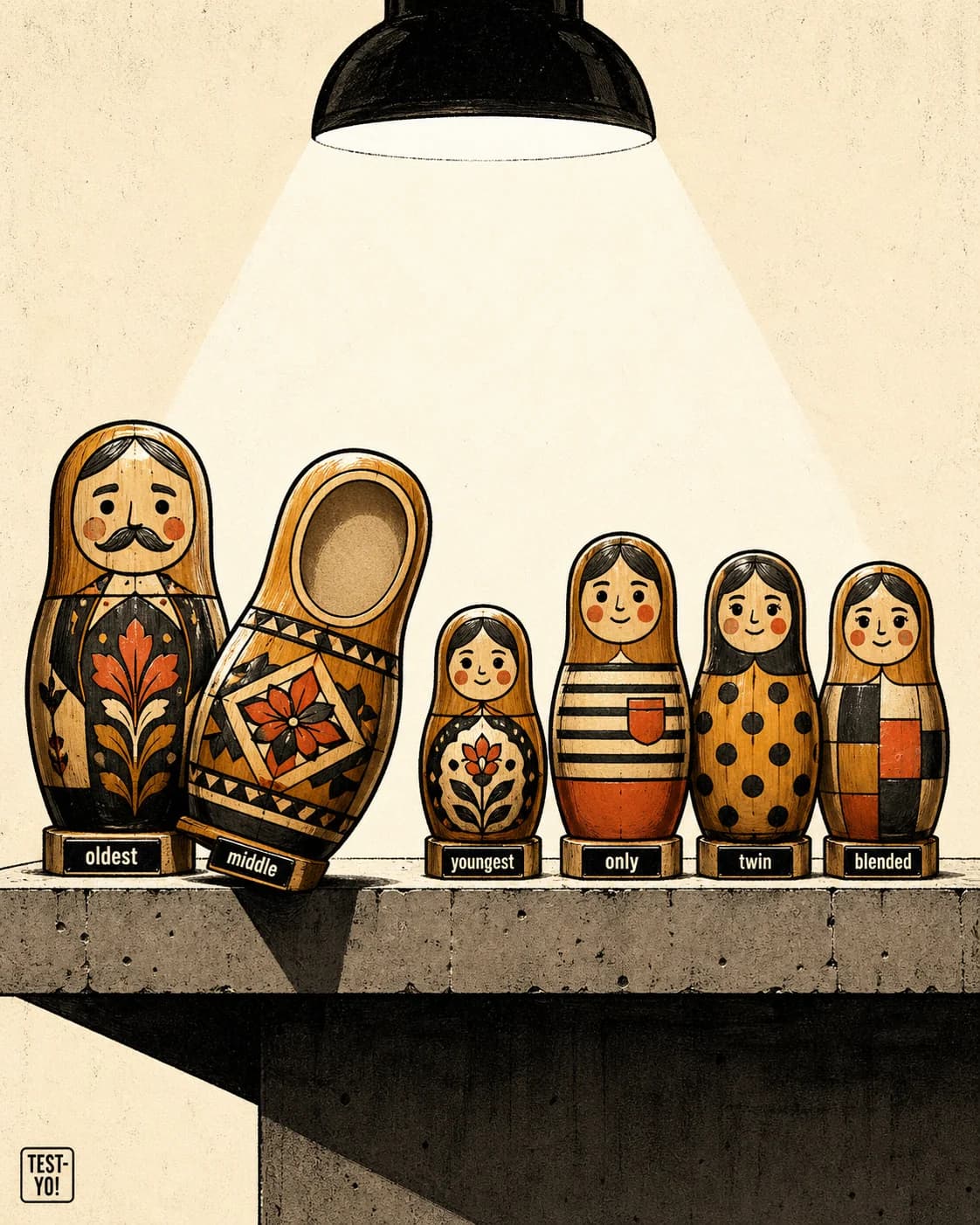
What the result types mean
Baca selengkapnya · Tentang tes iniRead less
The result labels borrow family positions to describe experiences. They do not establish your actual birth order or prove that a family structure causes a personality.
- Oldest
- Your answers emphasize early responsibility and being the capable one. Consider which responsibilities you chose and which became expected. You can value your competence while allowing others to help and deciding what you no longer want to carry.
- Middle
- You recognize adapting, reading the room and helping people get along. Those habits may make it easier to meet others’ needs than to state your own. Look for situations where you would like to be more visible or ask directly for support.
- Youngest
- You recognize bringing lightness and adapting to older family members. Consider whether people still treat you as less independent than you feel. Give yourself room to show seriousness, make decisions and ask to be seen as you are now.
- Only
- Your answers emphasize independence, time alone and relating closely to adults. These are themes to consider, not assumptions about everyone without siblings. Think about how you balance self-reliance with friendships or chosen family where you can ask for help.
- Twin-Vibe
- You recognize a close shared identity or a bond built around growing up alongside someone. The label does not mean you must be a twin. Consider what you enjoy sharing and which interests or decisions you want to develop independently.
- Blended
- You recognize moving between family settings, expectations or loyalties. Adapting may have helped you navigate those differences, while sometimes making your own preferences less clear. Consider what boundaries and sense of belonging you want to choose now.
How to use your result
Start with a situation you recognize, then choose one useful step:
- Separate the role description from your literal position in the family.
- Recall a specific memory that fits and another that challenges the description.
- Identify one expectation you want to keep and one you would like to renegotiate.
- Discuss your experience in your own words without assigning siblings fixed personalities.
Possible archetypes
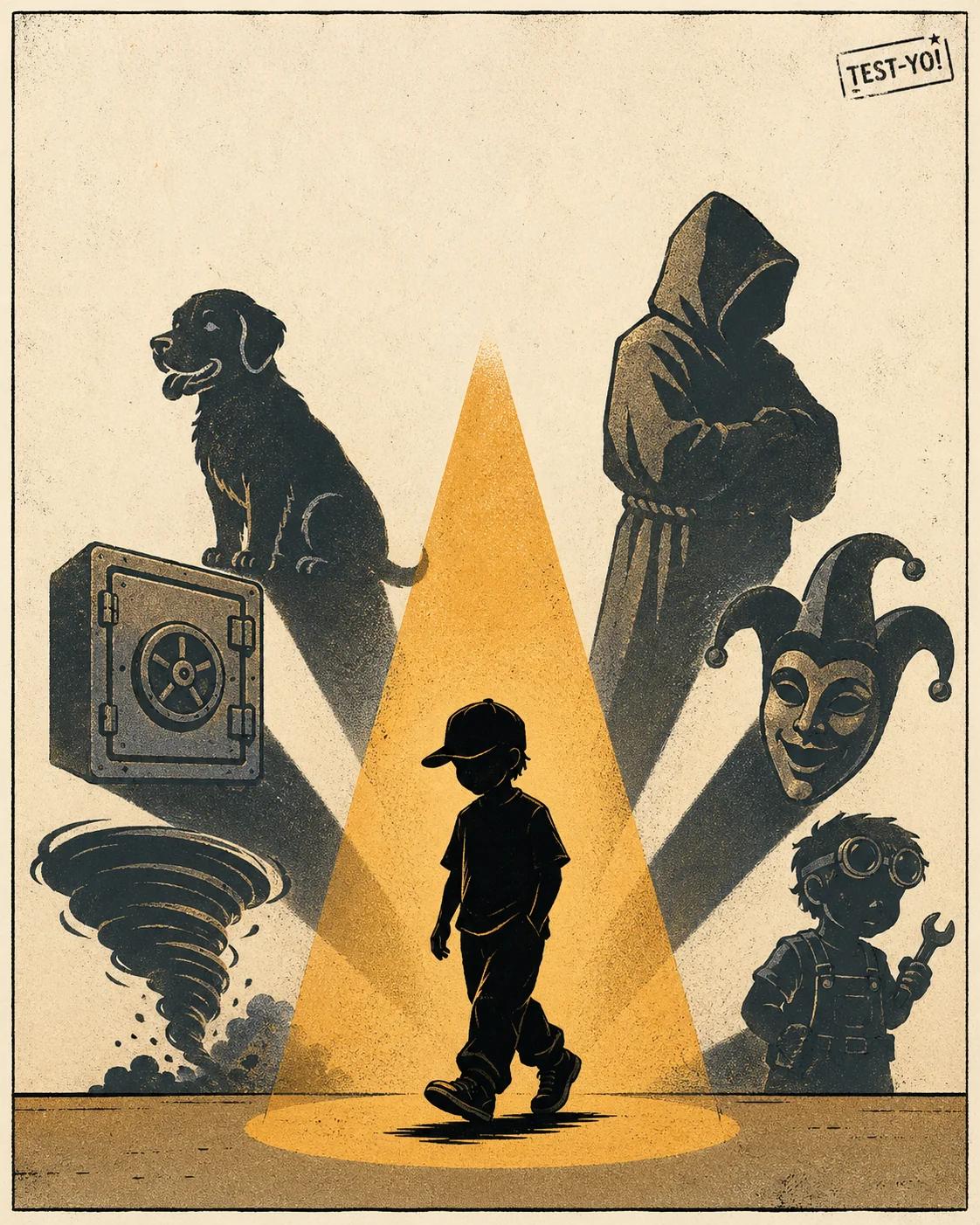
Explore six sibling role patterns with a free quiz about responsibility, closeness and independence. Reflect on your experience beyond birth order labels.
- OldestRecovering eldestYou were a parent before you were a teen. You're still trying to log off.
- MiddleInvisible middleYou were cropped out of the family photo and you became a diplomat about it.
- YoungestFamily wildcardYou got away with everything and they still order your food. We both know it.
- OnlyTiny adult, aloneYour group chat is your siblings now. Allergic to needing people.
- Twin-VibeHalf-person on purp.You share an identity with someone and a language no one else has cracked.
- BlendedTwo-household kidYou ran two operating systems before age ten. You spot fake hugs.
How it works
- Answer 24 short questions, honestly
- Your answers add up to 6 patterns
- Read your result and, if you like, compare it with someone
Birth order is half the story. 24 honest items, one verdict on the role you got handed and what it cost you.
This adapted quiz is not a validated instrument. How we build it
Baca selengkapnya · Tentang tes iniRead less
About this test
Methodology
24 items, 4 per role, 5-point Likert. Dominant-role scoring across six sibling positions.
Keep exploring
FAQ
How accurate is the sibling role result?
It summarises your account of family experiences. It cannot reconstruct your upbringing, establish causes or tell you how siblings remember the same events.
Is this a scientific birth order test?
No. This is a self-reflection quiz using informal family role labels, not a validated assessment or evidence that birth order determines personality.
Can my result change?
Yes. Your role and your understanding of childhood can shift as relationships change. You can also choose different responsibilities in adult life.
Why does my result differ from my actual birth order?
The questions match experiences and habits; nothing checks a family record. A result called Oldest can describe responsibility even when you are not the oldest child.
Can I take it if I have no siblings?
Yes. There is an Only pattern, but you may recognize other themes too. Treat the descriptions as prompts, not as a rule about what your family must have been like.