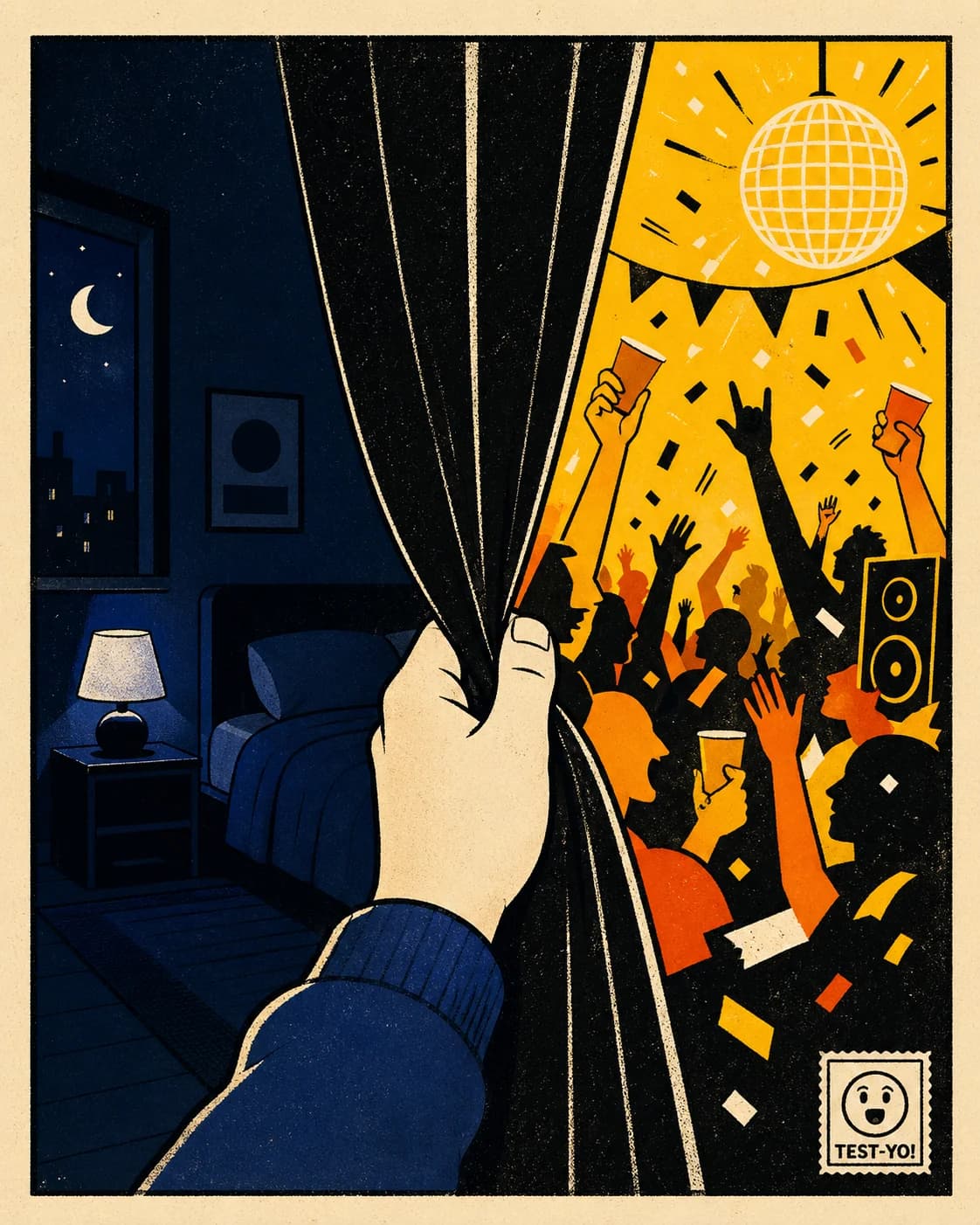
Recognising yourself in a list of introvert signs can feel reassuring. The useful part comes afterwards: can you describe an actual situation behind each answer? A quiet evening alone tells you little without knowing what preceded it. These signs are prompts for noticing your preferences, rather than a checklist you have to complete to qualify for a label.
First: what introversion actually is
Introversion describes the lower end of Extraversion in the Big Five framework. Here, we are looking at how social activity feels and how you process it. Being able to make conversation does not settle the question. Neither does feeling nervous before an unfamiliar gathering. Keep the focus on familiar situations where you have enough freedom to notice what you prefer.
10 signs with research backing
Use these familiar markers as questions about your experience, rather than a scorecard with a threshold. Read each as a possibility to examine, leaving room for an answer that depends on the situation.
1. Enjoyable company can still leave you mentally tired. You might come home pleased about a meal with friends while wanting the rest of the evening free from conversation.
2. You prefer to gather your thoughts before speaking. When someone asks for an opinion, you want a pause to work out what you actually mean.
3. A conversation feels better when it can develop. You would rather hear how a neighbour's project is going than keep introducing yourself around the room.
4. Group calls demand more attention than individual chats. Following interruptions and deciding when to enter can feel like work alongside the discussion itself.
5. You want space between social commitments. Leaving a meeting and immediately joining a dinner can feel different from having a quiet interval beforehand.
6. Ideas arrive after the discussion. You leave a planning session unsure, then find a useful suggestion while putting away the dishes.
7. You edit a thought before sharing it. You may have plenty to contribute while still wanting to choose the wording rather than answer immediately.
8. Being socially available has an aftereffect. Hosting visitors can go smoothly, yet you notice a strong wish for silence once the door closes.
9. Messages can feel easier than unexpected calls. Reading a question and replying when you have considered it may suit you better than answering on demand.
10. You notice when a visit has reached your limit. You still care about the people present, but extending the plan no longer appeals.
Common things that DON'T mean you're an introvert
Reading novels, disliking small talk or loving dogs cannot establish a personality trait. Silence during a meeting is ambiguous too: perhaps you are unfamiliar with the topic or waiting for someone senior to finish. Ask what the behaviour means in that setting before using it as evidence. Social anxiety also deserves its own consideration rather than being folded into an introvert label.
The ambivert sanity check
Mixed answers are allowed. Perhaps the phone example fits and the hosting example does not. You do not need to resolve that inconsistency by finding a more elaborate identity. The middle of the introversion–extraversion spectrum leaves room for preferences that depend on the occasion. Keep the observations that help you organise a day; leave the rest open.
A week in the life: where the signs show up
Imagine a workday with an open discussion before lunch. You have an idea but cannot find a gap to explain it. Later, a written follow-up lets you make the point clearly. The useful observation is the difference between those formats, rather than whether colleagues saw you as quiet.
At the weekend, you accept a friend's invitation to cook together but hesitate when the plan becomes a crowded outing. Notice which part changed: the people, the setting or the need to keep moving between conversations. Meanwhile, a family message thread fills up while you are busy. You enjoy reading it later but dislike the expectation of instant replies. These scenes give the signs a practical setting without requiring every preference to have the same explanation.
How to tell a sign from a mood
A tiring day is a poor basis for a lasting label. Look across several weeks, including ordinary days as well as unusually demanding ones. Keep a short note in your own words: what happened, what you wanted afterwards and what else was going on. “Wanted quiet after a noisy lunch; had also slept badly” leaves more room for interpretation than “proved I am an introvert.”
When you read the notes back, look for recurring situations. If the wish for a pause appears only around a particular deadline, that context matters. If it keeps appearing in otherwise different weeks, you have a preference worth discussing, even without turning it into a fixed rule.
Using the signs without boxing yourself in
Put recovery time into the plan while it is still being arranged. Choose a format you can participate in comfortably: a walk with a friend, a meal with a clear finish or a written contribution before a discussion. You can ask for something specific in a sentence: “I'd like to join dinner and head home afterwards.” That gives people useful information without asking them to interpret a personality category.
Leave room to accept an invitation that sounds worthwhile, even if it is outside your usual routine. A preference can guide a decision without making that decision for you.
What to do with this
Bring a recent example to our introvert–extrovert quiz and compare its questions with your notes. Read the result as an invitation to reflect. It provides no diagnosis and cannot support hiring decisions or medical or legal judgements. Your description of what you need matters more than fitting every sign.