 TEST-YO!· Grit Test
Konten utama halaman ini saat ini hanya tersedia dalam bahasa Inggris.
Inspired by research
How Much Grit Do You Actually Have?
Explore how you approach long goals, setbacks and changing interests. Read four grit result guides and choose a practical reflection step.
Grit-S · Duckworth 2009. This adapted quiz is not a validated instrument.
3 min · 8 questions · Free · No signup
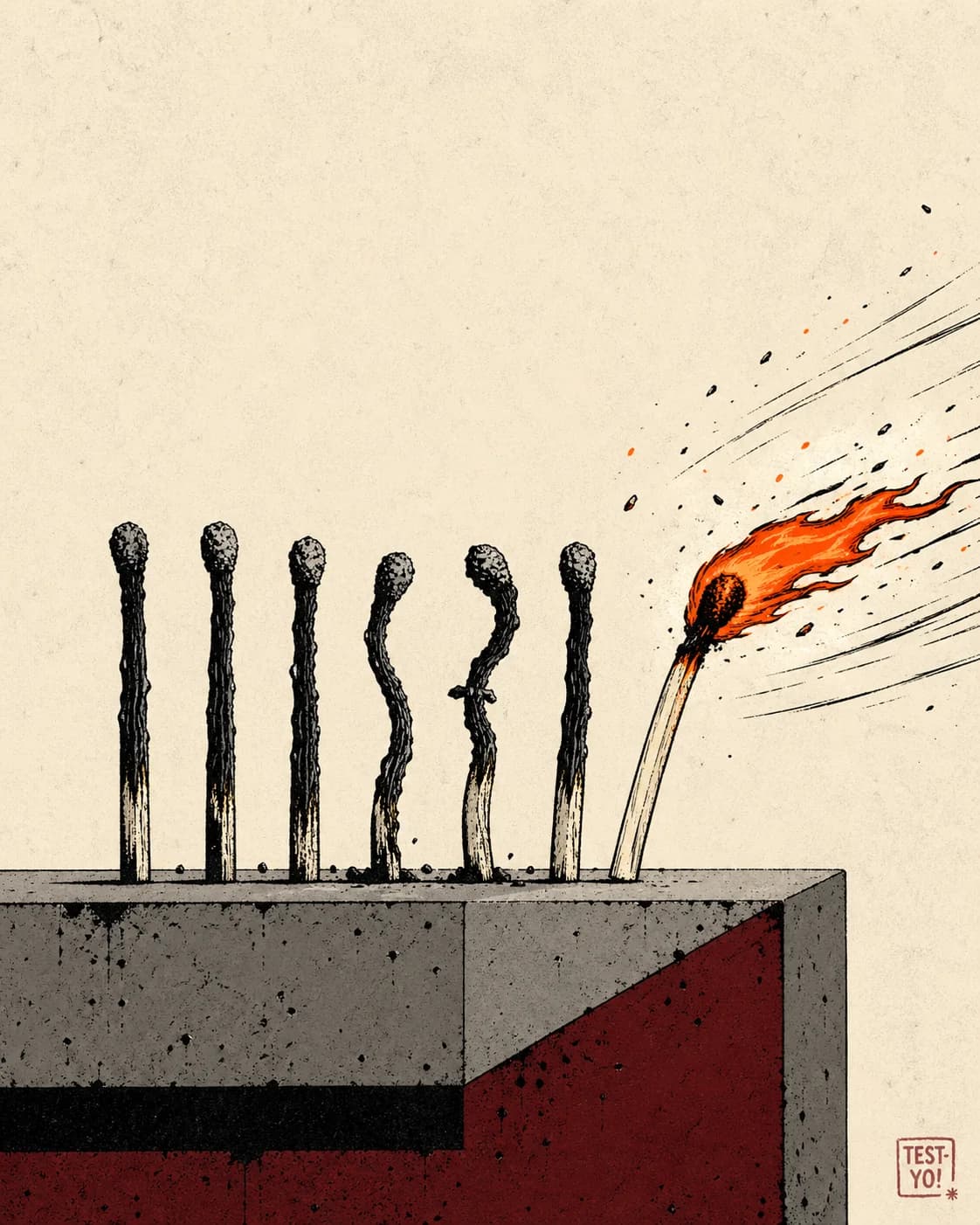
What the results mean
Baca selengkapnya · Tentang tes iniRead less
These are four bands of your answers, not population rankings or forecasts of success. Persistence can be useful, and changing direction can be reasonable too.
- Still Starting
- Your answers describe frequent changes of interest or difficulty staying with longer projects. Novelty may be appealing even when finishing matters to you. Look at what interrupts a particular goal before treating unfinished work as a fixed personal trait.
- Building Grit
- Your answers describe some sustained effort alongside periods of distraction or changing priorities. Rather than assuming you lack commitment, consider which conditions help you continue. A goal with a clear next step may feel different from an open-ended obligation.
- Gritty
- Your answers describe staying interested and continuing through setbacks on the goals you considered. Notice which routines, resources and relationships make that possible. The label does not mean you should persist with every project or compare yourself favorably with others.
- Relentless
- Your answers strongly endorse consistent interest and sustained effort within this quiz. Consider whether the goal still deserves that effort and whether rest has enough space. A high band does not guarantee achievement or make stopping a harmful commitment wrong.
How to use your result
Choose a step that fits your circumstances:
- Choose one current goal and write down why it still matters to you.
- Identify a recent interruption and one practical way to make the next step easier.
- Set a review point to consider continuing, changing direction or resting.
Possible archetypes
Explore how you approach long goals, setbacks and changing interests. Read four grit result guides and choose a practical reflection step.
- Still StartingFollow-thru allergyYour answers leave room for changing interests. Which small commitment still feels worth keeping?
- Building GritMid-arc protagSome answers favor persistence, while others leave room for a change of direction. Think about what helps you return to a goal.
- GrittyBoring-middle bestieYou endorsed staying with interests and effort through setbacks. What helps you keep going, and when would you reconsider?
- RelentlessMulti-year arc fanYour answers strongly favor sustained interests and effort. A long commitment still needs room for rest and review.
How it works
- Answer 8 short questions, honestly
- Your answers add up to 4 patterns
- Read your result and, if you like, compare it with someone
The Short Grit Scale (Grit-S) is an 8-item self-report measure developed by Angela Duckworth and Patrick Quinn (2009).
This adapted quiz is not a validated instrument. How we build it
Baca selengkapnya · Tentang tes iniRead less
About this test
It captures two facets of grit — consistency of interest and perseverance of effort — and maps you to one of four playful archetypes. This is a self-reflection tool, not a clinical assessment.
Methodology
Items are the Short Grit Scale (Grit-S), an 8-item self-report measure developed by Duckworth & Quinn (2009). Responses use a 5-point Likert scale; items 1, 3, 5 and 6 are reverse-scored; total range is 8–40. Four bands (≤16, 17–24, 25–32, ≥33) map to four archetypes. Reference: Duckworth, A. L., & Quinn, P. D. (2009). Development and validation of the Short Grit Scale (Grit-S). Journal of Personality Assessment, 91(2), 166–174. https://doi.org/10.1080/00223890802634290. This questionnaire and its result bands are not a validated instrument.
Keep exploring

Sources & references
- Duckworth, A. L., & Quinn, P. D. (2009). Development and validation of the Short Grit Scale (Grit-S). Journal of Personality Assessment.
FAQ
How accurate is this quiz?
This is a self-reflection quiz, not a prediction. It summarises the answers you give here, without establishing a fixed trait or guaranteeing an outcome.
Can my result change?
Yes. Different answers, circumstances or interpretations can produce a different result. If you retake it, compare the individual answers and context as well as the label.
Does grit predict whether I will succeed?
No. This quiz cannot predict achievement. Opportunity, resources, circumstances and the goal itself matter alongside your reported habits.
Is this the official Grit Scale result?
The items follow the Short Grit Scale described in the existing methodology. The four named result bands are this site’s presentation, not a clinical assessment or a population comparison.
Is changing a goal a sign of low grit?
Not necessarily. A goal can stop being useful, safe or realistic. Reflect on your reasons before treating persistence as an obligation.