 TEST-YO!· In Bed
Konten utama halaman ini saat ini hanya tersedia dalam bahasa Inggris.
How Are You In Bed, Actually?
How are you in bed? Giver, Tender, Playful, Explorer, Intense, Director, Sensualist or Dirty Talker — a free 3-minute quiz on your intimacy style. Private, no sign-up.
3 min · 32 questions · Free · No signup
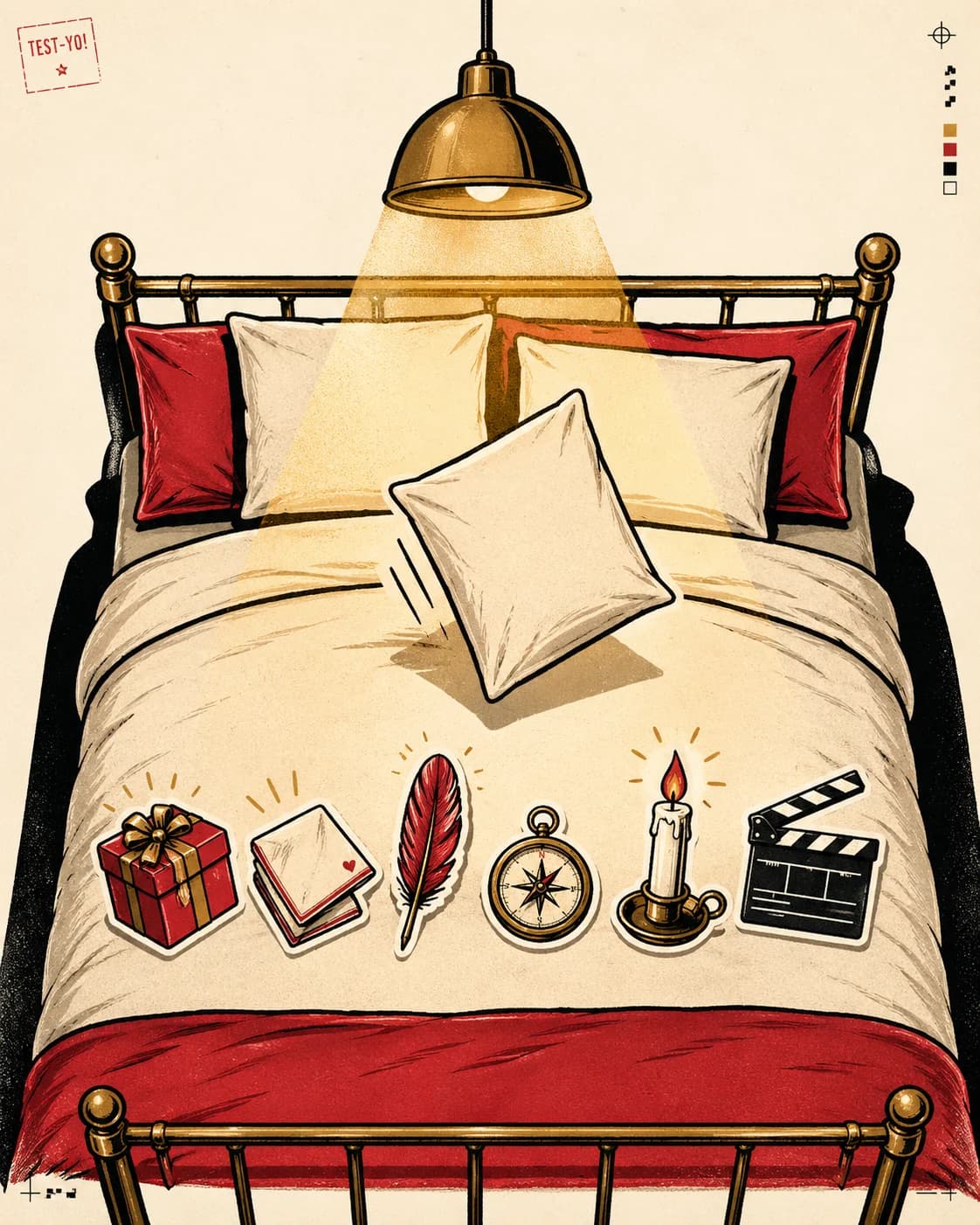
Possible archetypes
How are you in bed? Giver, Tender, Playful, Explorer, Intense, Director, Sensualist or Dirty Talker — a free 3-minute quiz on your intimacy style. Private, no sign-up.
- The GiverPleasure-as-serviceYou get off on them getting off. We both know it.
- The TenderEye-contact intimacyYou need feelings to want it. The eyes are the whole event.
- The PlayfulGoofball-in-bed modeYou laugh mid-thing and you're not sorry. We both know it.
- The ExplorerAllergic to routineSame script twice and you're bored. We both know it.
- The IntenseEye-contact maxerYou don't do casual. The lights go off in your head and the room disappears.
- The DirectorCaptain, lights onYou don't guess. You call it. We both know it.
- The SensualistSlow hands, all sensesYou treat sex like a tasting menu. Nobody leaves the table early.
- The Dirty TalkerSay it out loudIf it isn't said out loud, it's only half happening. We both know it.
How it works
- Answer 32 short questions, honestly
- Your answers add up to 8 patterns
- Read your result and, if you like, compare it with someone
This isn't a skills test and it doesn't grade performance.
This adapted quiz is not a validated instrument. How we build it
Baca selengkapnya · Tentang tes iniRead less
About this test
It's about how you show up with a partner — attentive or spontaneous, gentle or bold, leading or following. 32 honest statements, one of eight bed archetypes, plus the strength it gives you and the blind spot worth talking about.
Methodology
32 self-report statements, 4 per archetype, each rated on a 5-point agree–disagree scale. Scores are summed per archetype (Giver, Tender, Playful, Explorer, Intense, Director, Sensualist, Dirty Talker) and your highest total is your dominant bed archetype. A self-reflection tool, not a clinical assessment.
Keep exploring
FAQ
What does the "how are you in bed" quiz measure?
Your intimacy style — the energy you tend to bring with a partner. It sorts that into eight archetypes: Giver, Tender, Playful, Explorer, Intense, Director, Sensualist and Dirty Talker.
Is it about technique or personality?
Personality. Nothing here rates skill or performance. It looks at preferences and habits like who leads, how much novelty you want and how you show care.
What do the eight archetypes mean?
Giver: focused on your partner. Tender: closeness and emotional connection. Playful: humor and lightness. Explorer: curiosity and novelty. Intense: depth and passion. Director: confident, likes to lead. Sensualist: slow hands and all the senses. Dirty Talker: words are the turn-on.
Can I be more than one?
Most people are. Your result names your dominant archetype; a close second often shows up too, especially if your answers were evenly spread.
Can my bed archetype change?
Yes. Style shifts with a new partner, more trust, stress or life stage. Treat your result as a snapshot of now, not a permanent label.
Does it apply outside the bedroom?
Often. The same tendencies — leading vs. following, comfort vs. novelty, giving vs. receiving attention — tend to show up in affection and romance generally.
Is it based on real psychology?
It uses a standard self-report format (Likert-scale statements), but the eight archetypes are our own framework, not a validated clinical instrument. Use it for reflection and conversation.
Is it private?
Yes. No sign-up, no name, no email. Your answers are scored to produce your result; nothing asks who you are.
Should both partners take it?
Yes — comparing two results is far more useful than one. Different archetypes aren't a problem; they're a starting point for talking about what each of you enjoys.
Who is this quiz for?
Adults 18+ who want a light, honest look at their intimacy style. It's non-explicit and meant for fun and self-reflection, not diagnosis.