 TEST-YO!· Revenge Style
How Do You Actually Get Even?
Explore how you respond when someone hurts you with a free revenge style test. Read six patterns and practical prompts for boundaries and moving forward.
- 3 min
- 24 pytań
- Bez konta
- Bezpłatnie
Pełny wynik na końcu · bez podawania e-maila
Możliwe wyniki · który pasuje do ciebie?
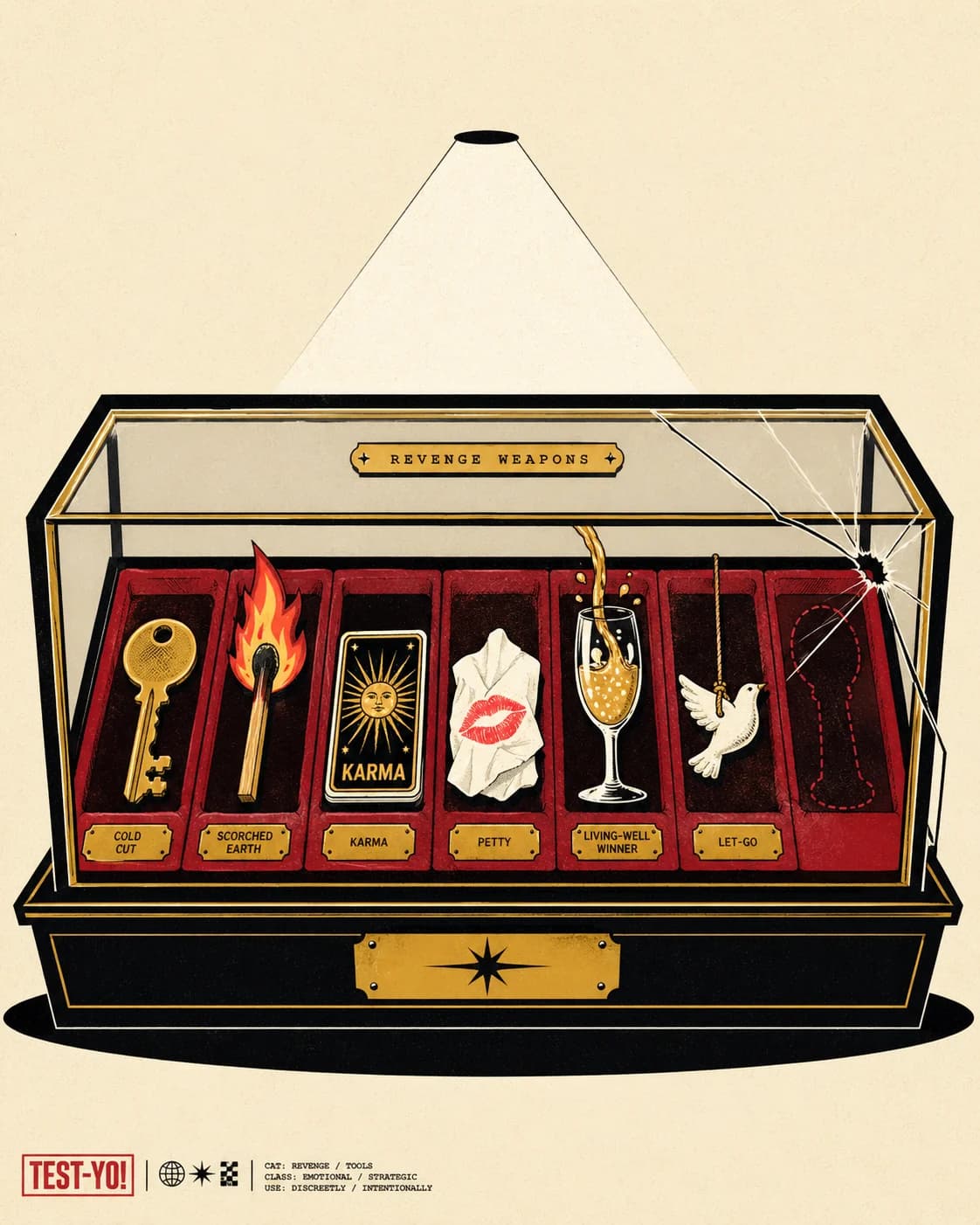
- Cold Cut
- Scorched Earth
- Karma Watcher
- Petty Operator
- Living-Well Winner
- Let-Go-er
W skrócie
Explore how you respond when someone hurts you with a free revenge style test. Read six patterns and practical prompts for boundaries and moving forward.
- 24 pytań · ~3 min
- Koszt: bezpłatnie · bez konta
O tym teście
Everyone has one. 24 honest items, one verdict on what you actually do when you've been wronged.
Jak liczymy wynik
24 items, 4 per style, 5-point Likert. Dominant-style scoring across six revenge tactics.
What the result types mean
The six labels describe reactions to being hurt, not recommended tactics. A strong impulse does not require action, and none of these results justifies retaliation.
- Cold Cut
- You tend to remove contact when someone hurts you. Distance may express a boundary, while in some situations it can also avoid a conversation you would value. Consider what level of contact you want without assuming that reconciliation is required.
- Scorched Earth
- You may want others to know what happened and feel a strong urge to confront publicly. Before acting, consider privacy, possible escalation and the outcome you actually need. The label is a prompt to pause, not encouragement to expose or humiliate someone.
- Karma Watcher
- You prefer waiting for consequences rather than retaliating directly. Notice whether that distance helps you move on or keeps you watching for proof that justice arrived. Think about what closure could look like without depending on another person’s downfall.
- Petty Operator
- Your answers suggest small retaliatory gestures or indirect messages when you feel wronged. Those actions can keep attention fixed on the conflict. Try naming the boundary or feeling underneath the impulse before deciding whether any response would help.
- Living-Well Winner
- You tend to turn hurt into effort towards personal goals. Consider which goals matter to you even if the other person never sees them. Progress can be satisfying without becoming a performance intended to provoke regret.
- Let-Go-er
- You lean towards releasing the conflict and moving forward. Check whether you have also given yourself room to acknowledge the hurt and set boundaries. Moving on does not require forgiving, reconnecting or pretending that what happened was acceptable.
How to use your result
Start with a situation you recognise, then choose one useful step:
- Pause before posting, messaging or making a decision while upset.
- Write down the outcome you want: distance, repair, accountability or closure.
- Choose a boundary or a private conversation that serves that outcome without retaliation.
- If the situation feels unsafe, prioritise support and distance over confronting the person.
Możliwe typy wyników
- Cold Cut · Block-delete-disap
- Block, delete, disappear. They get nothing — not even a goodbye text.
- Scorched Earth · Receipts everywhere
- You bring proof to the group chat. Then to Twitter. Then to LinkedIn. Damn.
- Karma Watcher · Popcorn-and-wait
- You don't lift a finger. You just sit, sip, and watch the universe collect.
- Petty Operator · Microaggression art
- You unfollow, mute, screenshot, and leave messages seen on purpose.
- Living-Well Winner · Glow-up = receipt
- Your glow-up is the receipt. The post is the closing argument. Iconic.
- Let-Go-er · No rent-free tenants
- They don't live in your head rent-free. They were evicted, with kindness. Rare.
Powiązane testy
Najczęstsze pytania + informacja
How accurate is my revenge style result?
It reflects the reactions you report, not an observation of what you will do in a future conflict. Different situations can produce different impulses.
Is this a scientific test?
No. This is a self-reflection quiz using informal response styles, not a validated assessment of aggression, character or mental health.
Can my revenge style change?
Yes. Experience, boundaries and a pause before acting can change how you respond. You are not required to act on an impulse because a quiz named it.
Does the quiz recommend getting revenge?
No. The labels are ways to discuss reactions to hurt. Use them to consider consequences and choose boundaries, support or repair without harassment or retaliation.