 TEST-YO!· Anger Style
Anger Style — What's YOUR anger?
Explore outbursts, slow resentment, hidden anger and withdrawal. Read four anger-style guides with practical prompts for respectful communication.
- 3 min
- 16 pytań
- Bez konta
- Bezpłatnie
Pełny wynik na końcu · bez podawania e-maila
Możliwe wyniki · który pasuje do ciebie?
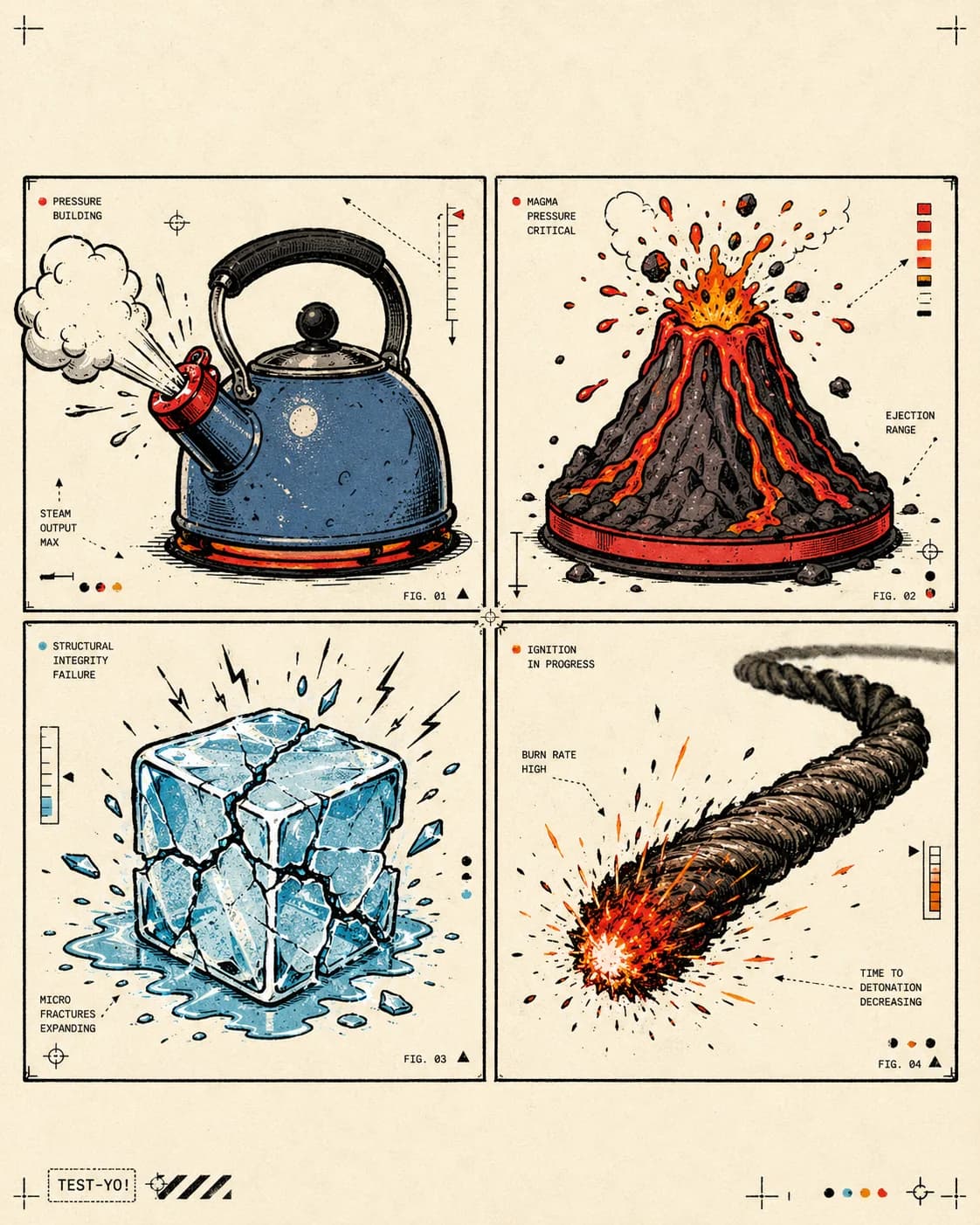
- Volcano
- Slow Burn
- Stuffer
- Cold Front
W skrócie
Explore outbursts, slow resentment, hidden anger and withdrawal. Read four anger-style guides with practical prompts for respectful communication.
- 16 pytań · ~3 min
- Koszt: bezpłatnie · bez konta
O tym teście
Volcano, slow burn, stuffer or cold front — your anger has a shape, even if you've never named it. 16 honest questions surface the one that actually leads. Most people use a mix; you'll find out which one runs the show.
Jak liczymy wynik
16 self-report items (4 per pattern) on a 5-point Likert scale. Inspired by Spielberger's STAXI dimensions of anger expression. Independent reformulation, not the official instrument.
What the results mean
The four patterns describe answers about behaviour. Anger is a feeling; intimidation, threats and hurtful actions still require responsibility regardless of your label.
- Volcano
- Your answers suggest anger can come out quickly and intensely. Notice early signs and consider a safe pause before continuing a difficult conversation. Directness does not require shouting or intimidation, and the label does not excuse harm or remove responsibility for repair.
- Slow Burn
- Your answers suggest holding onto smaller frustrations until several emerge together. Consider raising one specific concern while it is still manageable. Keeping a private score can leave the other person unaware of what needs attention until the conversation becomes overwhelming.
- Stuffer
- Your answers suggest finding it difficult to acknowledge or express anger. Try describing the feeling and the situation in ordinary words without deciding you must confront someone immediately. This result cannot explain physical symptoms or establish why you experience them.
- Cold Front
- Your answers suggest becoming distant or silent when angry. A pause can help if it is communicated and has a clear return point. Consider explaining what you need rather than leaving another person to guess whether the silence is punishment.
If these feelings persist, cause distress or affect daily life, consider speaking with a qualified mental health professional.
How to use your result
Choose a step that fits your circumstances:
- Recall one recent frustration and name the specific behaviour you want to address.
- If needed, agree on a safe pause and a time to return to the conversation.
- Describe your concern without threats, insults or demands for control.
Możliwe typy wyników
- Volcano · 0 to 100, instantly
- You go zero to nuclear in one sentence and everyone in the room remembers it.
- Slow Burn · Six-week list
- You stockpile six weeks of grievances, then unload in one sentence.
- Stuffer · Body pays the bill
- You don't get angry, you get a stomachache. Your body keeps the score.
- Cold Front · Weaponised silence
- Your anger isn't a yell — it's a closed door for three days. They feel it.
Powiązane testy
Najczęstsze pytania + informacja
How accurate is this quiz?
This is a self-reflection quiz, not a prediction. It summarises the answers you give here, without establishing a fixed trait or guaranteeing an outcome. It is not a diagnosis or clinical assessment.
Can my result change?
Yes. Different answers, circumstances or interpretations can produce a different result. If you retake it, compare the individual answers and context as well as the label.
Does my style excuse something hurtful I said?
No. A result does not excuse harm. Focus on safety, taking responsibility and changing the behaviour rather than defending the label.
Is quiet anger always healthier than a quick outburst?
No. Silence, sarcasm and withdrawal can also affect others. The quiz does not rank patterns as healthy or diagnose anger problems.
When should I seek support?
If anger feels hard to manage, causes harm or affects daily life, consider a qualified mental health professional. Prioritise safety when there is intimidation or violence.