 TEST-YO!· In Control?
I-E · Rotter 1966
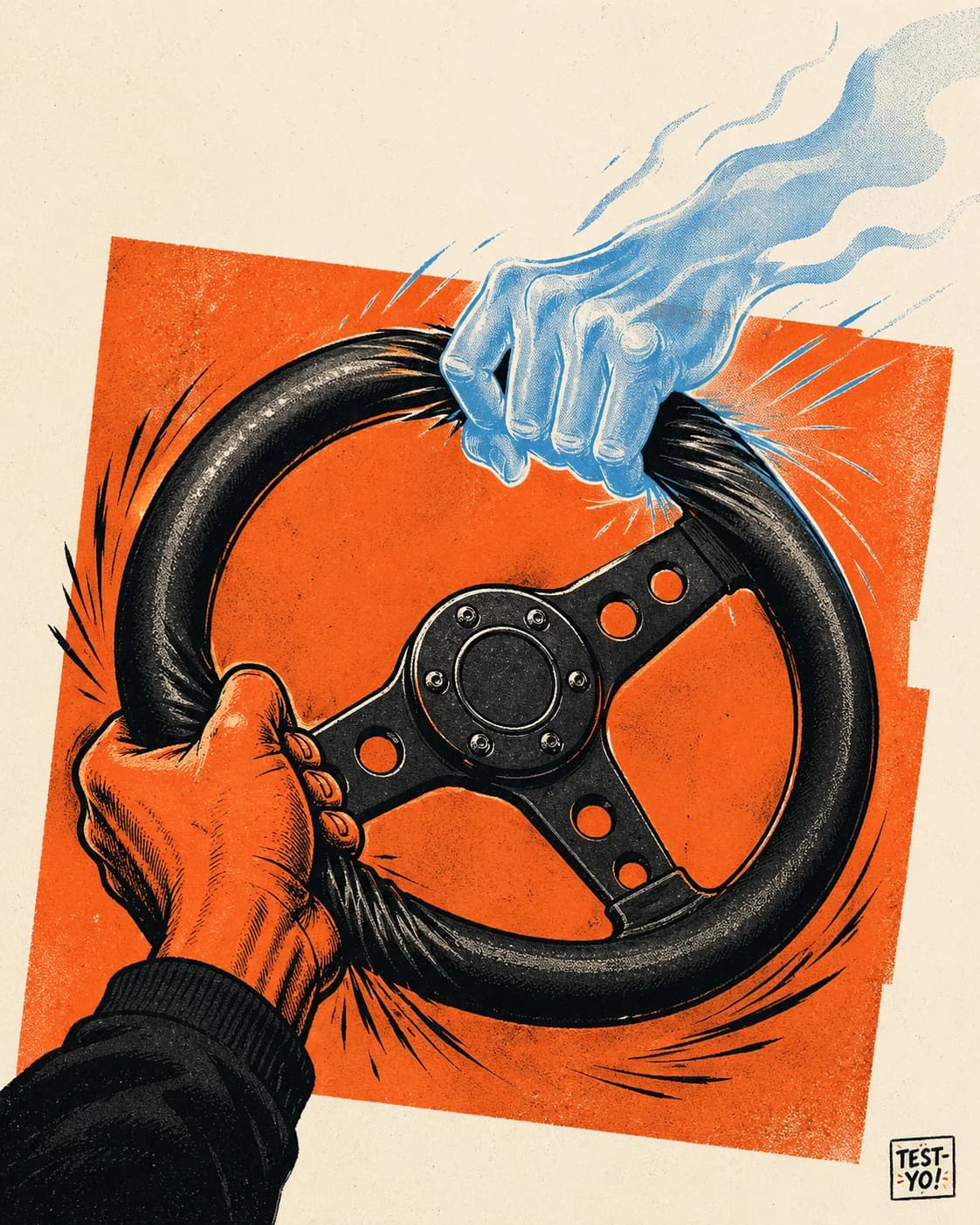
In Control? — Are you the captain or the passenger?
Explore how you explain outcomes through your choices, chance and circumstances. Read four result guides without turning responsibility into self-blame.
- 5 min
- 13 pytań
- Bez konta
- Bezpłatnie
Pełny wynik na końcu · bez podawania e-maila
Możliwe wyniki · który pasuje do ciebie?
- Driven by the Tides
- Sharing the Wheel
- At Your Own Helm
- The Captain
W skrócie
Explore how you explain outcomes through your choices, chance and circumstances. Read four result guides without turning responsibility into self-blame.
- 13 pytań · ~5 min
- Podstawa: Rotter, J. B. (1966)
- Koszt: bezpłatnie · bez konta
O tym teście
A 13-item forced-choice short form adapted from Rotter's (1966) Internal–External Locus of Control scale. On each item you pick the statement you agree with more; internal choices add to your internality score. Range 0 (strong external) to 13 (strong internal).
Jak liczymy wynik
Adapted from Rotter, J.B. (1966). Generalized expectancies for internal versus external control of reinforcement. Psychological Monographs 80(1), 1–28. This 13-item forced-choice short form draws items from the original 29-item I-E scale. Each internal choice scores 1 point on the internality dimension (range 0–13).
What the results mean
The four labels describe how you answered this adapted quiz. They do not establish how much control you actually have or which outlook is best.
- Driven by the Tides
- Your answers place considerable weight on chance, circumstances or other people when explaining outcomes. That may reflect real constraints rather than passivity. Separate what is outside your influence from any small choices still available, without blaming yourself for either.
- Sharing the Wheel
- Your answers give circumstances and other people a substantial role while leaving some space for your own actions. Consider where that mix fits your current situation. The label does not tell you the correct balance of responsibility for every event.
- At Your Own Helm
- Your answers lean towards seeing your decisions as important influences on outcomes. This can provide a useful starting point for choosing an action. Keep other people's decisions, available resources and chance in view so responsibility does not become unnecessary self-blame.
- The Captain
- Your answers strongly emphasise personal agency and responsibility. Notice where that outlook supports action and where it asks too much of you. You cannot control every outcome, and an unwanted result does not prove that you failed to try hard enough.
How to use your result
Choose a step that fits your circumstances:
- Write down one recent outcome and the factors that influenced it.
- Separate your choices from chance, systems and other people's decisions.
- Choose one action within your influence and name one outcome you cannot guarantee.
Możliwe typy wyników
- Driven by the Tides · NPC in my own movie
- Life feels like it's happening to you. You're mostly trying to adapt.
- Sharing the Wheel · Co-pilot of my life
- You drive sometimes, the universe drives sometimes. Honestly mature.
- At Your Own Helm · Excel-manifesting
- You believe in manifesting, but also in deadlines. The girlies do both.
- The Captain · Main-character mode
- You feel like the author, protagonist and editor. Watch the exhaustion.
Powiązane testy
Źródła i literatura
- Rotter, J. B. (1966). Generalized expectancies for internal versus external control of reinforcement. Psychological Monographs: General and Applied.
Najczęstsze pytania + informacja
How accurate is this quiz?
This is a self-reflection quiz, not a prediction. It summarises the answers you give here, without establishing a fixed trait or guaranteeing an outcome.
Can my result change?
Yes. Different answers, circumstances or interpretations can produce a different result. If you retake it, compare the individual answers and context as well as the label.
Is a more internal result always better?
No. The useful question is whether your explanation fits the situation. Taking responsibility for events outside your control can be unfair to yourself.
Is this the original Rotter assessment?
No. The existing methodology describes a shortened adaptation. These four quiz labels are a reflection aid, not official normative scores.
Does an external result mean I should try harder?
No. External constraints can be real. Consider support, resources and workable choices rather than interpreting the result as a judgement of effort.