 TEST-YO!· Emotional Intelligence — Complete Guide
Emotional Intelligence — Complete Guide
EQ has been oversold in popular books and undersold in some academic circles. The honest middle: it's a measurable set of skills, partly overlapping with Big Five Agreeableness and low Neuroticism, that adds predictive power for leadership, team performance and relationship outcomes beyond what IQ captures — but less than Goleman's early claims.
The four domains, in order
Self-Awareness: recognising your own emotions as they arise. Self-Management: regulating those emotions rather than acting on impulse. Social Awareness: accurately reading others' emotions. Relationship Management: using those signals to navigate interactions well. The order matters because each domain builds on the previous — you can't manage what you don't notice.
What EQ actually predicts
EQ shows incremental predictive validity above IQ and Big Five for leadership emergence, team cohesion and negotiation outcomes. The effect sizes are moderate, not dramatic. Claims that "EQ matters more than IQ" are marketing, not data — both matter, for different things.
How to train EQ (realistically)
Identify your weakest of the four domains — that's the one with the biggest lift. Pick one concrete behavioural practice (e.g. "name the emotion before acting on it" for Self-Management) and do it for 8–12 weeks. Re-measure. Self-Awareness improves fastest; Relationship Management is slowest because it requires sustained contact with other people.
Take the primary test
Emotional Smart — How well do you read feelings?
Smart is one thing. Emotional smart is another. Where are you?
Start the testTests in this line
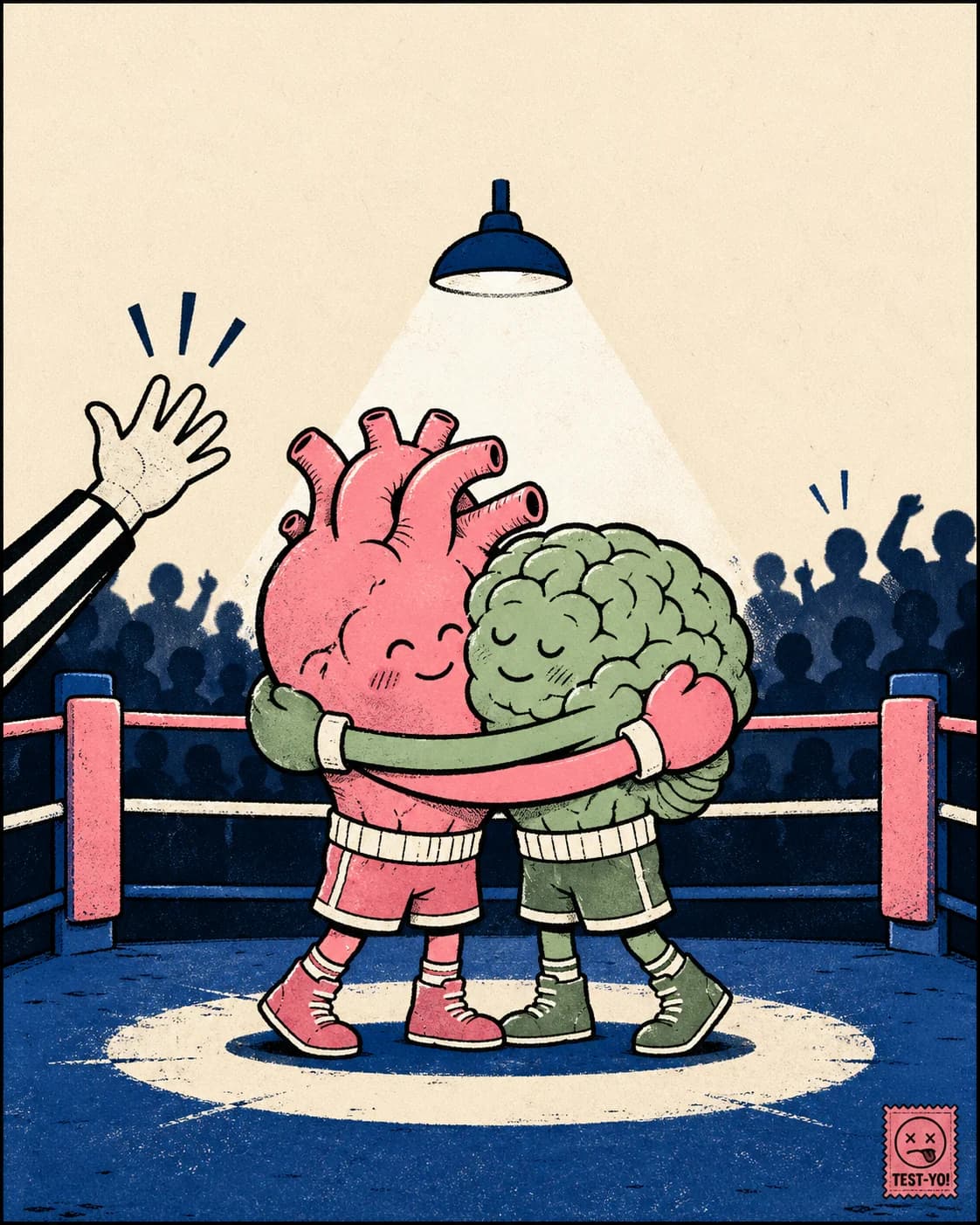
Emotional Smart
Smart is one thing. Emotional smart is another. Where are you?

How You Love
How you love. How you fear. 12 questions explain a lot.

Self-Esteem Test
How do you actually treat yourself? 10 honest questions.

Stress Test
How much can you take — and how well do you bounce back?
Articles
Traits & dimensions
Self-Awareness
Self-Awareness in Goleman EQ: the foundation domain — naming your own emotions accurately.
Self-Management
Self-Management in Goleman EQ: regulating and channelling emotions once you notice them.
Social Awareness
Social Awareness in Goleman EQ: reading others — the empathy layer of emotional intelligence.
Relationship Management
Relationship Management in Goleman EQ: the outward-facing domain — influence, conflict and connection.
Frequently asked
Is EQ more important than IQ?
No — despite the marketing. Both matter. EQ predicts social and leadership outcomes; IQ predicts cognitive task performance. They are partly independent and both add value.
Is EQ innate or learned?
Both. Baseline sensitivity is partly heritable (via temperament and Big Five traits), but the skills themselves are trainable — more so than cognitive ability after adolescence.
References
- Goleman, D. (1995). Emotional Intelligence: Why It Can Matter More Than IQ.. Bantam Books
- Goleman, D. (1998). Working with Emotional Intelligence.. Bantam Books
- O'Boyle, E. H., et al. (2011). The relation between emotional intelligence and job performance: A meta-analysis.. Journal of Organizational Behavior