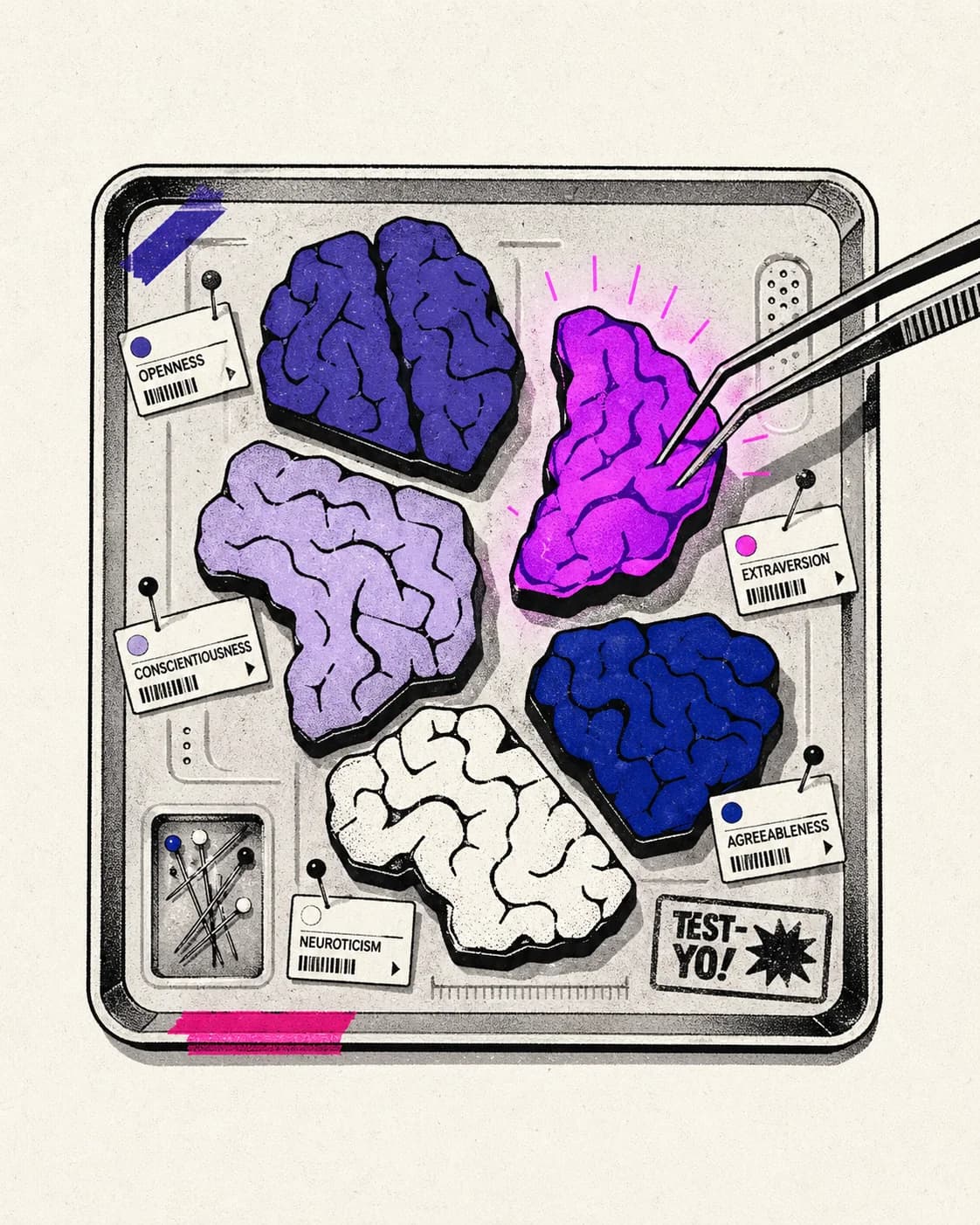
"Personality test" covers a lot of very different jobs. A questionnaire two people fill in to start a conversation, a workshop exercise about working styles, an assessment a candidate is asked to sit as part of an application, a themed quiz a teenager shares with friends — the same phrase, with wildly different requirements attached. What separates them is who is being asked, who sees the answers, and what happens next.
One thing before the sections below, because it applies to all of them: the quizzes on this site are entertainment. They are unsupervised, self-scored and written to be interesting, not to make decisions about anybody. Do not use them — or any free online quiz — to screen, select or evaluate an employee, a job candidate, a student, a child or a partner. Where a result would affect someone's job, schooling or wellbeing, the instrument has to be a validated one, administered and interpreted by someone qualified to do it.
Personality tests for children
For children, the honest purpose is language rather than measurement: giving a child words for what they enjoy, what tires them out, how they handle a change of plan.
In research and clinical settings, children's personality is usually assessed through questionnaires completed by parents and teachers rather than by handing a young child a self-report inventory, and temperament measures often do more work than trait inventories. What is sold online as a "children's personality test" is almost always a themed quiz.
What that can give you is a shared vocabulary and a pleasant twenty minutes together. What it cannot do is diagnose anything, predict how a child will turn out, or justify sorting them into a fixed category — traits are still moving at that age, which is the whole point of childhood. None of the quizzes here is written for children; if you do one together, treat the result as a conversation starter and nothing else.
Personality tests for teens
Teenagers are the age at which self-report starts working properly: they can recognise their own patterns and describe them, which is what these questionnaires actually depend on.
The useful instruments are the ordinary ones — Big Five based inventories, and interest inventories such as Holland's RIASEC when subject and career choices are on the table. Their value is that they widen the options a teenager is considering rather than narrowing them.
They cannot pick a career, and they are not aptitude measures — interest is not the same as ability. A result at fifteen is also not a verdict: traits keep shifting into the twenties, and most people's profile at thirty is not the one they had at school. Our personality test and career interests quiz are the closest fun match here, written for adults but harmless enough with a parent alongside.
Personality tests for employment and hiring
This is the highest-stakes use of the lot, and the rules are correspondingly stricter.
Employers who do this properly use instruments validated for the specific role — Big Five based work inventories, occupational profiles such as Hogan's, and situational judgement tests, which sit closer to a work sample than to a personality questionnaire. Good practice looks the same everywhere: the assessment is job-related, professionally administered, applied consistently to every candidate, treated as one input among several rather than a filter, and run with the privacy and fairness obligations that employment law attaches to it. Notably, the publisher of the MBTI states that it should not be used for hiring or selection decisions at all.
To restate the disclaimer where it matters most: the quizzes on this site must not be used to screen, select, rank or evaluate employees or candidates. They are entertainment, they have no validation behind them, and using a free online quiz to make an employment decision is unfair to the person on the other end of it and a legal risk to the organisation.
If you are the candidate being asked to sit one, the practical advice is dull: answer consistently and honestly. These questionnaires are long partly so that inconsistent answering shows up, and a profile you invented for a job you would then have to do is a poor trade.
Personality tests for the work environment and teams
The purpose here is different again — not selecting anyone, but giving a team a shared vocabulary for differences that otherwise get read as rudeness or foot-dragging. That is why the popular workshop frameworks, DiSC and MBTI-style type systems among them, stay popular despite the criticism they attract: they are memorable, and memorable is what a team conversation needs.
What they can do is make working-style differences discussable, which is worth something on a team where two people keep colliding. What they cannot do is measure performance, justify assigning or withholding work, or settle a conflict that is really about workload or authority. Type descriptions are also written to be flattering, so almost everyone recognises themselves in one — a reason to enjoy the exercise and not to build policy on it. Our DiSC-style quiz, work values quiz and office persona quiz all live in this territory, on the entertainment side of it.
Personality tests for couples
For couples, the test is a pretext for a conversation, and that is a perfectly good reason to take one. Comparing two Big Five profiles surfaces differences that are hard to name unprompted — one person's need for plans against the other's tolerance for improvisation — and the popular relationship frameworks work the same way without claiming to be validated instruments.
What no questionnaire can do is produce a compatibility score worth trusting. Relationship research points at how couples handle conflict and repair far more than at whether their traits match, and a low score has never been a reason to leave anyone. Our love language and attachment style quizzes are the ones couples here tend to do together; a persistent problem is a conversation for a couples therapist, not for a quiz.
Leadership personality tests
Leadership assessment is at its most defensible when it is used for development rather than for selection: understanding how someone tends to behave under pressure, where their blind spots sit, and which habits to work on.
The instruments used in coaching and executive development are again Big Five based inventories and occupational profiles such as Hogan's, frequently paired with 360-degree feedback — which is not a personality test at all, but structured ratings from the people who actually work with someone, and often the more useful half.
No inventory identifies "a leader". Decades of research have failed to produce a single leadership personality, and the traits that help vary with the situation, the team and the stage of the organisation. Treat a leadership profile as a description of tendencies to work with, not as a qualification. Our work values quiz gets at the adjacent question of what you want work to give you.
The common thread
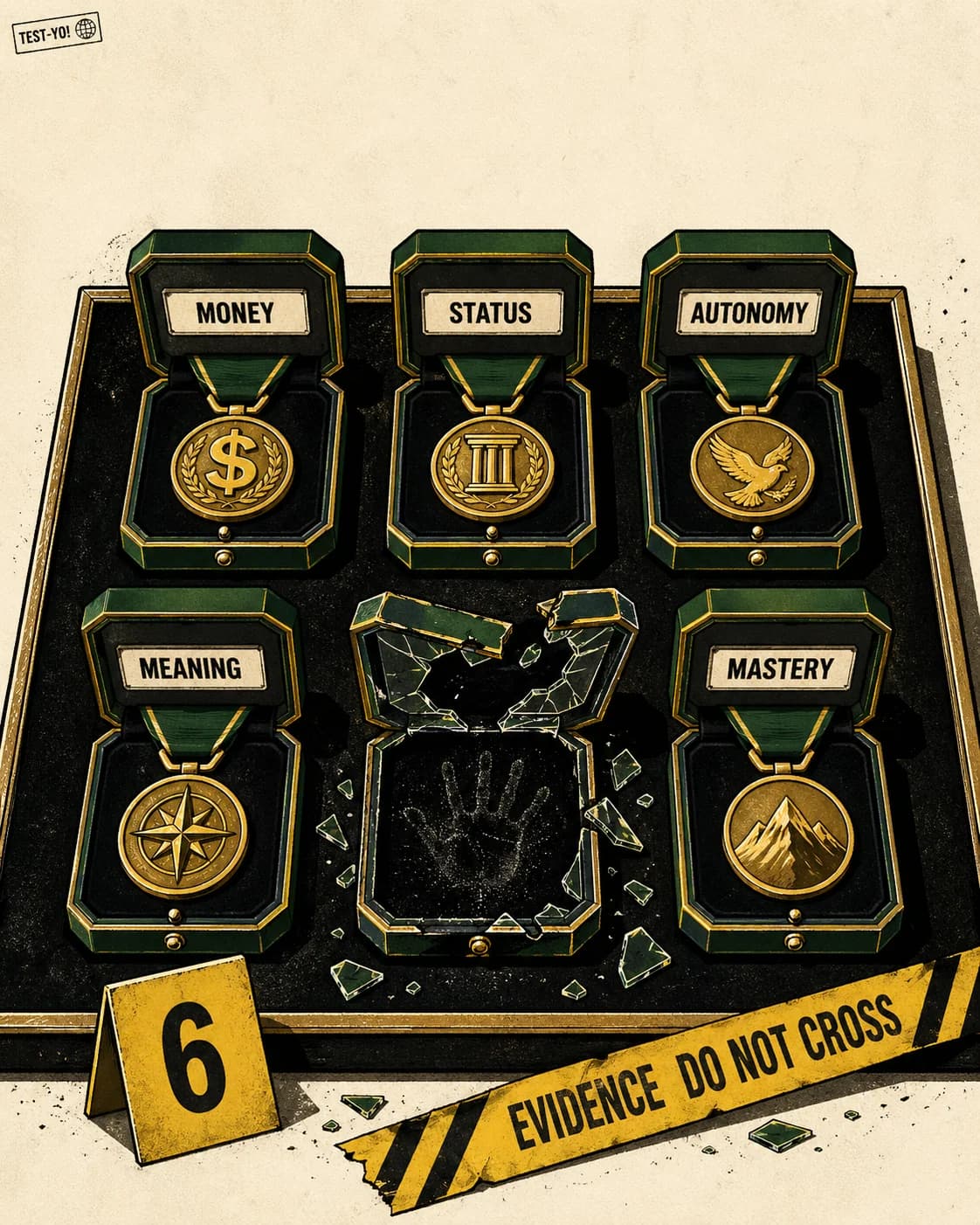
Across all six audiences the same three questions decide whether a personality test is being used well. What decision, if any, hangs on the result? Is the instrument validated for that decision? And is there someone qualified to interpret it? A quiz taken for fun answers "none, no, and no" — which is completely fine, as long as nobody pretends otherwise.