 TEST-YO!· Procrastinator Type
Procrastinator Type — Why do YOU procrastinate?
Explore perfectionism, deadline pressure, avoidance and big ideas in task habits. Read four procrastination styles and choose a manageable next step.
- 4 min
- 20 pytań
- Bez konta
- Bezpłatnie
Pełny wynik na końcu · bez podawania e-maila
Możliwe wyniki · który pasuje do ciebie?
- Perfectionist
- Thrill-Seeker
- Avoider
- Dreamer
W skrócie
Explore perfectionism, deadline pressure, avoidance and big ideas in task habits. Read four procrastination styles and choose a manageable next step.
- 20 pytań · ~4 min
- Koszt: bezpłatnie · bez konta
O tym teście
A 20-item self-report quiz that maps you to one of four procrastination archetypes drawn from published research on procrastination (Steel 2007; Sirois 2014). Each archetype is measured by 5 items on a 5-point Likert scale. The point isn't to label you — it's to identify the actual mechanism behind your delay so you can fix the right thing.
Jak liczymy wynik
20 self-report items (5 per procrastinator type) on a 5-point Likert scale. Inspired by published procrastination research (Steel 2007; Sirois 2014). The four-archetype framing is a synthesis, not a single official instrument.
What the results mean
These four patterns describe answers about delay, not diagnoses or an explanation for every unfinished task. Workload, access needs and unclear expectations can matter too.
- Perfectionist
- Your answers suggest that high standards or repeated revisions can delay starting or finishing. Consider which requirement is necessary and which is a moving target. An imperfect draft may help you discover what actually needs attention before further polishing.
- Thrill-Seeker
- Your answers suggest that approaching deadlines provide the pressure that gets work moving. Notice whether this approach leaves enough time for revision, rest and unexpected interruptions. Try making an earlier checkpoint concrete rather than assuming urgency will always arrive when needed.
- Avoider
- Your answers suggest stepping away from tasks connected with uncomfortable feelings or possible judgement. Notice the feeling without deciding it explains your character. Clarifying the task or making the first action smaller may be more useful than criticising yourself.
- Dreamer
- Your answers favour imagining possibilities over choosing the next concrete action. Ideas can be enjoyable while the project remains difficult to define. Write down one visible step and what counts as finished before adding more possibilities to the plan.
How to use your result
Choose a step that fits your circumstances:
- Choose one delayed task and identify what makes starting difficult today.
- Define a small first action and a clear stopping point.
- Ask for clarification or practical support if the task is unclear or unmanageable.
Możliwe typy wyników
- Perfectionist · Polish-it-to-death
- You've never started — you've only "researched". We both know it.
- Thrill-Seeker · Deadline athlete
- You only start when the building's on fire. And you call it a strategy.
- Avoider · Allergic to starting
- Your inbox is a minefield and your kitchen has never been cleaner.
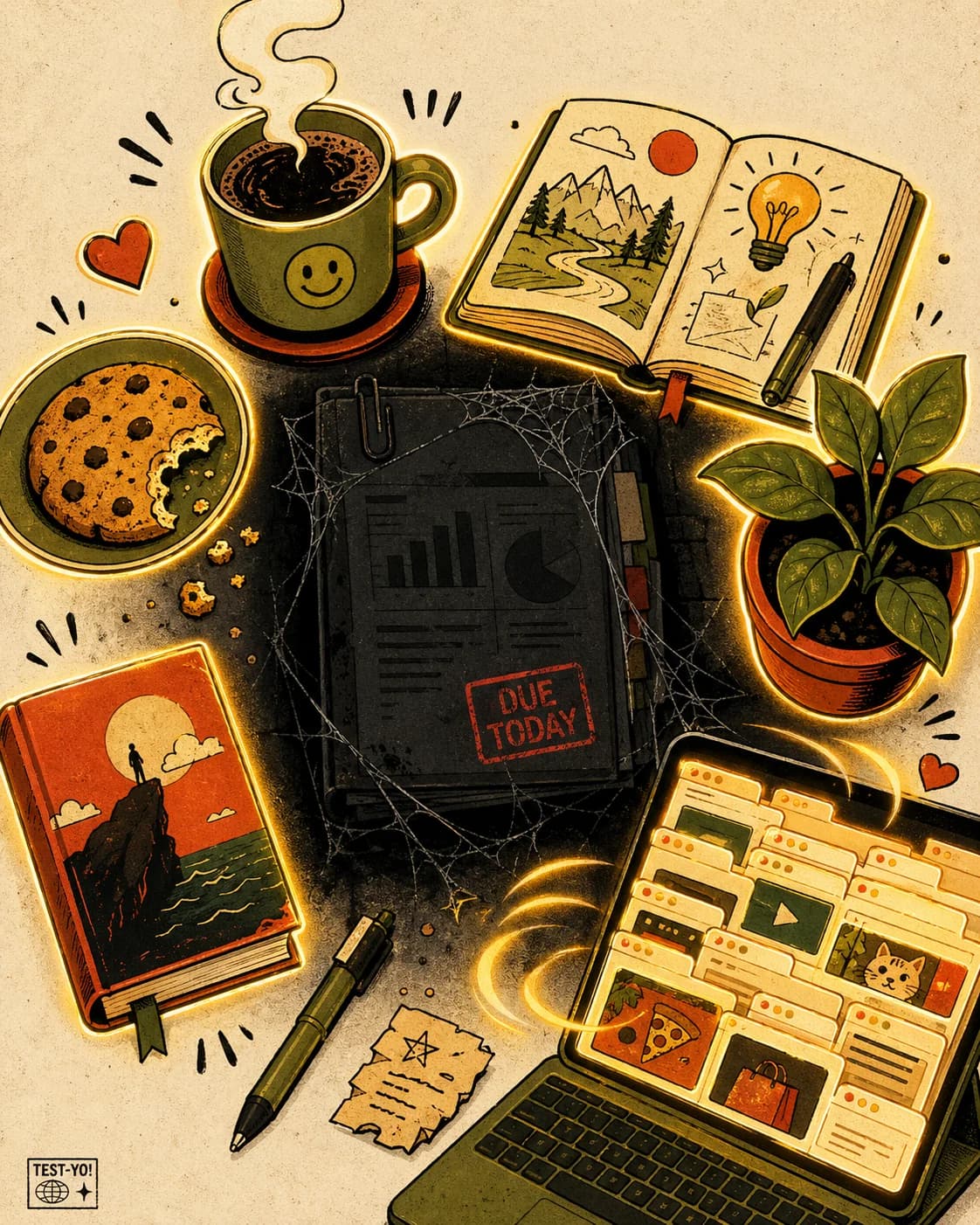
- Dreamer · 14-tabs-no-output
- You started 12 projects this year and finished a Pinterest board.
Powiązane testy
Najczęstsze pytania + informacja
How accurate is this quiz?
This is a self-reflection quiz, not a prediction. It summarises the answers you give here, without establishing a fixed trait or guaranteeing an outcome.
Can my result change?
Yes. Different answers, circumstances or interpretations can produce a different result. If you retake it, compare the individual answers and context as well as the label.
Can this tell me why I procrastinate?
It offers possible patterns from your answers, not a definitive cause. Demands, health, resources and the task itself may also affect delay.
Can I match several patterns?
Yes. Different tasks can bring out different habits. The result highlights the strongest match in this quiz rather than your only pattern.
Is the perfectionist result a diagnosis?
No. All four names are informal descriptions for reflection. Persistent difficulty affecting daily life can be worth discussing with a qualified professional.