 TEST-YO!· Exhaustion Stage
Exhaustion Stage — Where are YOU on the curve?
Free burnout test: 16 quick questions on exhaustion and cynicism place you on a 4-stage curve, from thriving to burned out. Not a diagnosis.
- 3 min
- 16 pytań
- Bez konta
- Bezpłatnie
Pełny wynik na końcu · bez podawania e-maila
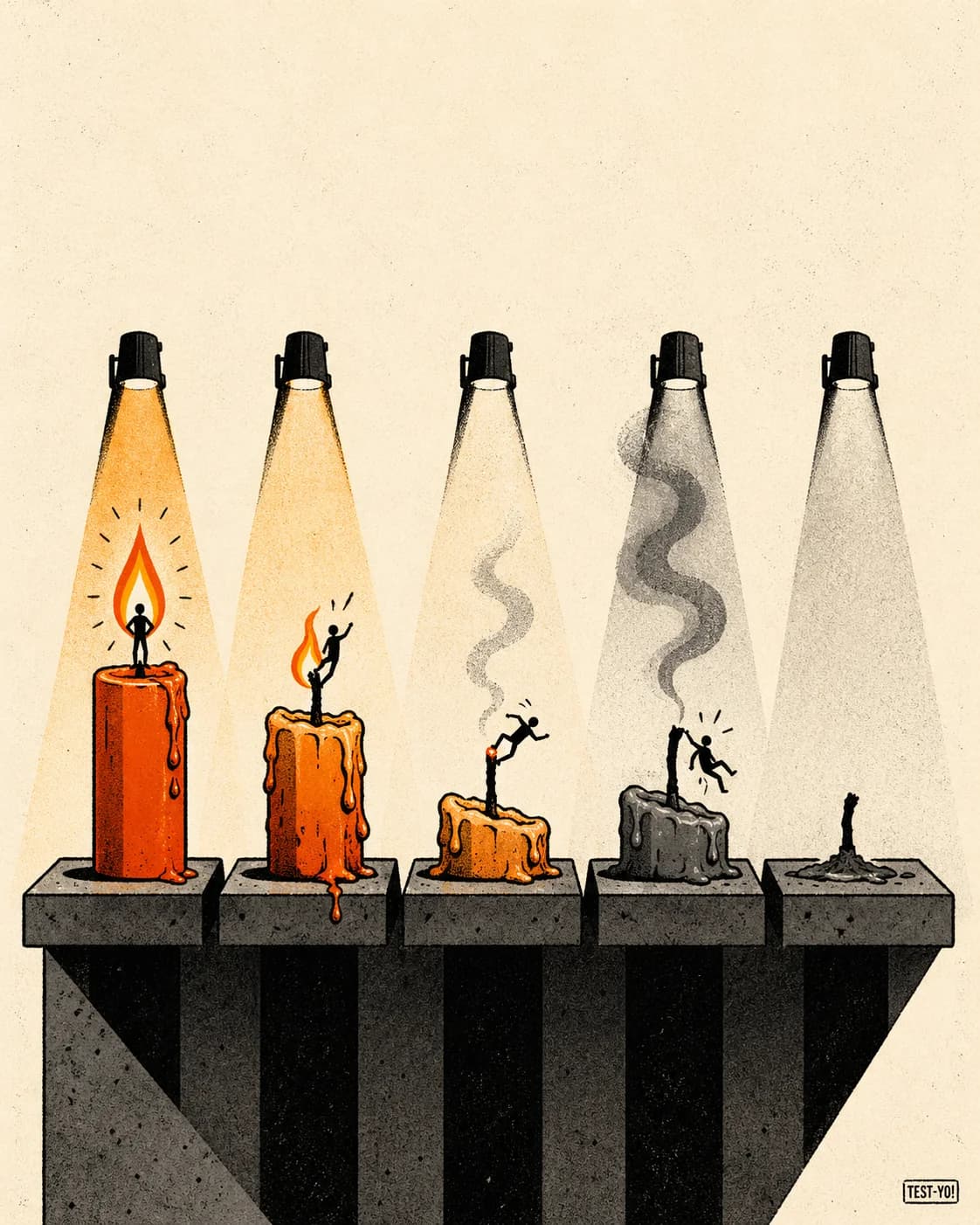
Możliwe wyniki · który pasuje do ciebie?
- Thriving
- Strained
- Depleted
- Burned Out
W skrócie
Free burnout test: 16 quick questions on exhaustion and cynicism place you on a 4-stage curve, from thriving to burned out. Not a diagnosis.
- 16 pytań · ~3 min
- Koszt: bezpłatnie · bez konta
O tym teście
Thriving, strained, depleted or burned out — there are four real stages on the curve, and you're on one of them right now. 16 honest questions about exhaustion, cynicism and what you still feel proud of. Not a diagnosis — a starting point honest enough to do something about.
Jak liczymy wynik
16 self-report items (4 per stage) on a 5-point Likert scale, grouped around themes similar to the three burnout dimensions described in WHO ICD-11 (QD85) and the Maslach & Jackson (1981) work-exhaustion research: emotional exhaustion, cynicism/depersonalization, and reduced personal accomplishment. This is an independent, non-clinical reformulation — not the official Maslach Burnout Inventory (MBI) and not a diagnostic instrument. Reference: World Health Organization, ICD-11 for Mortality and Morbidity Statistics, entry QD85 "Burn-out".
Możliwe typy wyników
- Thriving · Pure thriving mode
- You're suspiciously well-rested in a world that isn't. We both know it.
- Strained · Held-by-coffee mode
- By Friday you snap at strangers in supermarkets. Lo sabemos.
- Depleted · Cynicism unlocked
- Even your weekend doesn't feel like a weekend anymore. We both know it.
- Burned Out · Body-screaming mode
- Your body is screaming and you keep ignoring it. We both know this isn't fine.
Powiązane testy
Najczęstsze pytania + informacja
Is this the official MBI?
No. It's an independent self-report quiz inspired by the Maslach work-exhaustion dimensions: emotional exhaustion, cynicism and reduced accomplishment. Not affiliated with or a reproduction of the copyrighted Maslach Burnout Inventory.
How is the burnout test scored?
Four items per stage on a 5-point Likert scale. The highest-scoring of the four stages (thriving, strained, depleted, burned out) is reported as your result.
Is burnout a clinical diagnosis?
The World Health Organization's ICD-11 classifies burn-out (code QD85) as an occupational phenomenon resulting from chronic workplace stress that has not been successfully managed — not as a medical or mental-health condition. This quiz is for self-reflection, not diagnosis. If your result concerns you, talk to a doctor or therapist.
How long does the burnout test take?
About 3 minutes — 16 short statements.
What are the three dimensions of burnout?
The WHO ICD-11 describes burnout through three feelings: energy depletion or exhaustion, increased mental distance from or cynicism about one's job, and reduced professional efficacy. This quiz's items are grouped around similar themes.
Can burnout happen outside of work?
The WHO explicitly limits the term "burnout" to the occupational context and says it should not be used to describe experiences in other areas of life, even though exhaustion and cynicism can show up there too.
What is the difference between stress and burnout?
Stress is usually episodic and tied to a specific pressure; burnout is a longer-running state of depletion, cynicism and reduced sense of accomplishment that builds when stress goes unmanaged over time.
What should I do if I score "burned out"?
Treat it as a signal to act, not a verdict: talk to your manager or HR about workload, consider time off, and speak with a doctor or therapist, especially if exhaustion is affecting your sleep, health or relationships.
Can I retake this test later?
Yes — because burnout tends to build and ease gradually, retaking the quiz every few weeks can show whether your stage is improving or worsening.