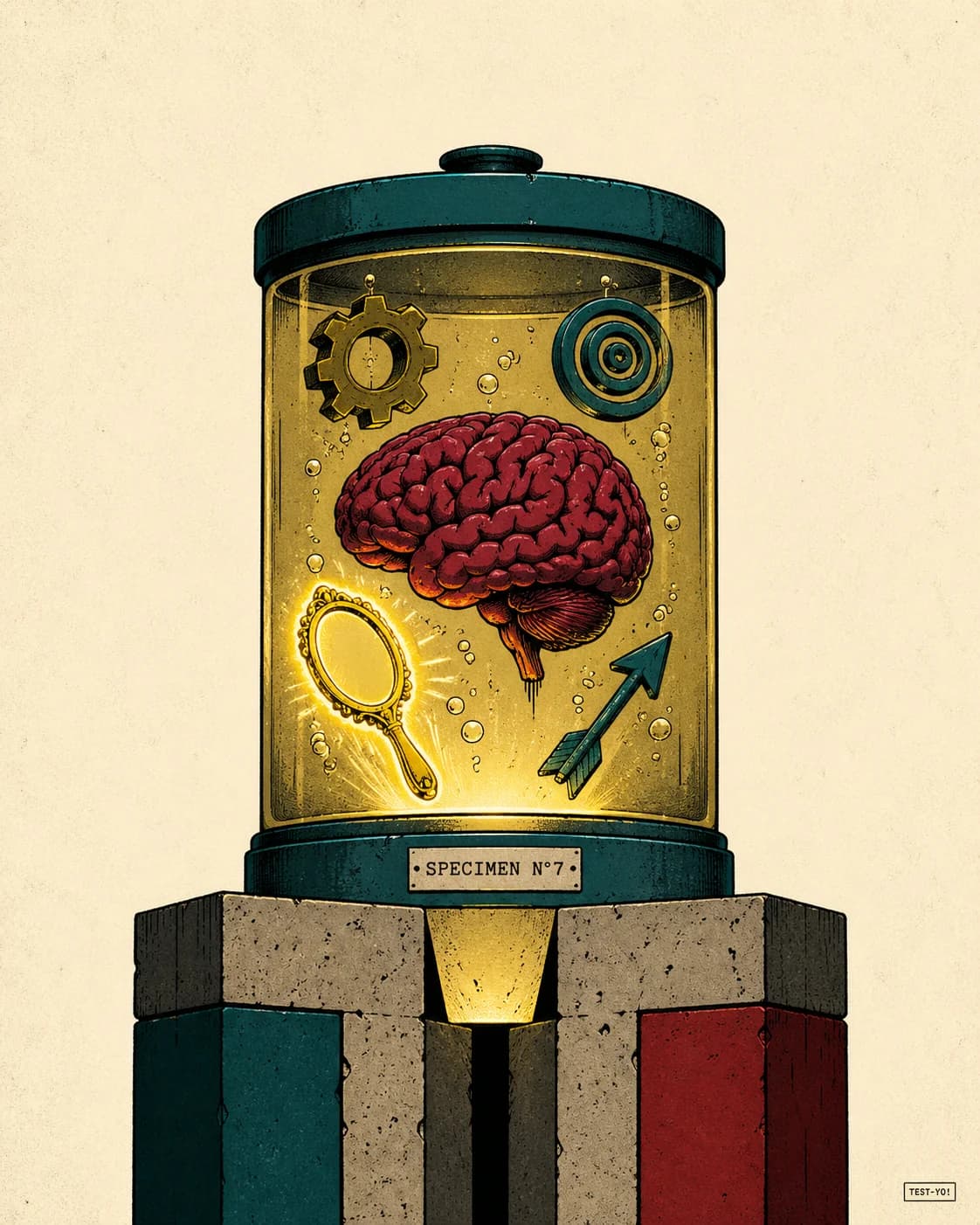
If you just took an online IQ-style test, here is what the number actually tells you — and, just as importantly, what it doesn't.
What IQ scores measure
IQ is a scaled score on a specific test. The average is set to 100. About two-thirds of people score between 85 and 115. Scores above 130 are typically called "gifted range" on clinical instruments; scores below 70 are called the "developmental range." These bands come from statistical calibration, not from moral judgment.
For the full band-by-band breakdown — every score with its percentile, the bell curve, and where 120, 121 and 130 land — see our IQ score ranges guide, linked under More reading below.
What IQ tests actually sample
Well-designed IQ tests sample reasoning across multiple domains — verbal, numerical, spatial, logical. They do not measure motivation, creativity, curiosity, emotional intelligence, wisdom, or the ability to learn new things under real-world conditions. All of those matter more than IQ for most life outcomes.
Why online IQ scores are estimates
Online tests, including ours, use a small sample of questions. A clinical IQ test has 60–100 questions across many subscales and is administered in controlled conditions. An online score is an estimate based on the specific format you took — nothing more.
How to read your score responsibly
- Treat it as directional, not definitive.
- Notice which subskill areas you did well in.
- Use weaker areas as a study prompt, not a label.
- Don't use online IQ scores for anything consequential — educational placement, hiring, clinical decisions. They are not designed for that.
The good news
IQ is not fixed in stone. Specific reasoning skills — pattern recognition, working memory, verbal fluency — can all be improved with practice. Take another test, practice the areas where you slipped, and try again in a month.